In this thread , there is much lamenting about the evil nastiness of ticks and lots of tick anecdotes. jellyblue posted about a tick that had burrowed into his girlfriend’s arm, such that only the legs were sticking out (ugh!). I have heard anecdotally that ticks can burrow under the skin and had always thought this was true, but my wife (a tick-hater in the extreme) does not believe they can - she thinks they just bite and latch on. There was no resolution in that thread as to whether they actually burrow or not, and my online searches have turned up nothing definitive, so I thought I would start a thread here.
So, can ticks burrow under your skin? All of them or only certain kinds? Which ones? Thanks in advance.
A completely baseless conjecture here, but I’d guess they don’t actually burrow under the skin. Their saliva does contain anticoagulant and I’m guessing the skin around a bite could get swollen or puffy enough to make it seem like the little son of a bitch is burrowing into the flesh.
Purely a guess, but with tons of experience behind it. You grow up in the country - you’re going to have a lot of tick bites.
Never heard of any such thing, never seen any such thing. They can’t burrow anyhow: their jaws can barely get through your skin. They are just good enough to get a tiny trickle of blood.
To me “burrow” tends to indicate that their entire body is under your skin (ugh !!), and I know this is not the case.
But the ticks I know of (don’t know the specifics, but those found in California: tickus disgustingus californius do bury their heads in the skin. It’s not just “chompers”, but actually their head. This is why there are various tricks to removing ticks that have latched on - you don’t want to remove the body and leave the head imbedded in your skin (leads to infection). The tricks involve getting the tick so uncomfortable/annoyed that he pulls his head out. Then you can remove him and dispose of him.
In case you’re interested, some of the tricks are:
hold a recently extinguished match close to the tick so he feels the heat
apply nail polish on him. Either the fumes or fear of suffocation force him out
(this one takes GREAT skill) hold the body, and twist EVER so slightly as to let him know he may lose his head. The problem with this is that it is VERY easy to pop the body off the head. Not recommended until you’ve practiced.
[QUOTE=cormac262]
To me “burrow” tends to indicate that their entire body is under your skin (ugh !!), and I know this is not the case.
But the ticks I know of (don’t know the specifics, but those found in California: tickus disgustingus californius do bury their heads in the skin. It’s not just “chompers”, but actually their head. This is why there are various tricks to removing ticks that have latched on - you don’t want to remove the body and leave the head imbedded in your skin (leads to infection). The tricks involve getting the tick so uncomfortable/annoyed that he pulls his head out. Then you can remove him and dispose of him.
In case you’re interested, some of the tricks are:
hold a recently extinguished match close to the tick so he feels the heat
apply nail polish on him. Either the fumes or fear of suffocation force him out
(this one takes GREAT skill) hold the body, and twist EVER so slightly as to let him know he may lose his head. The problem with this is that it is VERY easy to pop the body off the head. Not recommended until you’ve practiced.
[/QUOTE]
Interesting. I have heard similar things about the delicate-ness of tick removal once they were really attached. This might be why I thought they could burrow. Of course,if the head is under the skin and difficult to remove, that kind of counts as burrowing, I would think.
[QUOTE=ShadowFacts]
Interesting. I have heard similar things about the delicate-ness of tick removal once they were really attached. This might be why I thought they could burrow. Of course,if the head is under the skin and difficult to remove, that kind of counts as burrowing, I would think.
[/QUOTE]
I’m guessing you’ve not seen a tick while it is feasting. Their bodies (abdomen) are little more than a big “bladder” to store the blood. So what starts out as a “speck”, expands to this “blood balloon” more than triple the original size (maybe even quadruple). The telltale sign you have a tick is not that you feel them, but that you have this little “blood balloon” hanging off of you.
So it would be somewhat impractical for them to burrow their entire body into your skin. As they feast, the body would be that much larger to have to maneuver under the skin.
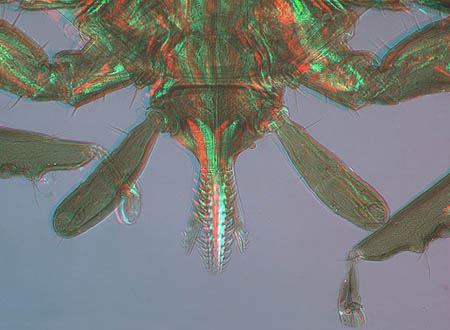
Here is a good photo of the tick’s head. See the part with all the barbs? The tick inserts that into yor skin. Grabbing the tick by the abdomen and pulling it out may cause the head to break off and stay attached to your skin. Here is a good article on removal of ticks.
I just took a first aid class with a video that included the removal of ticks. The recommendations followed the article in BMax’s linked article. It showed actual ticks being removed from actual skin. The trick is to grasp the head gently with the tweezers then lift straight up until the skin tents up and is taut. Then you hold it there until the tick lets go. They didn’t say what to do if the pull of the skin didn’t make the tick release, or if you couldn’t get a grip on the head. It seemed to take from a few seconds to ten seconds or more, depending on the tick, but they may have not shown ones that took longer.
[QUOTE=cormac262]
The tricks involve getting the tick so uncomfortable/annoyed that he pulls his head out. Then you can remove him and dispose of him.
In case you’re interested, some of the tricks are:
hold a recently extinguished match close to the tick so he feels the heat
apply nail polish on him. Either the fumes or fear of suffocation force him out
(this one takes GREAT skill) hold the body, and twist EVER so slightly as to let him know he may lose his head. The problem with this is that it is VERY easy to pop the body off the head. Not recommended until you’ve practiced.
[/QUOTE]
the first two are a bad idea, as they may cause the tick to disgorge it’s gut (okay, “vomit”) into the bitten area, injecting it’s stomach contents into the “host”, there is a high risk of infection if the tick does this
the third one has the risk of turning the tick into a “syringe”, once again, injecting the wound with the contents of the tick’s gut
there are specially designed tick removal tools, they slip between the tick’s “head” and the host’s skin, so no squeezing of the tick is neccecary, the less you touch the thing, the greater the chances of it being removed without emptying it’s gut
once it’s been removed, all bets are off, kill it as you see fit (I love to use my 170 lumen MagCharger flashlight to “cook” the removed tick, the MC produces a lot of infrared as well as visible light)
They itch quite a bit on me, long before they become engorged. I always rip them off, either by grabbing a large tick with my fingers or scraping a tiny one off with my fingernail. I have never had infections.
I am personally a victim of two tick burrows. One was in 2003 and the tick had burrowed until only the feet were sticking out. The doctor used a biopsy instrument that created a plug out of my skin to extract the tick which left a small hole in my neck that later closed up. If a tick only bit me and hung on, all I would have needed to do was to pull it off. I didn’t know it was there until it created serious problems as discussed next.
Last night, I had to go to an emergency center to have another one extracted that had burrowed until only its tiny feet were sticking out. Since I have a lot of aches and pains and have a high tolerance to pain, I did not notice this tick’s presence until the anesthesia the tick used to burrow was no longer working. The doctor had to kill it and then dig it out of my skin.
The first tick was located on the back of my neck. This last one was on the side of my neck in plain sight. They must be extremely tiny and burrow deeply before ingesting much blood, making their presense known and looking like a black mole on the skin, or I would have to be dumb as a rock to not notice a tick hanging off the side of my neck. Don’t you agree?
In addition, just when I finally paid serious attention to the pain caused by both ticks, I had also developed serious neurological symptoms such as a stiff neck, headache, knees wanting to buckle, shaky hands, and felt absolutely horrible. I truly believe if I had not gotten the ticks out of my skin that they would have put me in the hospital.
Having had dogs all of my life, the ticks that I have found on them were simply hanging on and getting bigger as they filled with blood were easily removed. The kind that burrows must be a different breed. I probably should do some research about ticks to avoid this happening again. Today, I feel better but still do not feel well.
Tell your wife that I hope she never gets a tick on her that is capable of burrowing under her skin.
Same here. I’ve had dozens of ticks that have gotten their heads embedded, and I’ve always just pulled them off. I’ve never had a problem with an infection.
I’ve only had a few ticks that I didn’t find before they became engorged. They usually itch enough by the first day or two so I find them. Of the ones I didn’t, one was inside the rim of my outer ear and the other was under my toenail. The second one was the most painful to remove of any I’ve had.
i’ve never seen or heard of (except for this thread) a dog or deer tick burrow under skin. the mouth pierces and hangs on, legs hang on. the tick wants to feed to lay eggs. these eggs are laid elsewhere for other host animals. the tick needs to drop off.
Dog ticks = those huge nasty gray things that blow up to the size of a small grape. Those don’t usually attach to people and I doubt they ever could embed because of their eventual size and the way they work. Their legs and mouth can be hard to remove however.
Deer ticks - they look like tiny pepper flakes to the naked eye and can carry Lyme disease. You can have dozens of them on you without even realizing it for a long time. They are so small, it may seem like they are embedded but they mainly just sit flat on the skin with a tight grip. It usually takes a close inspection and tweezers to pick them off.
Red ticks - These attach to people readily especially if you work or play in tall grass or wooded areas. They are redish-brown and look like tiny crabs. They don’t usually embed in your skin but they can at least partially if they latch on to a sensitive area (why yes, I did find one on my dick once when I was 5, why do you ask?). If you leave one in place for too long, some of them seem to get lazy or may even die instead of ever delatching. The skin will start to heal from the small wound around it and it can take tweezers, a knife, or razor blade to get most of it out. I have never had one get seriously infected however but I always put on neosporin cream after the minor self-surgery.
This what doesn’t add up. All the ticks I have seen have tiny little legs that are much shorter than the body. They just aren’t long enough to stick out with the rest of the body burrowed under the skin. I think you had some other bitey bug having a blood meal at your expense, but not a tick.
 do bury their heads in the skin. It’s not just “chompers”, but actually their head. This is why there are various tricks to removing ticks that have latched on - you don’t want to remove the body and leave the head imbedded in your skin (leads to infection). The tricks involve getting the tick so uncomfortable/annoyed that he pulls his head out. Then you can remove him and dispose of him.
 do bury their heads in the skin. It’s not just “chompers”, but actually their head. This is why there are various tricks to removing ticks that have latched on - you don’t want to remove the body and leave the head imbedded in your skin (leads to infection). The tricks involve getting the tick so uncomfortable/annoyed that he pulls his head out. Then you can remove him and dispose of him.