In another thread we’re tearing down the ‘cave’ part of the cave man, so let’s skip lightly by the stylish pelt and focus on the other aspect: [del]A predilection for sniffing Marilyn Manning[/del] A giant club slung over one shoulder, what he beans his bride with.
I know wooden clubs don’t preserve well in most climates. However, bashed skulls and other evidence of blunt trauma to game animal bones should preserve as well as anything we have. Also, we seem pretty sure about fire-hardened spears and atlatls and other things that leave limited remains behind, right?
Finally, I know clubs were used at various points in the past by various cultures. I’m interested in whether the archetype fails spectacularly or merely very badly.
the use of clubs by recent HGs is ubiquitous, so we can fairly safely assume that humans have always used clubs.
Evidence of animals with their heads based in isn’t going to be common, because large animals weren’t killed that way. The skulls of small animals that are killd with clubs aren’t going to yield evidence because the skulls were always smashed open to get at the brains. Fat was the most highly prized food of HGs and brains are something like 3/4 fat in a convenient package.
Where your picture differs from reality is in the size of the club. The gigantic cavemen club (GCC) is a fiction. Real clubs are basically batons, handy little one-handed things about a foot and a half long. These are ideal for killing small game or for fighting other humans.
For situations where more force was required, people tied a rock to the end of their baton to make a mace or axe. That provided as much force as a GCC without nothing like the weight, meaning it was also much faster and more practical to use and carry.
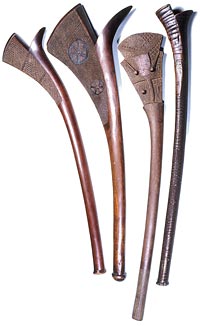
Some HGs have used what were essentially wooden swords or axes, but once again these are radically different to the the GCC being flattened, carefully carved and balanced and quite delicate.
So no, at no stage in history would you have seen someone with a gigantic club slung over his shoulder. People with handy little clubs slung in their belts, OTOH, would have been the norm right through to the bronze age. as would people with wooden swords.
Bashed animal skulls are very rare in the archaeological record (see Blake’s comment), but bashed human skulls abound, being quite common in Stone Age cemeteries the world over. Mostly these are described as “blunt force trauma”. Some, like certain 6000-year-old skulls from Germany, could be traced to certain stone axe and club types in use at the time. The typical smallish, roundish depressions in human skulls were not made with gigantic caveman clubs, for sure.
As per spears and atlatls, we have direct evidence of those, although rare. However, stone, bone and antler tools interpreted as projectile points (on solid evidence such as points found stuck in animal and human bones, and microscopic use-wear consistent with uni-directional, high-velocity impacts) are extremely common in most regions and time periods from the Late Palaeolithic onwards.
Not true. For instance, Stone Age Danes at the famous Ringkloster winter dwelling site simply threw the numerous skinned pine marten bodies, skulls intact (but with small trapping injuries on the back of the head plus skinning cuts) into a nearby bog. A thousand km’s east from there, pine marten were cooked and eaten just like other game animals. Goes to show generalizations fail when applied to Prehistoric humans.
Bizarre. Is there evidence they were eating these animals rather than just skinning them? Charred bones, butchering marks etc? If they weren’t eating them then obviously you wouldn’t expect them to be extracting the brains.
Where did the idea of giant clubs themselves come from? Did anyone at any point in history actually make and use a wooden club as long as a baseball bat and six inches thick at the head, or is it basically a cartoon exaggeration?
Once again, we really should start these types of threads by defining what we mean by “human”. Blake implicitly assumes H. sapiens in his post ("…humans have always used clubs"), but the classic cave man is a Neanderthal.
Frankly, I suspect the use of clubs goes back very far in human ancestry since chimps sling club-like branches during displays and acts of aggression. It doesn’t take much of a leap from that to, well, “Bonk, bonk, on the head!”
Probably came from the same place that picturing poverty by a naked man wearing a barrel came from. Symbolic representations don’t need real life antecedents.
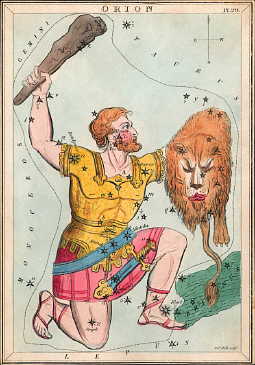
This picture, and some others like it, from the early 1900s were probably the inspiration for the club wielding cave man. They were largely fantasies, based on preconceived ideas of what a primitive human ancestor would look like. They had some skulls and a few skeletons, but not the kind of expertise and objectiveness we can bring to the science of reconstruction today.
With paleolithic technology, what other weapon options do you really have available? A stone spear head by definition puts you in neolithic. You could make a spear by sharpening the wood itself, but most of the ways of doing so are also neolithic at least.
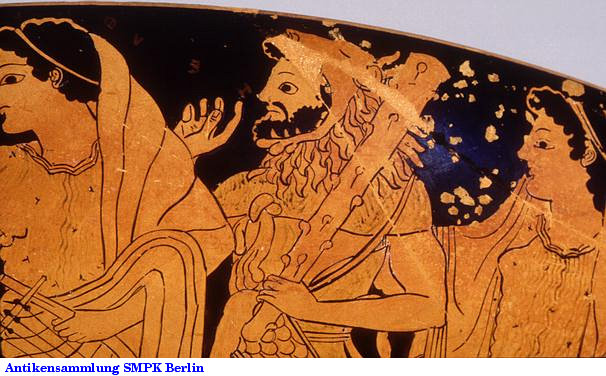
In Classical times Herakles / Hercules was often depicted wearing only a lionskin and carrying a large club. These images would have been very familiar to anyone with a classical education (i.e. the majority of academics and popular writers from the Victorian era right up through the late 20th century).
Stone tipped spears, axes and maces are a middle Paleolithic invention, and almost certainly predate H. sapiens.
By the end of the Paleolithic humans were making stone-tipped arrows, wooden swords faced with microlith cutting edges, stone bolas and any number of other weapons that would be infinitely superior to a club.
Even leaving that aside, the aforementioned batons and wooden swords are far more effective weapons than a gigantic caveman club.
which while not quite the bulbous cartoon club do suggest that Hercules anticipated Sheriff Buford Pusser (of* Walking Tall* fame) by several centuries in the “carry a big-ass whomping stick” department.
No, paleolithic (literally “old stone”) covers chipped or flaked stone tools from the earliest pebble tools through fairly sophisticated blades up to 10,000 BCE. Neolithic refers to polished stone tools typical of post-glacial times.

 )
)