Oh, well if it’s round-trip, then there’s at least the possibility of charging at work, too. Not all employers offer that as an option, but it’s increasing.
And that’s still an awfully long commute.
Oh, well if it’s round-trip, then there’s at least the possibility of charging at work, too. Not all employers offer that as an option, but it’s increasing.
And that’s still an awfully long commute.
Because it generally still is a less expensive option to engineer, produce and initially buy. The cheapest hybrid I can find is the Hyundai Ioniq, at basically 25K. The cheapest car is a Chevy Spark, which comes in at basically 15K.
Oh well, in that case, that’s hardly a typical use case.
Plug-in hybrids aren’t going to be the best option for everybody. Not sure why people expect anything will be a one size fits all optimal solution for everybody in all cases. No automobile type is.
The daily average (granted - large deviations from norm in many cases) commute for Americans is somewhere between 30-40 miles roundtrip. Plug-in hybrids fit that (rather large) niche pretty well and can be used for longer trips as well with existing public infrastructure.
For people who don’t fit that usage pattern, full BEVs, ICEs, non-plugin hybrids, or public transit may be better fits.
It amazes me that threads like this or the ones about electric vehicles always seem to have someone with an extreme end case.
Indeed. I know somebody who had to make that switch, 5 miles roundtrip - usually made on bicycle or occasionally his Porsche - to suddenly a 300 mile roundtrip once a week to some God forsaken construction site on a back road corner of Louisiana. Clearly neither his bicycle nor his Porsche would work for that, so he bought a used VW Golf that fits his needs.
Needs must. Plug-in hybrids will be a totally viable option for a large number of Americans for at least the next decade.
From an engineering standpiint, There are pluses and minuses to a hybrid.
On the plus side, when you are commuting you aren’t hauling around a 1,000 lb battery pack you don’t need. With a hybrid, if you drive 30 miles per day or less you essentially have an EV that’s lighter and more nimble and more efficient (theoretically). This is negated somewhat by having to have an engine, transmission, differential, etc. So maybe 500 lbs in savings.
On the negative side, you lose the simplification of a pure EV. You still need a gas engine, transmission, etc. Hybrid EVs are therefore more complex and more expensive than equivalent ICE cars, while pure EVs are significantly less complicated (but still pricey) Repair and service costs (and maybe resale value) will reflect this. You’ll still need regular oil changes in a hybrid, for example.
On the positive side, if you are like most car owners and do about 80% short range commuting and 20% long-range driving, a hybrid will give you the advantages of both electric and ICE.
On the negative side, the driving experience in a typical hybrid won’t be as good. It won’t have the acceleration of a pure EV unless it’s got a huge gas engine, You still have to deal with a transmission, power band issues, etc.
On the positive side, plug-in hybrids can typically be charged overnight from standard home charging. An EV with a big battery will need 220V charging, custom installation of the charger, and will probably be subject to central charge management at some point. Especially in Europe.
Also on the positive side, in extremely cold weather your hybrid will be able to get going immediately, while a pure EV that wasn’t plugged in could need anywhere from 5 mimutes to an hour to warm the battery. And given the rickety state of the charge network, you have the choice of charging your plug-in battery for more range or fueling up with gas if the chargers are down or full. An ICE car loses 15-20% of range in extreme cold, while an EV can lose as much as 60%.
So, it all comes down to your location, use case, tolerance for the quirks of electric charging, etc.
Why not? Until my battery ran down, it accelerated with the motor, not with the gas engine. I LOVED how responsive that car was, and how great the acceleration was. Now, granted, once it was driving with gas it lost a little of that oomph. But it still functioned as a hybrid, and charged the battery enough from the engine to keep a little of that oomph available for highway driving.
Damn, that car was fun to drive.
I can’t charge at home and only have a 13 mile round trip commute, so I’ve been eyeing these. Although the commercial chargers at work and near home are sparse and charge about as much as gasoline for the electricity. I’m hoping that changes.
Even if, and that’s a big if, the targets set by some countries and states for an end to new ICE car sales are met, buying a hybrid or plug-in hybrid now is not going to strand you with an unusable or unsellable car.
I have a 2018 Kia Niro hybrid which is pretty great. The only issue I have is that in the current market I keep getting spam from my local dealer that they’d absolutely love to buy it off me.
And also that with my use pattern it’s so long between filling it up it feels like an annoying imposition when I have to.
My understanding is that hybrids are typically more or less normal ICE cars, but with a battery and electric motor built in. Do they make hybrids that are more EV? Basically an EV car with a generator to charge the batteries if charging isn’t available?
It seems that would work better and be simpler.
I’m only aware of the onboard generator for the F-150 Lightning, which probably isn’t quite what you’re asking.
Yeah, that would be a series hybrid as opposed to a parallel hybrid where the electric motors run in parallel to the gas engine. In a series hybrid, the drive train is entirely electric and the gas motor is just a generatir for the battery.
There aren’t a lot of series hybrids around, especially in North America. The mass market ones I know of are the BMW i3, and the new Mazda MX-30. Both cars are available as straight electric vehicles, with an optional gas generator being available. The Ford Lightning Truck and the Chevy Silverado will both be available with range extenders in the future.
The MX-30 is interesting. As a straight electric it has poor range. But as a series hybrid with a range extending rotary engine you get the benefit of pure electric power for 100 miles, then the range extender kicks in to keep you going, It seems like a great way to go.
Talking about lower accelerations in hybrids:
There’s no reason a hybrid can’t be a power monster: Some of the fastest cars in the world are now hybrids. But marketing prevails, and most hybrids are sold for efficiency and not performance, and therefore have smallish gas engines. And when a gas engine is in the mix you get all the problems of gas engines for acceleration: peaky power curve, poor low-end torque, etc.
It’s easy to make an extremely powerful electric motor, and having a large motor does not really impact efficiency much. Acceleration in a pure electric is often limited by how much current the battery can deliver. But with an ICE engine you either need to build it large, or hang turbos on it and such to get power.
So the powerful consumer hybrids will often advertise 400 HP or more, but it’s typically going to bve something like a turbo 4 cylinder gas engine coupled to a 200 HP electric motor, or something like that. The cheaper hybrids will have more like 200HP combined, with a tiny engine married to a 100 HP electric motor.
That just doesn’t come close to something like a Tesla which can spank a 700HP Dodge Demon.
It does, so I wonder why series hybrid (I learned a new term, thanks) are not more popular.
Most of the time, except if you are already at fairly high speeds, it’s more limited by traction.
Somewhere I read that pretty much all racecars are now hybrids, just to get that immediate acceleration.
Well, if you have a gas engine in the car and running, it’s always going to be more efficient to use that mechanical energy to drive the wheels directly.
This is what happened with the original Chevy Volt, GMs moonshot answer to the Prius. The concept car was wild, with a long, low hood and partially glass door. It was also supposed to be a series hybrid. As it came nearer to release, the shape changed to a typical hybrid jellybean and the clear doors became cheap black plastic. And as journalists got access to engineers, it became apparent that it was no longer a series hybrid either.*
Now, there may be other advantages to a series hybrid that offset the loss of efficiency – maybe a smaller, simpler, more efficient gearbox, or better packaging. But if you’re going to have an engine running in a car with a depleted battery moving at 80mph, and there’s any reasonable way to hook that engine up to the drive wheels rather than using it to drive a generator, well… You’ll do exactly what the GM engineers did.
I’m curious to see what Mazda does with the plug-in MX-30 when it’s released. 38hp doesn’t seem like enough to keep an SUV with a depleted battery going on the highway if you’re eating the losses from converting its power to electricity and back again.
Not always, as there’s a lot of mechanical overhead in your engine. It needs to be able to put out a couple hundred horsepower when you accelerate, but isn’t using most of that power while you are cruising.
If the engine or turbine is scaled to put out enough power to charge the battery while cruising, then it can be much smaller and simpler, running at a constant power.
There are also losses in the powertrain, along with the extra weight of it, which would be deadweight when you are using it purely on batteries, as it would be for most commutes. Not to mention the cost and maintenance on it.
From what I read, it only links the engine directly to the wheels when it is going over 70mph and the batteries are depleted. Not an issue for most driving, and only relevant that it adds cost and weight.
The engineers and beancounters decided it was an acceptable tradeoff, but it doesn’t mean that all series hybrid would have to do the same, and we can see that there are others that don’t.
The drivetrain of a car eats up about 15% of the power. Similarly, motors are around 85% efficient, and generators are generally 99%+, so it would be about the same. You are right that it doesn’t seem like 39 horsepower should be able to maintain highway speeds with an SUV, but it does appear as though it has a 144 hp engine,
Having less battery lowers the cost, as that’s a significant part of an EV’s cost. Not having a powertrain also lowers the cost. Having a smaller and simpler engine lowers the cost. Putting it in a BMW raises the cost. I wonder what the MSRP would be on a Chevy Spark level series hybrid, or a Ford Focus, or other economy class cars, rather than building it into high end luxury cars.
It seems optimal if your usual commute is within battery range, but you want the option to occasionally take long trips. Obviously, this doesn’t work for everyone, but it should work for a rather large swath of drivers, it would be exactly suited to my needs. I wouldn’t expect it to be every car out there, but as I said, I’m surprised they aren’t more popular.
2018 Chevrolet Volt owner here.
There is a bit of confusions with Volts as there are 2 different versions. The Gen 2 volts (2016-2019) can actually float between serial and parallel hybrid modes.
This youtube video (8min) breaks down the difference and details each style. Complete with diagrams.
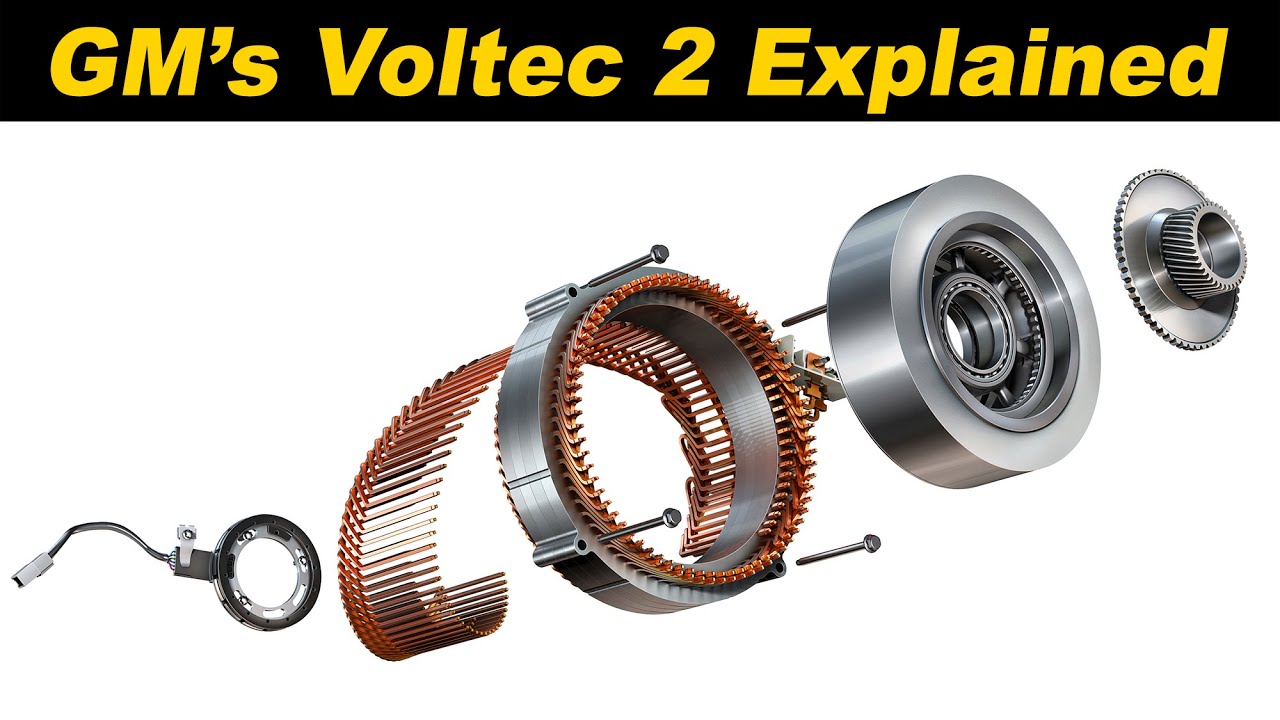
I own a 2018 Volt, nowadays i go at worst several weeks on a 9 gallon fill up. my current tank is about 8 weeks old and i still have about 70%, I charge at home with an L1 charger. Normal battery range is around 55 miles, I am getting about 48 right now running heat and other cold related degradation in NW Washington state.
I love this car. The electrics do most of the heavy lifting. It defaults to pure electric so the first 50 or so miles, no gas engine at all if desired. My little foray today was about 18 miles, no gas used… It switches to hybrid automatically when battery range is depleted or it can be manually switched to hybrid/hold mode. Acceleration and hill climbing all tap electrics in hybrid to give things a boost when torque is needed. It is very zippy. Gas engine kicks in around 20-25mph in hybrid. The instrument panel shows how much power is coming from gas and electric at any given moment.
Oil changes depend on the amount of use your gas engine gets. I haven’t changed my oil in 6mo or so, not sure what the oil life minder says right now but its usually around 20k miles under typical use cases.