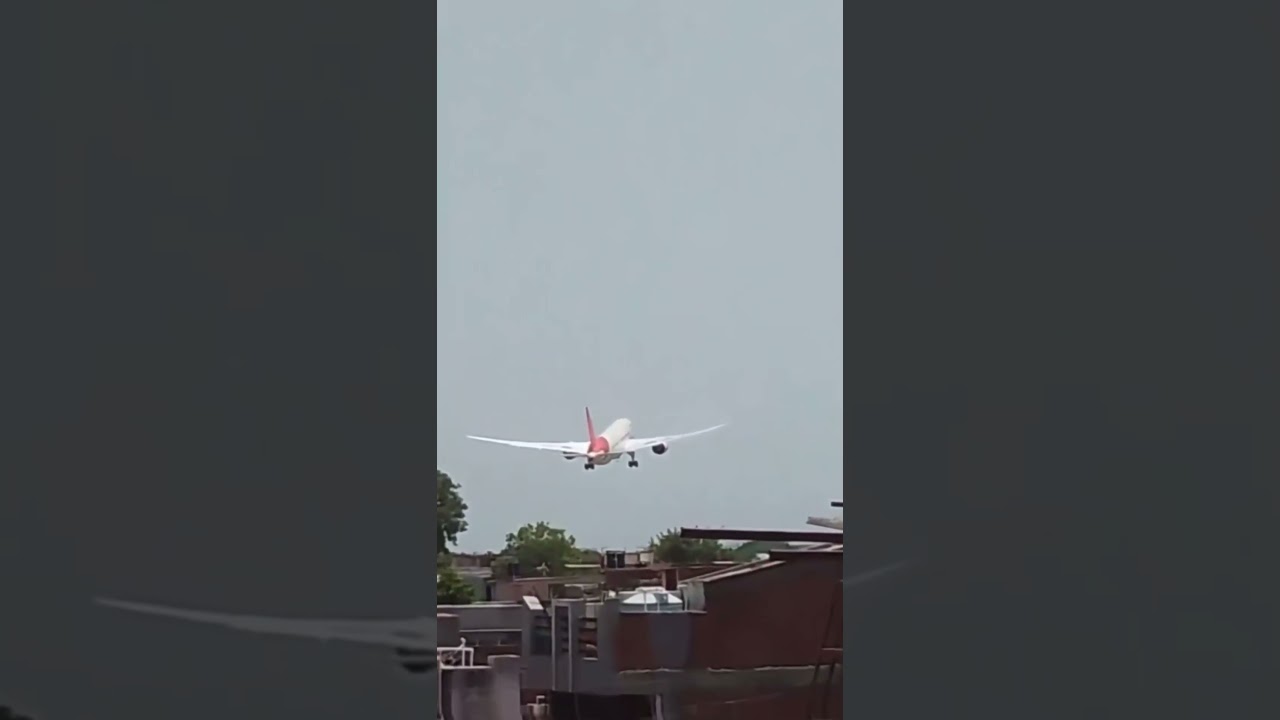
Yes, but in a bit of a left handed way. The plane climbed out and the gear wasn’t retracted. The plane began to descend. It was in a tail down position as it descended. They then talk about an FO who once started to retract the flaps instead of the wheels on another flight but it was caught in time. The stall speed difference when flaps are not extended is substantial.
One possibility they left out was cargo shift. International flights carry revenue cargo in the bellies. It’s possible to have an empty position in the tail and the pallets shift because the locks weren’t set properly. It’s unlikely to have an empty position because there’s always freight moving commercially. But it’s a possibility.
I think that is what the low cost carriers rely on. There are enough people who want that $100,000+/year job with benefits and pension and medical. But, pilots need lots of experience to be able to get the better paying jobs. So, offer them a pittance they will take to move up the ranks. Almost like a paid (barely) internship.
The sub-joke is that while the pilot can’t afford to feed the family, the family can eat the pizza. The family can’t eat the pilot. Well, shouldn’t, anyway.
I used to regularly read the Ask the Pilot column from Patrick Smith. At one point he said that when pilots were laid off and then got hired by another airline, they were once again at the bottom of the pay scale. So it sounds like a tough situation.
Not sure why it took so long to get there. The survivor heard it !!!
I was toured around the 757 which was the first RAT on an airliner ( we were recruiting sailplane pilots ) and it stuck with me.
Then it saved an entire plane with the Gimli Glider incident.
The FO in the Colgan crash had 2244 hours with 774 in turbine aircraft. The captain had 3379 hours with 111 in command of the Dash 8 400. There’s nothing about those numbers that is worrying and I never really understood the desire to create a 1500 hour gate for hiring a pilot to airline ops. Both of those pilots had significantly more than 1500 hours so how is it supposed to have helped? They could still have been flying that aircraft on that night if the 1500 hour requirement was in place.
The problem was more about training and fatigue. The captain was a “struggler”, someone who regularly fails checks but then manages to scrape through and meet the standard. As you say, the captain’s response to the stall warning was fatally incorrect. The anti-ice systems were on and that biases the stall warning to activate at an artificially high speed. They were nowhere near stalling and the captain could have simply increased the power to increase the speed. Instead he heaved back on the control column which triggered an actual stall and he held the column back in his stomach fighting against the stick pusher all the way to the ground. The FO was just along for the ride really. She raised the flaps which didn’t help, but I don’t think it made any difference to the outcome.
It doesn’t sound like a lot to be in the right seat of a B787 to me either, but different parts of the world have different pathways to airline flying.
Petter Hörnfeldt, AKA Mentour Pilot, who many here seem to respect for his aviation knowledge and insights, did an aviation scholarship followed by compulsory military service (non flying), then a multi crew cooperation course and multi-engine rating. He then got a job as a B737 FO. At this point he probably had about 300-500 hours. By the time he was 25 he was a B737 captain and shortly after he was a line training captain, and sim instructor/examiner.
This kind of thing happens all the time in Europe. You might have a pimply faced 300 hour cadet in the right seat of the jet and a slightly less pimply faced 3000 hour ex-cadet in the left seat, and they fly all day every day, safely. They can do this because they have a pilot training system that is designed from the ground up to take a kid from zero hours to the right seat of an airliner.
Air India has a cadetship program as well, so maybe this 1100 hour B787 FO had been trained from the start on how to fly a passenger jet, with hours in light aircraft being the minimum required to gain licences and ratings.
It very much depends on what those hours are made up of. There’s a certain amount of staring out the window that happens when flying and some flights have more of it than others.
When I had 1100 hours, 600 of them were spent flying aerobatics in a little biplane and I was probably as good at it as I would ever get. 600 hours, 1900 flights, 1900 landings. Compare that to my first 600 hours flying maritime patrol Dash 8s (lots of gazing out the window), 101 flights and 48 landings. I had a weekend flying the biplane at an aviation museum open day where I did more landings (69) in two days than I did in 18 months of flying the Dash 8! (Shout out to electronic pilot logbooks by the way, as much tedious historic detail as you could ever want.)
So 1100 hours could be 1100 hours of getting very good at a certain task, or it could be 1100 hours of staring out the window, or something in between. Either way, the number alone isn’t a good indicator of anything much.
BA is a bit unusual in that they have the FO handle the thrust levers for the take-off if they are the flying pilot. The FO would then also make the rejected take-off (RTO) decision and carry out the actions. A slightly different dance to the way most (AFAIK?) airlines do it with the captain handling the thrust levers for all take-offs and making the RTO decision.
It’s a bit of both. For take-off the thrust levers (“throttles” in Boeing lingo) are advanced manually to an intermediate setting where the engines are allowed to stabilise briefly, then the TOGA button is pushed and the auto-throttle will advance the throttles to the required take-off setting. After take-off the throttles are either automatically controlled to a certain rating or to maintain a certain speed, and you can operate them manually if you wish. If you want to abort a take-off then you manually close the throttles and the brakes and spoilers should activate automatically to slow the aircraft. If anything that is supposed to be automatic doesn’t happen then you do it yourself. The manual closing of the throttles is the decision trigger though.
To me, flying consists of 2 things, the ability to physically fly the plane, and the knowledge of the complexities of the plane. The combination of the 2 are the foundation of flight. The beginning. Not the end-all certification.
Yes, 1500 hrs is an arbitrary number and it was driven off a flight that never should have ended the way it did. I’ve seen airline pilots who couldn’t handle crosswind landings well in their own plane. They weren’t brutally bad landings but they weren’t good landings either. I don’t understand how the Captain of the Colgan flight got certified.
I want pilots like Richard Pearce and LSL who come from a personal background of aviation that involves time and practice. I’m biased in favor of this background of hours logged. I don’t like the compressed component of school-based flight schools.
Do I remember correctly that the 777 is a little unusual in that it has a tiller on both sides? That would certainly make the crew coordination different than most other planes in that the right seater has full control on the ground.
My personal experience in airline and bizjet ops differs somewhat. In the airline world (with a single steering tiller on the left side) there is always a change of controls at 80 knots. I’ve seen captains and companies with varying technique about who is handling the throttles. At my regional airline the captain would set power and steer during the beginning of a takeoff, and at 80 knots the right-seater flying pilot would take over both with the verbal callout, “My controls.” On landing the right seater did everything until slowing to 80 knots and the captain would take over.
In bizjets, there’s more variation. Many companies - most, in my experience - always have the flying pilot in the left seat, be they captain or FO. This simplifies things because there’s no changeover of controls. I’ve also seen airline style flying, with some captains controlling the throttles at first, others giving throttles to the right-seater from the get-go.
All that is fine as long as it’s been thought through and they have a procedure. I worked at one company that decided to switch to airline style flying, but didn’t work out the details. Pilots with no airline experience have probably never done a control change at 80 knots, and it’s a non-trivial bit of crew coordination. I urged the company to consider it more carefully.
Apart from all that is… who can call an abort? Answer is usually either of them. But as for who actually performs what action during a RTO depends on the type of plane and company procedures.
So if it turns out a wrong control was moved by the Air India crew, hopefully we’ll find out the context. At low altitude someone might have made a mistake in haste.
Is stick-and-rudder time in either a sim or a smaller plane underrated? That Colgan crash can be generalized as often finding the pilots in the wreck with the stick in their laps (see also the Air France crash in the mid-Atlantic). You’d think their flying instincts would thus be honed with all that time spent actually training to fly an actual plane, vs. learning to twiddle all of its systems, but maybe they simply don’t prioritize that anymore.
Not sure if this has been reported here yet, but the last words from the pilot were “Thrust not achieved… falling… Mayday! Mayday! Mayday!” moments after takeoff as the plane began losing height.
Which doesn’t give us a lot of information, but makes me wonder if it could have been something like a bird strike into both engines. Taking the words literally sounds like the plane still had some thrust, just not enough to stay aloft.
Yeah consensus finally coming around to dual engine failure and RAT deployment but WHY!!! is the question.
That captain saved a lot of lives by pancaking in as slow as possible …including one of his passengers.
The weird thing is the plane had enough thrust to taxi and then take off and then…poof…nothing or near enough. That does suggest bird strikes but we see nothing to indicate that (which isn’t to say it didn’t happen, just we see no evidence of it).
What else can it be beyond the pilot throttling back to idle (but that would not deploy the RAT would it?)? That seems unlikely too. Both engines breaking at simultaneously. Something wrong with the fuel? It will be interesting to see the results of the investigation on this one.
As the whine of what we presume to be the RAT is heard on the video as we first see the plane, if it was a birdstrike, it probably happened while the plane was still behind the person with the camera.
The Times of India has run the gamut from flaps up instead of landing gear to electrical failure. Yet even they admit so far nothing fully substantiates all the other things that seem to have occurred.