Are airing cupboards/hot presses non-existent in US homes?

I think based on the explanations I’ve read in this thread I mostly understand everything except this part.

[ol]
[li]If you have district heating, I can understand having a hot water tank to be able to regulate your own water pressure (if the district pressure is too low for example)[/li][li]If you have a tank water heater, the tank is part of the water heater[/li][li]If you have a tankless water heater you don’t have a tank[/li][/ol]

Even if you have a combination boiler and heater, wouldn’t it have a tank specifically for potable water? I am not seeing how anybody ever thought separating the hot water storage tank from the heater could be a practical idea. You need to constantly move the water back and forth to keep it at the right temperature.

Nonono. The hot water tank does nothing except store water - it doesn’t do anything to the pressure, which is taken care of by the header tank in the attic or the mains directly. And there is no ‘right temperature’ - if the water in the tank is by some strange twist of fate really hot (the water heater has just been run on its daily schedule, a demon has manifested in the airing cupboard, whatever) then you get the skin scalded off your bits, unless you are radical enough to posses one of those devil’s playthings known as a ‘mixer tap’, in which case you can blend in enough cold water to get the temperature down. This old system did make sense, after a fashion. The water heater was a coal furnace or an old-school gas burner, and you could use natural convection to move the heat to a separate tank, giving you flexibility as to where you put the heater and the tank. Typically the heater would be at the bottom of the house (easier to load the coal or pipe in the gas) and the tank would be near the top (so you could get nice hot water in the rooms below) - bear in mind that this layout preceded the availability of cheap reliable pumps, so it all had to run off convection and gravity, with low water pressure. It just outstayed its usefulness by a long long time.

Potable water is on a different loop - no matter what the system you wouldn’t want to be drinking water which has been anywhere near the hot loop, since it might be full of god knows what. The regulations specify that drinking water has to be straight out of the mains.

I am starting to feel really stupid because I’m still not getting it. By “right temperature” I meant hot enough. If you fill a tank with hot water, it’s going to get cold unless you reheat it or use it up (so that new hot water from the heater goes in to maintain temperature).

The way you describe I am envisioning something like this:

You have a water heater has to have two inputs and one output. One of the inputs is the mains with cold water, and the other is the flow back from the tank. The output goes to the tank.

The tank has two outputs and an input. The input comes from the heater, one of the outputs goes back to the heater, and other output connects to all the hot water taps in your house.

You have to arrange the tank/piping/heater so that convection handles the flow across the two pipes correctly. You also need to put a thermostat on the tank that controls the heater.

This just doesn’t make sense to me. Why would you go to all that trouble to decouple the tank from the heater? What do you gain? Is this so that the heater can be in the basement and the tank upstairs?

In theory, yes. In practice, the insulation maintains the heat quite well enough that the boiler only kicks in to reheat it when hot water has been drawn and the replacement cold fill causes the tank thermostat to click in.

My boiler is set to maintain hot water in the tank 24 hours a day. I can’t remember ever hearing it fire up to reheat the tank just because it cooled down naturally (I guess it probably happens a bit, but only very, very occasionally).

Water from the mains goes directly into the storage tank not the boiler. The water in the tank is heated by heat exchange, it doesn’t get pumped to and from the boiler.

Separating the boiler and tank makes sense because a combined boiler/tank would be pretty big, and would take up too much otherwise usable room. Also, you’re less likely to cause damage by boiling dry, should the mains be cut off, because the heat carrying fluid (water + additives) is either in a closed system or topped up from it’s own header tank.

You also have to remember that most central heating systems here work by pumping heat carrying fluid (the same water + additives) round a circuit to which radiators are attached.

Several reasons, none of them necessarily all that compelling, but including:

-Because most hot water use happens upstairs in the bathroom (in most house design cases) - the further away the tank, the more cold water you have to run out of the tap before the hot comes through and the more hot water you have to leave in the pipes when you stop.

-Because many systems are retrofitted to a house design where there was already a hot water tank but no boiler, water being solely heated by the electric immersion element - the tank being eventually upgraded in situ with a new one with a heat exchanger coil, and a need to find a suitable site for the boiler - bearing in mind it would be a bit noisy and would usually require fitting on an outside wall for the flue.

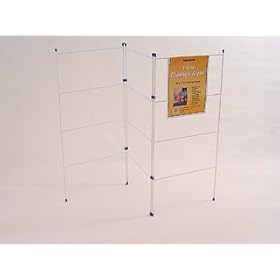
There’s a difference between stuff stored in there and stuff put in to “air” or to finish drying. In my airing cupboard there are two shelves. the top one is where I stack dry sheets and bed linen. The bottom one, right above the hot water tank is for things that are still dampish (not wet). There’s two basic reasons why that stuff isn’t dry enough to put away. Firstly things that have had to be taken in from the line because it’s it’s started to rain, or because it will rain or the dew will fall before I can get to it again. Secondly if I’ve been having to hang a lot of stuff on the clothes horse* indoors and I need the space for another batch of washing.

An airing cupboard shouldn’t get humid but no you can’t just put of damp stuff in there and forget about it. If I’ve had to stack it high then I’ll go back and rearrange it a couple of times to make sure everything does get properly aired before I take it out and put it away.

*Do you have theseover there?

This thread is hysterical. You have two countries with almost identical language and a common background, yet the plumbing/heating systems are incomprehensible to each other. Wait til we find intelligent life on another planet and try and understand each other. Wait, you have 3.5 different sexes?

Yes, but they usually look like this.

I lived and worked in England for a year in the late Nineties. The company rented a flat for me in a wonderful old building that had been a boarding school in the early to mid Twentieth Century, then divided into flats. Beautiful but funky - flowered wallpaper everywhere, fringed lampshades, flowered sofas - a great place with large rooms, two bedrooms, gardens, situated on the River Great Ouse. If you google *chav towns england *you might be able to figure out the location.

I had a very small version of the airing cupboard with only a few small shelves that I must admit never occurred to me could be used to dry things. I kept cleaning supplies in there alongside the water heater.

The bathroom had a wall mounted tank (maybe 3’ x 3’ x 5") that was sort of an immersion heater that heated water very quickly for the bath/shower. It was explained to me that it was a far more economical method than keeping an entire water heater filled with hot water. The water heater in the closet was filled with room temperature water that ran to the bathroom tank where water heated quickly when I flipped a switch. I don’t remember waiting for hot water in either the bathroom or the kitchen although I don’t remember having a tank in the kitchen. How’d that work?

Other differences:

The bathrooms at my flat and everywhere I traveled in GB had plug outlets only for an electric razor; hair dryers, curling irons, etc., had to be plugged in elsewhere. Not all that convenient with a head of long wet hair. All outlets were 220 so that all appliances, lamps, etc., had humongous ugly plugs.

The washer and dryer were located in the kitchen, something I found common in the homes I visited. The washers are on some sort of cycle where there’s a spin for a minute, a rest for a minute or two, repeat x 6 or more. Took double the time to run a load of wash. The dryers didn’t have a permanent press cycle that really worked - people in England still iron! I’m sure people do here too, but I haven’t had to for a few decades and pick my every day clothing accordingly. In my chav town, the people with jobs ironed.

No bugs, no window screens. The cat was pleased.

No closets, but cupboards built out from the walls. No walk-in closets, obviously.

The faucets were separate - one for hot, one for cold - in both the bathroom and the kitchen. I wanted the single faucet with hot/cold handles where I could adjust the temperature.

My wonderful flat was old with ancient systems but the new estates have up-to-date appliances and heating/electrical systems. The variation in age in the British houses is staggering - one of my cow-workers had a 300 year old home. That’s a heating problem!

And IME we usually call them “drying racks” instead of “clothes horses” in the US. (AKA “solar powered clothes dryer”, a term also used for clotheslines. :))

My MIL who is

  1. from Yorkshire
  2. completely mad

will not put dry clothes away before they have been “aired” in the airing cupboard.

It’s a RULE.

Missed edit button…

On the other hand, we are building a new laundry and my husband who is handy at nothing but electrical stuff is building us an (solar powered) absorber with a fan attached which will make the laundry warm and dry all year round (for free). I use the dryer for everything I can (I tell MIL that I have a machine for washing clothes, I don’t beat them against a rock, and therefore I have a machine for drying clothes) but there are lots of things that don’t go in the dryer so this will be ideal.

Link to the system for those interested.

You know, now that I think on it, some houses in the US that I’ve seen, 50s/60s era construction , in the Upper Midwest & Chicago, had central heating ducts leading into linen closets.

Same idea?

We have those too but they are all too tempting for cats to climb up and knock over into the fire so I got the other type.

Three countries, Dan. :slight_smile:

We call that a “closet.” Closets can have regular doors, like a room, or more narrow doors, or if it’s a wide closet, sliding doors.

American bedrooms generally have closets rather than cupboards (is that built into the structure or a separate piece of furniture?). A piece of furniture designed to hold clothing is called a “wardrobe.” Non-clothing items, such as books and toys, are generally stored on shelves (bookcases).

A house may be adjudged as being of lesser value if it has inadequate “closet space.” It’s considered undesirable to have to supplement closets with wardrobes and other kinds of storage devices.

In the kitchen, we have “cabinets” for holding dishware, pots, cutlery, and food. If you live in a very large house, you might have a closet in the kitchen, which would be called a “pantry.” Most houses don’t have pantries, though. We make do with cabinets.

many British central heating systems have had to be fitted to houses that are centuries old and were never intended to have indoor plumbing at all, let alone hot water. Indeed, until say, the 1950s, you would have been deemed some sort of pantywaist, liberal, pinko, commie fag subversive for wanting central heating in the house at all.

There have also been some various experiments with different types of house heating systems, particularly in properties built in the 70s and 80s.

My house was constructed around then - and the builders saw fit to install electric storage heaters (they heat up a bunch of special bricks during the night, using separately metered electricity at a cheap rate, then - supposedly - release the heat through the next day) - behind each of these was a vent connected via 2 inch flexible tubing to an air pump on the ground floor - the purpose of which was apparently to pump outdoor (i.e. cold) air through the storage heaters.

Whatever this was supposed to achieve, it failed miserably and most of the houses in this development have replaced the system with conventional (for the UK, that is) central heating systems as I described in previous posts.

Count me in with the amazed folks that can’t figure out how the darn thing works. I can however, figure out why someone would want it. I’m in Florida and humidity is always a battle. Especially in older homes.

I keep hoping someone will be able to explain the concept in simple terms. Like american simple. :slight_smile: