You are wrong. Nuclear fission accounts for only 10% of global electrical energy production (and is declining as nuclear plants are retired and less expensive and faster to deploy renewables are increasing), but that is only a fraction of total energy used which includes transportation, material processing, and industrial use. We do not have an endless supply of uranium (details in this post) and magically scaling up nuclear fission power production would reduce viable duration of uranium reserves to a few years at best before depletion notwithstanding the environmental devastation of uranium mining and the total lifecycle costs of the nuclear fuel production process (milling, separation, enrichment, processing, reprocessing or disposal). Thorium is an alternative fissionable material which requires less processing but requires different technology and there are still practical limits to how much can be extracted and produced into fuel within some reasonable scope of developing an infrastructure to support it and maturing the technologies to use it.
The production of battery electric vehicles is currently predicated on lithium reserves which are limited, and BEVs are best suited for ground fleet and commuter vehicles, not for commercial aircraft, cargo watercraft, and many other applications. There is no process, existing or proposed, by which “gasoline can be made from algae”; there is research into genetically engineering algae that can be processed into biodiesel but not anywhere near ready for even small scale production, and the production of alcohol fuels (methanol, ethanol) from vegetative feedstocks is not anywhere close to cost effective (and likely never will be given the low energy density of those feedstocks).
This is all notwithstanding the ways in which hydrocarbon feedstocks are used in a vast number of structural materials, textiles, coatings and packaging, chemical precursors for a vast array of industrial and agricultural uses, et cetera, the cost-effectiveness is heavily dependent upon that the feedstocks are essentially a byproduct of the hydrocarbon fuel industry.
This isn’t even remotely true. You appear to be making sweeping statements about the feasibility of replacement processes disconnected from any actual data or understanding of the limitations of how far energy and other technologies can reasonably replace hydrocarbon fuels in the energy economy (which is basically ‘the economy’ as far as industrial activity is concerned). If it were really this easy people would actually have concrete proposals for replacing gas and oil instead of vague, sweeping notions without hard analysis behind them. The techno-optimism of just kicking the can down the road because future generations will figure it all out is what has led us to the place where we are now, with people hopefully pleading that “AI” will come up with the magic pixie dust that will somehow scoop out the diffuse carbon dioxide from the atmosphere at pennies per tonne. The reality is…somewhat different, and does not lend itself to such positivism.
This is extra power for data centers, not any kind of comprehensive plan to completely replace hydrocarbon fuels for all electrical production much less total energy use.
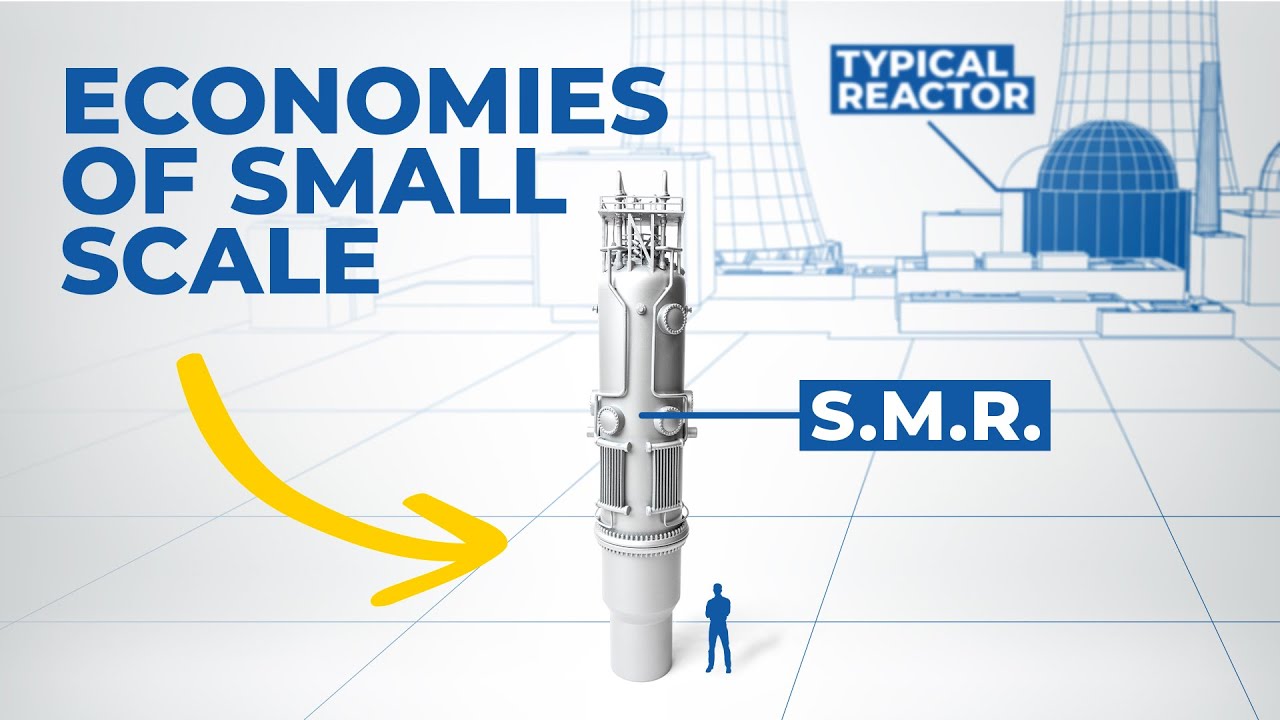
If SMRs work there are notions to place them in neighborhoods. Rather than one big power plant there’d be lots spread all over. No need for those giant power lines and maintenance.
Nowhere close to happening but it is a vision for the future. Maybe wrong, maybe right but being thought about.
Here is a pretty good video discussing it. It is an unproven tech but being seriously considered:
I still don’t understand why breeder reactions aren’t an option. The technology has been around since the 1950s, and there are endless thousands of years, if not millions of years of potential fuel. Electricity is just part of the energy system and part of the production of greenhouse gases though.
As far as writing off future technologies as naive, we’ve already seen a lot of declines in the cost of wind and solar power over the last 15 years. Hopefully by 2040 we have far cheaper wind, solar and battery power.
An EV has 8kg of lithium in it. The world has close to 100 million tons of lithium.
COP30 just recently finished. Aside from the rather unsubtle metaphor we were presented with (the international mechanism for dealing with climate change literally catching on fire), it was a very sober reminder of where we are and… and how little we’re doing.
The talk I watched on the state of the Antarctic underscores how quickly things are changing for the worse (climatologically speaking). https://m.youtube.com/watch?v=YjYkKvwW-Sw
And yet we (as an international community) can’t even commit to a roadmap to begin phasing out the single biggest cause of the problem - fossil fuels.
If that isn’t the most damning indictment of our “progress”, I don’t know what is.
There may be lessons to learn in the history of California’s smog. It is a whole lot better than it was sixty years ago. A look at how it was done may provide some insights.
For the average driver, the differences are small. We need to get a smog check every two years to renew registration. The window sticker on every new car has an added $500 option called the ‘California Emissions Package’. Gasoline is more expensive by about $1.00/gallon. That’s about it.
There is more of an impact on auto mechanics, both professional and amateur. for the pro’s, the smog check business looks like a source of income. For the amateurs, it looks like a lot less fun. Fixing a car is fine. The ‘improvements’ they used to do are no longer. If you modify an engine, it won’t pass smog. It may be that at my advanced age, I don’t notice but, one of the fun things kids used to do was to install headers.
The average person did not like breathing that air. They were not voluntarily doing anything about it. One person making no smog was not going to make a difference. It took collective action by the government. In a democracy, that action could not inconvenience the average driver.
Electric vehicles are not good enough yet. The market for Tesla’s was already beginning to soften even before Elon went nuts and showed his true colors. The people who considered them cool enough were willing to plan their trips around charging. They set their houses up so they can charge overnight in a garage or driveway. If fast chargers are the only option, you need to spend about an hour instead of a few minutes. You need to do it twice as often as you would fill up the tank.
For electric vehicles to completely replace internal combustion, we will need curbside level II charging. Many people park their cars overnight on the street. If charging is more convenient than pulling into a gas station people would buy EV’s when it’s time for a new car. Until then, we can’t expect much.
Before Fukushima, I was beginning to come around on nuclear power. At three mile Island, the containment did hold. At Chernobyl, the Russians made fools of themselves. They thought they were so good that they didn’t need containment.
Fukushima suffered a thousand year event. The evidence it could happen was there. The history was a good as could be expected from that long ago. It was difficult to get good numbers on how bad it could be. ISTM that that would mean they needed to be really conservative in the measures to deal with it.
It was long my hope that this sort of incrementalism was going to be our path forward. But we’ve pissed away the time needed for such measures to be effective.
To meet any of the emissions pathways that aren’t classified as “really bad bordering on catastrophic” we need to cut emissions by like 6% every year going forward. That isn’t a few hundred dollars on the price of a car and a smog check. In the global context, that is essentially saying we need half of all US’ emissions (or all of Europe’s) to go away next year.
Our approach (certainly here in the US) is consistent with our approach to pretty much any challenging and expensive issue. Ignore it, just assume future generations will come up with some miraculous solution, and impose the calamitous costs on future generations to avoid ourselves incurring any inconvenience or minor cost.
Selfish and short-sighted. Tho not sure exceptional in that respect.
And even with a thousand year event, Fukushima managed to stay almost completely safe. It’s stark evidence of just how safe nuclear power is: If you were on the fence before, you should be firmly pro-nuclear, now.
There’s also the issue that, with how rapidly we’re altering the climate, thinking of things in terms of X year events isn’t particularly useful. Because those X years apply to the old regime and tell you very little about how things might be under this new climate regime we’re creating. That might be a decadal event going forward for all we know.