# Arnold Schoenberg and Jazz
**URL:** https://boards.straightdope.com/t/arnold-schoenberg-and-jazz/1015477
**Category:** Cafe Society
**Tags:** music
**Created:** [March 12, 2025, 3:54pm UTC](https://boards.straightdope.com/t/arnold-schoenberg-and-jazz/1015477 "2025-03-12T15:54:59Z")
**Posts on this page:** 9
**Page:** 1
### Author:  [@DPRK](https://boards.straightdope.com/u/DPRK)
#### Post date: [March 12, 2025, 3:54pm UTC](https://boards.straightdope.com/t/arnold-schoenberg-and-jazz/1015477/1 "2025-03-12T15:54:59Z")
If you type “Arnold Schoenberg” into Wikipedia, the introductory paragraph reads
> **Arnold Schoenberg** or **Schönberg** (13 September 1874 – 13 July 1951) was an Austrian and American composer, music theorist, teacher and writer. He was among the first modernists who transformed the practice of harmony in 20th-century classical music, and a central element of his music was its use of motives as a means of coherence. He propounded concepts like developing variation, the emancipation of the dissonance, and the “unity of musical space”.
On this board there are comments like
> [@Arnold Schoenberg fans--unite!](https://boards.straightdope.com/t/arnold-schoenberg-fans-unite/268979/1):
>
> In case you’ve never heard of the man, he’s a classical composer. His music from the late 19th century was tonal but still blazingly original. Then, in the 20th century, he pretty much invented atonal music. What’s beyond dispute is that he invented the 12-tone method of composition, in which every tone of the Western scale must be used before it is repeated.
What I am looking for, to make it simple, are links or references to his writings on jazz harmony.
---
### Author:  [@Aeschines](https://boards.straightdope.com/u/Aeschines)
#### Post date: [March 12, 2025, 4:59pm UTC](https://boards.straightdope.com/t/arnold-schoenberg-and-jazz/1015477/2 "2025-03-12T16:59:02Z")
Whew, I wrote that 21 years ago!
I applaud your interest in this great composer. I plugged the question into Gemini and got this:
> [@google gemini](#):
>
> While Arnold Schoenberg is most renowned for his revolutionary contributions to classical music harmony, particularly his development of the twelve-tone technique, direct, extensive writings specifically focused on “jazz harmony” are not a primary part of his published works. However, his general harmonic theories have had an impact on how later musicians have thought about harmony, and that includes those who have worked in jazz.
This jibes with I have seen–or not seen–myself. I’ve not seen any quotes by AS on jazz itself (I suppose he had to have said something somewhere) and nothing longer about it. Maybe the closest thing he did to jazz was this (not that it’s necessarily close at all; I think I heard it a long time ago):
> [@google gemini](#):
>
> “Begleitmusik zu einer Lichtspielszene” (Accompaniment to a Cinematographic Scene):
>
> This is a significant piece that demonstrates Schoenberg’s interest in the cinematic. It’s music designed to accompany an imaginary film, with sections titled “Threatening Danger,” “Fear,” and “Catastrophe.” This shows his exploration of how music could convey dramatic and emotional states in a visual medium.
AS fled Nazi Germany (he was a non-practicing Jew), came to live in the US, and ended up teaching at UCLA. So he was close to the heart of the movie industry, and had an interest in writing for movies, but it seems nothing came of it. The above are the only facts I’ve seen that put his life in the context of non-classical forms of music. Hope this helps!
---
### Author:  [@xtenkfarpl](https://boards.straightdope.com/u/xtenkfarpl)
#### Post date: [March 12, 2025, 7:18pm UTC](https://boards.straightdope.com/t/arnold-schoenberg-and-jazz/1015477/3 "2025-03-12T19:18:35Z")
I’m not really sure Schoenberg had any connection at all to jazz?
He seemed to be the ultimate evolution of classical harmony beyond traditional tonality.
Finally rejecting all the old rules of harmony in favor of what seemed to be a rather mathematical approach?
Whereas the bebop guys, as far as I can see, sometimes just winged it: chromatic notes not in the scale, who cares? Of course many of them were very technically skilled: you have to know the rules before you can break them!
---
### Author:  [@DPRK](https://boards.straightdope.com/u/DPRK)
#### Post date: [March 13, 2025, 6:01am UTC](https://boards.straightdope.com/t/arnold-schoenberg-and-jazz/1015477/4 "2025-03-13T06:01:33Z")
I should say, I do not know for certain that he wrote anything specifically about jazz per se—that is why I am asking.
I learned something about Schönberg via studying his _Harmonielehre_, which does start off teaching classical tonal harmony, you could say, but even from the very beginning he repeatedly goes into long digressions and expositions about, to paraphrase to a ludicrous extent and probably inaccurately, how you have to know the “rules” or guidelines and understand the historical path that led to where we are in order to understand how come you are inevitably led to break them (and he states flat-out that, as far as he is concerned, there is no distinction between consonances and dissonances and any combination of sounds is possible). He hints that things like the 12-tone scale itself may be a provisional compromise that future [he was writing before 1911…] advances in technology will overcome, and so on.
I seem to agree with you that one thing he was _not_ doing was “winging it”, or teaching the student to do so.
---
### Author:  [@xtenkfarpl](https://boards.straightdope.com/u/xtenkfarpl)
#### Post date: [March 13, 2025, 8:15pm UTC](https://boards.straightdope.com/t/arnold-schoenberg-and-jazz/1015477/5 "2025-03-13T20:15:07Z")
> [@DPRK](#):
>
> he states flat-out that, as far as he is concerned, there is no distinction between consonances and dissonances and any combination of sounds is possible
History has not been kind to that idea.
A commentator (Christopher Small ([Christopher Small - Wikipedia](https://en.wikipedia.org/wiki/Christopher_Small)) claimed Schoenberg himself looked forward to a time when grocers’ boys would whistle serial music in their rounds. (May be apocryphal, I can’t find an actual cite from Schoenberg himself).
Obviously this didn’t happen. There seems to be something in human physiology that is attracted to some kind of harmonic relationship based perhaps on the physical overtones of vibrating strings etc. Resonance, perhaps?
On the other hand, I understand that some non-western musical traditions use microtonal scales that sound unusual to ears used to western music. Though I _think_ they are all divisions of an octave: are there any musical traditions that don’t recognize an octave as a similarity?
> [@DPRK](#):
>
> He hints that things like the 12-tone scale itself may be a provisional compromise that future [he was writing before 1911…] advances in technology will overcome, and so on.
Of course we now have instruments that can produce any pitch to any level of precision.
Though as far as I know almost all experimental microtonal scales are logarithmic divisions of an octave?
Sorry, getting a bit off topic here… as I’ve said, I don’t know of any writings by Schoenberg himself about jazz. Though I’m sure some of the more exploratory jazz musicians of the 20th century may have known about him and absorbed some ideas?
---
### Author:  [@DPRK](https://boards.straightdope.com/u/DPRK)
#### Post date: [March 14, 2025, 6:22pm UTC](https://boards.straightdope.com/t/arnold-schoenberg-and-jazz/1015477/6 "2025-03-14T18:22:05Z")
> [@xtenkfarpl](#):
>
> Obviously this didn’t happen. There seems to be something in human physiology that is attracted to some kind of harmonic relationship based perhaps on the physical overtones of vibrating strings etc. Resonance, perhaps?
He outlines all of that, and its relationship to scales and chords and consonances and dissonances, in his book, even as he throws out a big fat disclaimer that he does not know anything for sure about whatever is the underlying true physiological basis of harmony in the hearing and the brain.
However, if I have understood something about the history, to grossly simplify things, once upon a time intervals like 3rds (tuned in various ways) were considered dissonant and irrational, however later styles changed. As another example, parallel fifths and fourths were OK, but later they were not.
> [@xtenkfarpl](#):
>
> On the other hand, I understand that some non-western musical traditions use microtonal scales that sound unusual to ears used to western music. Though I _think_ they are all divisions of an octave: are there any musical traditions that don’t recognize an octave as a similarity?
Schoenberg mentions “unusual scales” of other cultures, among other things, as evidence that the history of what dissonances have actually been selected in practice hardly leads to a correct judgement of the real relations, because the “unusual scales” (including microtonal scales) must be just as natural, and their tones are often more naturally tuned than those of a tempered scale.
Now, you are asking about traditional scales that do not incorporate the octave; that is an interesting question. I am no ethnomusicologist, unfortunately. Some music is not polyphonic at all, for starters, which would affect how you might tune your instrument. Another thing to consider are traditions such as Ancient Greek, Georgian, etc. which are based on perfect fifths and quartal/quintal harmony. If you do a little arithmetic, you can see that perfect fifths do not combine into octaves.
> [@xtenkfarpl](#):
>
> Of course we now have instruments that can produce any pitch to any level of precision.
> Though as far as I know almost all experimental microtonal scales are logarithmic divisions of an octave?
Many are, but, especially if you admit “experimental” scales, there are plenty of examples of things like the Bohlen-Pierce scale (3:1 instead of 2:1). However, as mentioned, even if you do start from an octave, dividing it _equally_ is arguably less traditional than not doing so.
The thing about limitations of instruments is that, maybe not so much with a violin, but if you want to play arbitrary microtones on a keyboard instrument like a piano or harpsichord you quickly run into the problem of requiring lots of keys, and the resulting instrument being rare and expensive. Certainly in the 19th century, but even today when it is trivial to produce _any_ pitch and any timbre to any level of precision, for example via digital synthesis, how many musicians are trained on it?
---
### Author:  [@K364](https://boards.straightdope.com/u/K364)
#### Post date: [March 14, 2025, 8:57pm UTC](https://boards.straightdope.com/t/arnold-schoenberg-and-jazz/1015477/7 "2025-03-14T20:57:26Z")
Just some nitpickin’ @DPRK
> [@DPRK](#):
>
> parallel fifths and fourths were OK, but later they were not.
Just to clarify, the interval of a perfect fifth is consonant, but parallel fifths (two voices a fifth apart moving together ) are not ok in counterpoint. Fourths have to be prepared properly to be ok otherwise they are considered dissonant.
> [@DPRK](#):
>
> you can see that perfect fifths do not combine into octaves.
Only if you try to map 12 fifths into 7 octaves which is a Pythagorean tuning problem.
---
### Author:  [@DPRK](https://boards.straightdope.com/u/DPRK)
#### Post date: [March 15, 2025, 12:15am UTC](https://boards.straightdope.com/t/arnold-schoenberg-and-jazz/1015477/8 "2025-03-15T00:15:02Z")
Thanks for the comments; I did post rather hastily. I also heartily recommend actually reading Schoenberg’s book if anyone is interested.
> [@K364](#):
>
> Only if you try to map 12 fifths into 7 octaves which is a Pythagorean tuning problem.
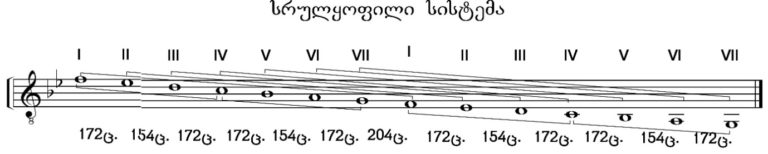
Yes, the Circle of Fifths. Specifically about Georgian music, it does seem to use octaves as well as fifths and fourths (and seconds, sevenths, ninths…) in polyphony
example mode:
[ ](https://www.georgianchant.org/wp-content/uploads/2020/12/page2image32024-768x154.jpg)
however there is a comment on Wikipedia that "Because of the peculiarity of the scale system based on perfect fifths, there is often an augmented octave in Georgian songs and church-songs. I think I know what they mean— and there are certainly chords that sound unusual or even dissonant if you are only used to more Western harmony, but it doesn’t mean there are no octaves—however I will have to defer analysis to someone who actually knows what they are talking about and has not merely heard a couple of folk songs way back when.
---
### Author:  [@Moonrise](https://boards.straightdope.com/u/Moonrise)
#### Post date: [March 15, 2025, 9:11am UTC](https://boards.straightdope.com/t/arnold-schoenberg-and-jazz/1015477/9 "2025-03-15T09:11:38Z")
> [@DPRK](#):
>
> However, if I have understood something about the history, to grossly simplify things, once upon a time intervals like 3rds (tuned in various ways) were considered dissonant and irrational, however later styles changed. As another example, parallel fifths and fourths were OK, but later they were not.
I’m going from memory here, but the 19th century saw a massive extension of the notes that could be included into chords. Up until the classical era, you had the tonic, the third and the fifth, plus sometimes the seventh. The Romantics started using the 9th, the 11th and the 13th and later on their altered, more dissonant, versions. On top of that, Wagner introduced the famous Tristan chord which does not resolve to a consonant one thus leaving the harmony uneasily suspended. By the beginning of the 20th century some composers like **Richard Strauss** were using so many additional dissonant notes that the tonal center of some pieces was difficult to determine. Tonality was becoming diluted beyond recognition.
Schoenberg’s twelve-tone harmony was both an admission that traditional harmony had stopped being functional and an attempt to reintroduce rules. In that sense, his thinking is almost reactionary, a need for more clarity and order. Its aesthetic merits are debatable, but his reaction was probably necessary, and it opened countless new paths for younger composers to explore including jazz musicians.