It looks like some new information has emerged as to what caused the power outage on the ship:
//i\\
It looks like some new information has emerged as to what caused the power outage on the ship:
//i\\
Uncle Sam goes to court.
The EIA is reporting that Port of Baltimore coal shipments have rebounded since the collapse.
The PBS series Nova has published a documentary on the bride collapse (54 minutes):
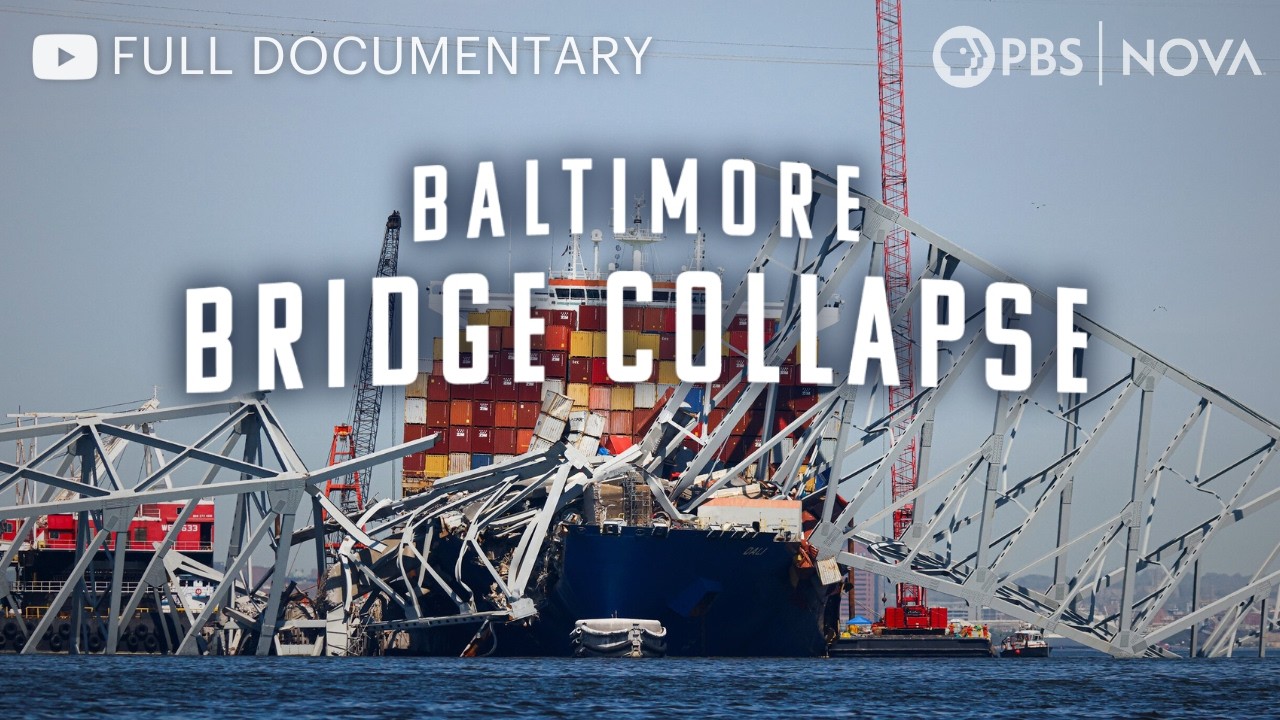
Thanks for posting. I saw a preview for that and wanted to watch.
Anyone remember the old proverb which goes something like:
“For want of a nail the shoe was lost,
For want of a shoe the horse was lost,
For want of a horse the rider was lost,
For want of a rider the message was lost,
For want of a message the battle was lost,
For want of a battle the kingdom was lost—
And all for the want of a horseshoe nail.”
It turns out the ship failure might be something similar:
That article is terrible. It doesn’t really explain how the label caused the problem. And the illustration contradicts itself.
Here’s a better article with photos of the problematic wires showing what the issue was:
See the second photo in particular.
TIL the word allision:
the act or an instance of a ship striking a stationary object (such as another ship that is not underway) —distinguished from collision
Ditto. Never seen it before now and spent a few minutes learning the history and etymology.
One neat example: in a sample poem, the encounter of a lover by another is captured with the verb form “to allide.”
From here:
…in maritime law, a collision and an allision are different. When two moving vessels crash, that is a collision. But when a moving vessel crashes into a stationary object, that is an allision.
- Collision. This term refers to an accident involving two vessels. Two ships passing one another must adhere to the Rules of Navigation. They need to communicate to decide which vessel will “stand on” and which will “give way.” If the vessel that is supposed to give way does not act to avoid a collision, the other vessel must do anything possible to prevent the accident.
- Allision. This term refers to an accident between a vessel and a stationary object. A stationary object is any object that isn’t in motion, for example, a bridge, pier, dock, or bridge. Sometimes ships crash into oil platforms or drilling rigs, causing fires or disastrous oil spills.
My gawd. I just followed that link on my phone without all the anti-advertising features on my PC. I could hardly find the article between the ads. And they were all for BS, not real products. So much for CBS, that bastion of traditional MSM.
We are so doomed.
As to the substance …
Lotta ways for tags to get in the way of connections and bundles and routing and clamps. None good.
The crash that caused the bridge to collapse and will cost billions to replace
was triggered by…….. a loose wire. Story here:
The cargo ship Dali that ran into the bridge has been fixed and returned to service.
See paragraphs at bottom of this page:
Is this the same or a different wire to the one @PastTense posted about two days ago?
Read before posting… 
Ooops. Guess I sould have read some of the more older posts instead of just a few recent ones before making my comments. I find it incredible that a little bitty bit of wire could trigger such a major disaster.
As discussed waay upthread, cargo ships aren’t built with all that that much redundancy. The design assumption seems to be that they can just stop wherever they are, drift around on the big ocean awhile, and get it fixed at their leisure.
As a separate matter, even machines designed with lots of deliberate redundancy of their operating equipment tend to have little redundancy in the control and sensing paths of that equipment. Such that loss of a single sensor or control takes whatever functional component offline, despite it being actually healthy. Which can start a failure cascade.
Cargo vessels of this size - and actually significantly smaller - usually have three gensets. At sea they will commonly operate on one but have one on standby such that it should auto start within a few seconds if the first genset goes “off the board”.
Commonly when in restricted waters - as here - they will have two gensets running.
Nonetheless I’ve been involved in several ship incidents where all power is lost because - as you identify - when critical switchgear itself failed it was a chokepoint that no backup system bypassed.
This reminds me of the two crashes of the 737-MAX. A failed sensor on a system that did not automatically go offline. It pushed a control surface to one extreme instead.
Bumpdate:
Criminal charges filed against two companies and the ship’s technical superintendent