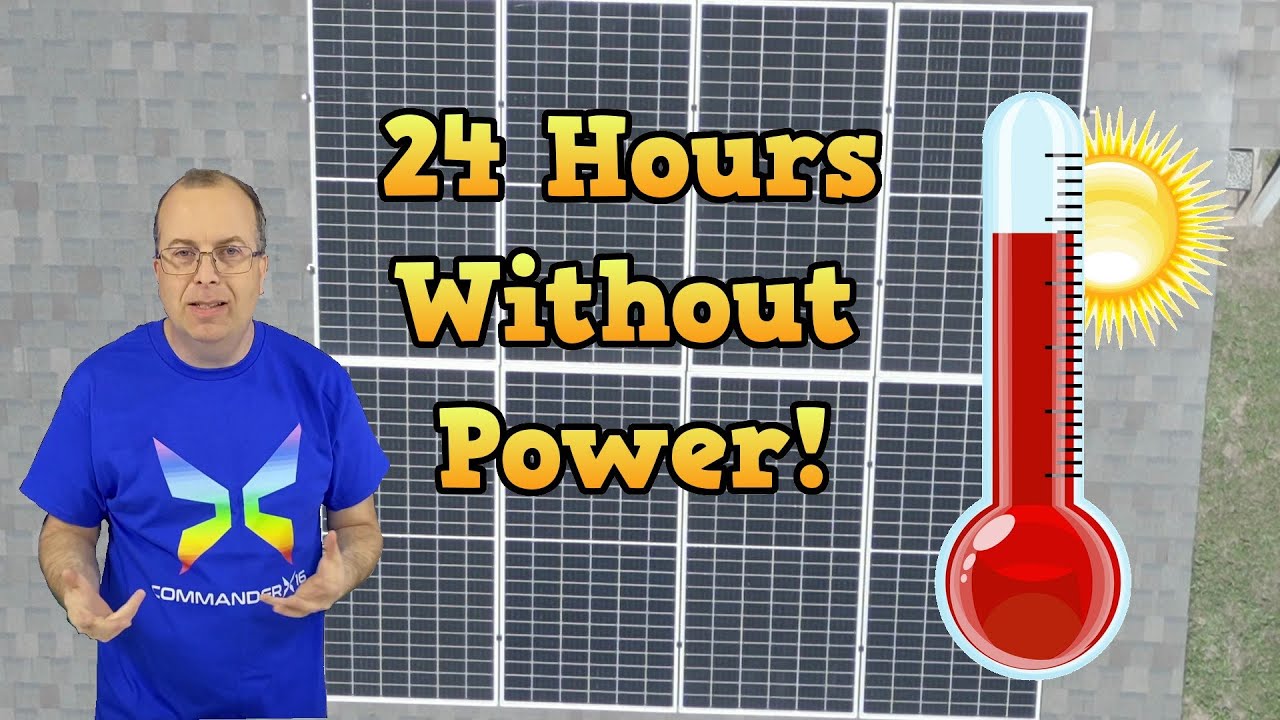
I just got them installed on my house. We are going to do what’s called net metering. Not ‘internet’ but net use. So, I sell the extra power I’m not using to the power company, and buy it back at night. I’m told my bill will be $15 a month.
It’s not up and running yet. Permiting takes a while.
I got in just under the wire for the tax incentives. My tax person said to go for it.
Another big reason we went for it is we are very newly retired. And had the money from a recent home sale. Now I don’t have to be surprised by a crazy electric bill.
Nothing should be need to be done with them. All the wires and inverters are in the attic. Some systems leave them exposed on the roof. If one panel gets damaged, it doesn’t take the entire system down. I guess each panel has an inverter. Not real sure how this works.
And there is some sort of wire mesh around them so critters/birds don’t get under them.
I was told these panels can handle hail up to 5" in diameter. I’m a little dubious about that. But they must be pretty robust.
I think I have 19 panels. When told that I would need 17, I said to add two more. Everything is going electric.
This is also sized for two electric cars and a hot tub. We also use an electric heater in some rooms so we don’t have to keep the house real warm using NG. My office for instance, and what we call our ‘play room’ (chess & electric piano [retirement is nice]).
This sounds quite a bit like your typical rural electrical co-op. I’ve belonged to several in the past. The co-op did not own the power plants, but they did own and maintain the substation(s), transmission lines, etc., that served the community. We got an annual rebate/dividend check each year around March. Don’t see that it would operate much differently if you substituted a solar farm for the substation(s). Guess you’d have to still regularly buy power from a third-party or invent a storage system.
The solution for “The 8 Bit guy” was to set off-grid lines with specific outlets in his studio and home,
His next step will be to get a larger battery system to use the energy he is not using coming from the solar panels. Even with those limitations, he does get very significant savings, and it is interesting to check his test of how to use that limited system if there was an outage, he shows how cooling mostly the bedroom and his study can save a lot. He makes a good argument that a central cooling/heating system makes less sense nowadays, having units in each room is more economical, particularly when one gets enough solar panels and batteries.
Also, yes, commercial solar projects; which, at least around here where most crops grow better when not shaded, are somewhat controversial.
Designing them to work with farming systems is possible and sometimes done; but they have to be designed for specific farming systems — a design that works with chickens is likely not to have enough ground clearance to work with cattle and cattle are likely to put a lot more stress on the supports; sheep might work with one design but goats would be a whole different issue as they climb and jump; lettuce may grow fine in the shade but in this area not tomatoes; and the panel spacing needs to allow for the particular farm equipment to be used, which varies both with crop and with size of operation and to some extent with the particular farmer. So agrivoltaics while definitely a worthwhile idea limits the farmer and increases the effective cost of the installation, both in that it may cost more to build and that it may produce less power for a given area.
So often what’s proposed isn’t agrivoltaics, but shifting farmland to solar production solely; which has obvious downsides. And then, of course, there are the people who just don’t want to look at large installations. I don’t know whether there are studies about whether really large ones affect local weather (and local weather affects wider weather patterns).
Putting as many panels as reasonably possible on existing roofs dodges all of the above. Some other installations will be needed, but not as many.
Well that’s Angi’s list. And they have to fail first. There are no moving parts, I suspect they will do fine.
It was kind of interesting. We bought a new home (5 years old) and decided to go all the way. About 1/3 of the homes in this subdivision have solar. So it seems to be working.
How far can electricity be shipped before resistance makes it not feasible? Say the western U.S. had a surplus and the eastern U.S. had a large deficit?
Every inch costs something. “Feasible” is entirely in the eyes of the financiers. There is some cost that’s too much for them to pay.
The problem today is the physical capacity to move large amounts long distances doesn’t exist. The pipes are too small. It was built for a lesser consumptive era and where the assumption was most generation was local and the long haul was as much for synchronization and reliability enhancing tie-in as it was for bulk transport.
Trying to remote all or even most of power production for the PNW or New England to the Southwest or Southeast is a non-starter. At least a non-starter until after somebody pays to lay one hell of a lot more, and more advanced, long haul transmission lines.
We are part of a community solar project. We pay for a small portion of the solar power generated on a farm outside of Chicago. That gets us credits on our regular ComEd bill. It ends up being a 20% discount on a portion of the bill.
My utility company has just unilaterally signed me up for something similar. I can opt out if I want to; but, although I do want to research the particular setup a bit, I expect I’ll stay in.
I can’t afford to put my own panels up, though I expect it would save me money in the long run. I know several people in the area who have done so and they’re happy about it.