I saw an article once, a long time ago, on this. It described the elaborate mathematical computations that our brains must be implicitly making in order to do the kinds of tasks mentioned in this thread. For example, to catch a frisbee, we have to continually judge its distance at it approaches us, using as input the angle of parallax between our left and right eyes, and some elaborate trigonometry.
Even honeybees, in navigating by the sun, and then reporting back to the hive with their waggle dances, are doing some impressive mathematical processing. (Their waggle dance even adjusts for the advancing position of the sun in the sky.)
Maybe natural biological brains are quantum computer systems?
They just kind of looked that way doesn’t it and they probably have the potential to be almost infinitely more powerful than they are now genetically speaking
The most striking example that comes to mind immediately is the peregrine falcon. When in a stoop (diving down at prey), they can reach 200+ mph. Imagine zooming in on your target at that stage. If prey on or near the ground, there is the danger of flying into the ground, but if the falcon pulls out too soon, the prey is missed. The same is true for hitting prey in mid air. This requires reactions on the part of the falcon that is measured in milliseconds. Note that this is a reaction rather than a hard wired reflex.
Reflexes like a knee jerk when the doctor taps a mallet near the kneecap are preexisting neural pathways that occur in the spine and occur without thought. This is automatic and very fast. basically the pathway goes from a pressure receptor in the tendon to your spinal cord, and is automatically sent out a motor nerve to cause a leg muscle to contract, thereby moving the leg.
Responses are more complicated and flexible; an example might be when you drop a knife and don’t attempt to catch it as you might do with another harmless object…in fact in this case you might even move your feet to avoid the knife hitting a foot.
These can be fast, but involve processing with the eyes, brain, etc.
The falcon is amazing with the responses involved in flight.
There was a post on the defunct Mythbusters forum where a kid who obviously just learned geometry claimed that dogs new geometry because they would take the shortest path on the shore when retrieving an object thrown in the water. This was also claimed in one of those incredible/extraordinary claims shows on Discovery or the History channel.
Despite everyone clearly explaining that the action was just inbreed hunting behavior with no conscious calculations on the part of the dog, the kid insisted “I WANT THE MYTHBUSTERS TO TEST IT!”. This type of reaction was the main reason the forum was closed.
I saw real life amazing nature escape once. A small bird was diving at a butterfly in flight. The butterfly made a slow turn mid-flight and the bird missed it by inches. Never then and never now have I considered either creature made a conscious calculation of their move. I highly suspect the butterfly just caught a lucky updraft that moved it out of the way.
I don’t know that this is true. I became much more coordinated after I learned calculus and partial differential equations.
It’s not that I was actually doing them in my head, but that understanding how they worked made me better understand how an object moved in free fall. I’m likely a small minority on this, but my ability to catch, throw, or hit a ball went up substantially once I understood how it was moving.
People sometimes tell me they hate math. I tell them, “Catch!” and toss them something. I then explain that they use fairly complex math in order to catch it.
Yes this reminds me of an interaction that I had with a LaRouchie trying to convince me that soap bubbles were smarter than humans because by minimizing surface area they could solve integrals that mathematicians couldn’t (at least not in closed form). I don’t think we ever got to his main point about why this meant that LaRouche was wrongly convicted as we never got past this point.
As far as what the various animals are doing, it is probably much closer to a simple look up table than it is to symbolic mathematics.
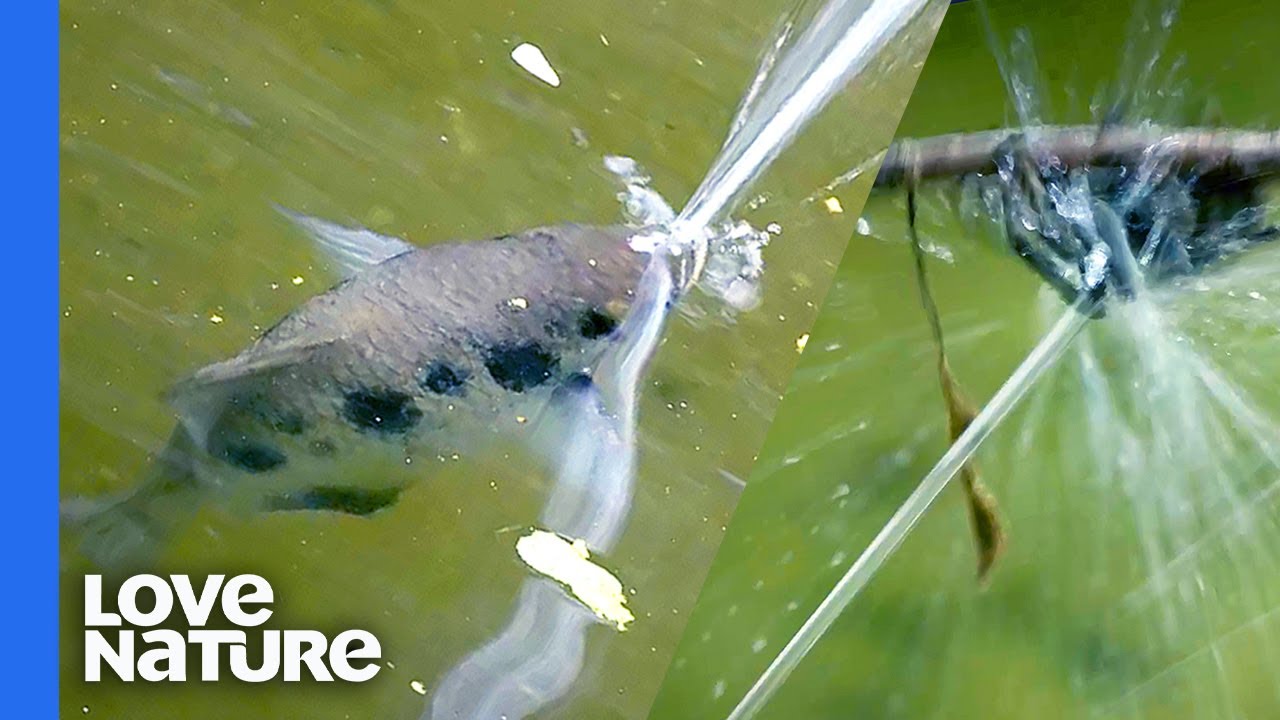
I can’t think of any animal that can accurately throw things, possibly a dolphin to some degree. But for the most part less intelligent animals simply can’t throw well. It would seem the next step after throwing would be launching things.
I think it more physiological. Neanderthals were, as far as I can see, as smart as homo sapiens but, because of the way their arms were built, they couldn’t throw a spear to save their lives.