I imagine that every coastal city in the world is built at least partly on landfill. Land near the heart of a city is valuable enough that it’s worth making more.
Specifically the Marina district. That, and a habit of building under-braced garages on the bottom floor is why quite a few buildings collapsed during the Loma Prieta quake.
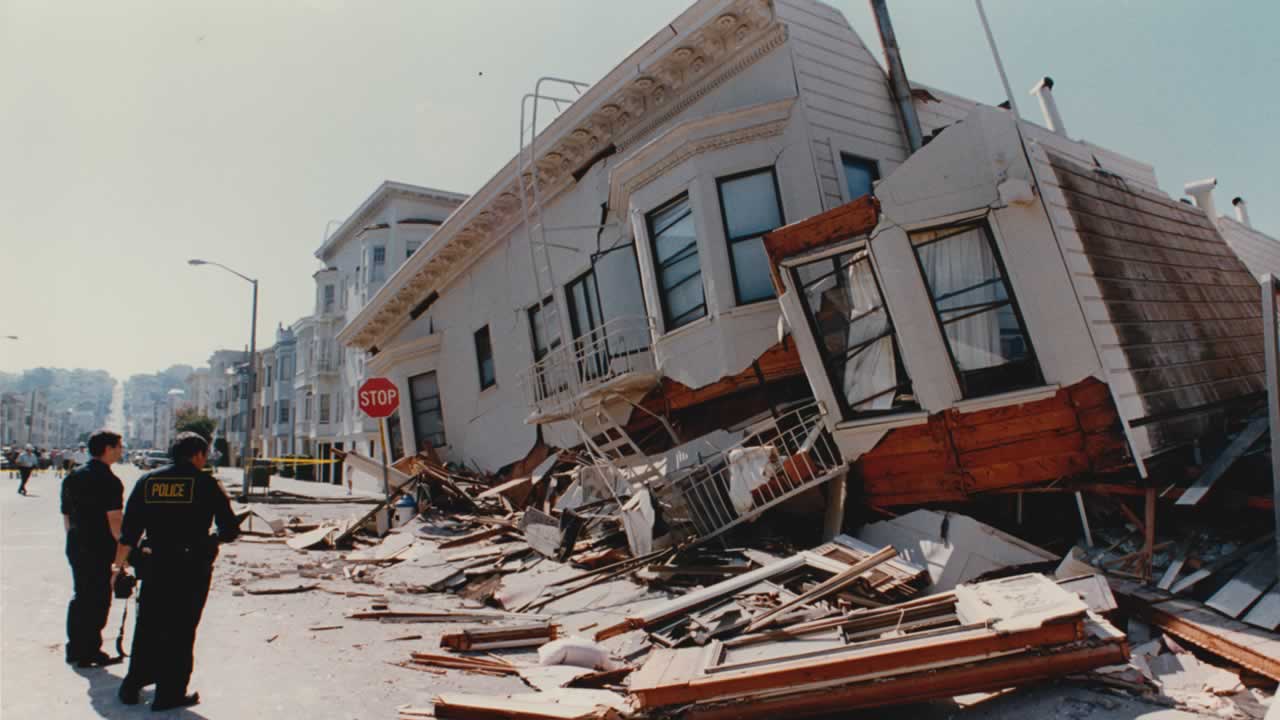
The city is mostly built on hills (Nob Hill, Russian Hill, etc) which is why the little cable cars climb halfway to the stars, something hard to do on fill.
The Marina is fill, and a considerable amount of San Francisco Bay has been filled in and built on.
Many. The question really is did they manage to keep their fortune after supplies, girls and whiskey?
My friend’s sister was killed in one of those buildings, possibly that very one. He had the pleasure of watching live news coverage of the aftermath of the disaster and seeing his sister’s actual destroyed house.
When Richard Dana (Two Years Before The Mast) made another voyage to California in 1860, this time by steamship, he found himself moderately famous in California, most everybody who had gone to the Gold Rush had read his book, as it was almost the only information available about the California coast.
We had a similar situation but with better results. A good friend of ours lived in the Marina District and was not answering his phone in the days after. One of the homes that had not only collapsed but caught fire was about a block away and we watched in frustration as the news helicopter kept circling the fire, and never quite looked up the block to see how intact Richard’s might be.
It turned out he was in London at the time and the house was fine once the power and gas were restored.
including Treasure Island slowly sinking
MIT is built on landfill put into the Charles in the very early 20th century. Before it moved to Cambridge it used to be nicknamed Boston Tech.
One reason most miners went bust is that they were too late to the party. By the time they were able to scrape the gear together and find their way to the gold fields, the best claims were already staked or the run had petered out. A lot of them died trying to get there quickly over routes that were untried and through the most arduous of landscapes, and even more died because they were inexperienced and unprepared for life in a wilderness. But by far the biggest problem was disease. Typhoid was rampant in places like Dawson City, which was basically a swamp with no sanitary facilities.