@BigT you have no context from which to argue your point, and you expect me to provide it for you. And you misstate my own position. I’m not interested in carrying both sides of this discussion just to satisfy a context-free devil’s advocate argument purely for argument’s sake. I’ll talk interpretation of any movie I’vee seen all day long with someone who’s seen the same movie and wants to discuss their own interpretation. I have no interest in convincing you one way or another about a subject you’re not actually invested in beyond a theoretical contrarianism. Thanks for understanding.
John Ford hero worshiped USGrant, and struggled for decades to find a way to make a biopic. Buy he couldn’t find a way to portray Grant’s alcoholism in a sympathetic light so he never made the movie. This from a director whose signature theme was that legend was more important than history.
History is what future generations deem it to be.
Not to get too far off-topic here, but both of the articles linked below address aspects of how rape-revenge films can be viewed as both empowering and misogynistic:
As to the OP, any U.S. film released nowadays which whitewashed its historical subject’s racism would undoubtedly come under critical and popular attack. It is hard, though not quite impossible, to believe any major studio would produce - let alone, release - such a film knowing the reception awaiting it. As such, I believe that currently, it is effectively not possible to make a biopic that (at the very least) excluded any references to racist behavior on the part of historical figures, even in cases where the focus is not on racism, per se.
I think part of the issue here is that American films have long presented polarized portrayals of human beings; i.e., characters were either all good (with perhaps minor flaws) or all bad. Many Euro-movies tend to take a different approach where characters can be equally capable of good or bad behavior. This is both more realistic and more uncomfortable for audiences used to dealing with moral simplicities; and making audiences uncomfortable is generally viewed as a less favorable way for a movie to make money than to provide straightforward entertainment sans moral complexities. Nevertheless, given the current wave of rising racial awareness, there is reason to believe the U.S. approach may be acutely evolving.
Mention? Sure. Make it the overriding theme? Nope.
Let us face it, anyone born before the 20th century was a racist. Poe, Lovecraft, Kipling, TS Eliot, etc. They were men of their time, and that time was racist. Few rose above it.
But since their craft and life are the important things, yes, you could skip over their racism in a 90 Minute film, since you certainly have 90 minutes of more important stuff.
In a book? You’d have to mention it, of course. But maybe leave it to one chapter.
Now with those whose very Raison d ’ être was racism, such as Nathan Bedford Forrest, then it has to be a important and critical part of your work.
It wasnt his Raison d’être by any means- that was his art, his craft his writing- which was caused by his tortured dark life.
In a 90 minute film, you can & may be should skip over it. After all his writing alone is worth more than 90 minutes.
Clue: “too late!”
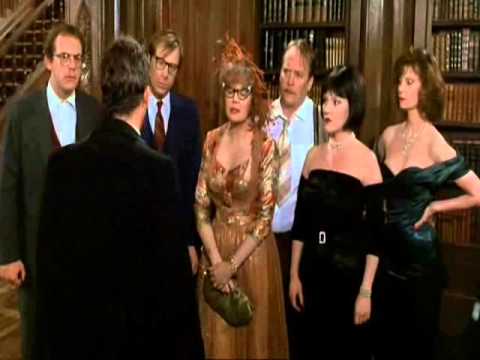
The protagonist of a book or movie is not automatically a good guy. He or she is not always intended to be a sympathetic character.
He was not. He had stomach issues which meant he ate largely a vegetarian diet, but he did not exclusively and suffered when he did eat meat (I believe sausages and pigeon was in there). Some people use the term “non exclusive vegetarian” which is a bizarre set of words for “not vegetarian in the slightest”.
Gandhi movie was racist for not showing how racist Gandhi was (Africa style racist in his case) yeah. Not sure about his vegetarian status, that’s another matter.
Or selective meatarian?
That would fight my ignorance, to some extent.
@lissener, if you try to make a point, and several people don’t get it, and no one does seem to get it, and some of the people ask you for more details — Which is what seems to have happened here — then it’s not reasonable for you to get cranky and aggressive at the people who are trying to understand your point.
You also replied aggressively towards k9befriender, who similarly asked you to provide more information.
You are, of course, under no obligation to demonstrate that the movies you mentioned are routinely considered to be misogynist. But it was clear that no one else in the conversation had seen the movies. And no, no one else is under an obligation to watch movies that you brought up to determine whether your point is true. And even so, they are allowed to ask you why you brought them up, and to demonstrate why they make the point you asserted that they make.
If you prefer not to discuss them with people who haven’t watched them, that’s fine. And I know that it’s hard to express “tone of voice” in text. But the words you used come across as hostile. Please try to avoid that in Cafe Society. Thanks.
This is a good point. I can envision a movie about the early days of the automotive industry, with Henry Ford as the main character (and Rolls, Duesenberg, etc. as major supporting characters), and in that movie, we probably wouldn’t see much of Ford’s antisemitism… and we probably also wouldn’t see much of his childhood, his family, or his non-work-related hobbies. And I can also envision a movie about Henry Ford the man, with parts about his work, and his family, and his childhood, and so on, and his wife, best friend, and parents as major supporting characters, and in that movie, it’d be odd, to say the least, if his antisemitism wasn’t one of the many aspects of his personality explored.
Of course, there’s also not a clear, sharp divide between historical dramas and biopics. Somewhere in between those two movies, there’s a movie where we can be genuinely unsure of whether it should include his antisemitism or not.
Das Boot?
Not a biopic. In any case, although they are fighting for Germany, not all the crew are Nazis. In particular, the captain is openly anti-Nazi, and the hardcore Nazi officer is disliked by the rest of the crew. Most of the crew is apolitical. In general, they are not depicted as bad guys, but sailors doing their duty.
Apolitical? They aren’t portrayed denouncing the Holocaust??? They’re eeevvvilll!!!
While not the same level of evil, US officers and troops are virtually never shown denouncing segregation in the US forces during WWII. In fact, the situation is rarely even acknowledged.
Exactly!
I make every effort to use a neutral tone. Apparently it’s something I’m particularly bad at. I could simply have not replied, but that seemed dismissive and rude. It seemed more polite and respectful to try to explain why I didn’t think I should. Art analysis is opinion not fact, so it struck me as odd that I was being asked to fact check it. Odder still that I was being asked to do so by someone who had no context, i.e. no “standing” on the subject. For me to provide both sides of the discussion seemed kind of absurd, and also would inevitably make it more about me than about the movies. I’m happy to discuss any movie, but it just seems weird to be asked to defend an opinion to someone who hasn’t seen the same movie. I apologize if this seems antagonistic, but I admit I don’t see how it could be. So that seems to be where the disconnect lies. I’m checking out of this thread rather than continue to detail it.
ETA: it’s possible that my efforts to use a neutral tone might have backfired: in trying to sound impersonal I may just sound pedantic which can sound condescending.
As a reader, it’s not so much that–it’s that you said (paraphrased), “These movies are called misogynistic, and that’s wrong,” but folks wanted to read examples of calling those movies misogynistic. The article Dropo linked to was the kind of thing folks were asking for, I think; in any case, it was helpful background. Nobody wants you to defend calling them misogynistic; folks just wanted to see what you were talking about.