I would think that as it boils off, the cold gas would get into more nooks than the hot water. And also, wasps are better adapted to avoiding water than to avoiding a gas, which probably suffocates them even when not cold enough to kill them immediately.
Last summer the wife pointed out some yellow jackets coming from the ground. I was on the riding mower and I dropped the blade down, revved her up and parked over the nest. I bailed out and watched from a distance. It did work but I don’t know that I recommend it. Especially since the blades should stop if you get off the seat but my blade switch has failed.
Insects are endothermic, so the nitrogen not only freezes and suffocates them, but the initial cold front slows them down enough to prevent a fast reaction to the attack. Also, boiling water is only some 60C above their temperature tolerance while liquid nitrogen is more than three times that the other way.
Besides, this isn’t about money… it’s about using one study to say that something doesn’t work, when in reality it doesn’t work for the amount they tested, and they didn’t bother to try larger doses and then declared that it didn’t work at all
It might be inconvenient to carry boiling water across a large property. On the other hand it would be more readily available and you could boil it with a camp stove at the location. Maybe boiling water with cinnamon added would be better.
And it wouldn’t be, to carry liquid nitrogen? Plus, most folks have both a source of water and means to boil it both in their home, so you’d only need to carry it across your property, but very few people have an air condenser in their home, so they’d have to carry the liquid nitrogen from someplace much further.
I’ve had good luck killing burrowing insects by pumping RTV or other caulking material into the hole. The stuff initially blocks the hole, and any insects trying to burrow out through it gets stuck in the sticky mess. Eventually it solidifies and blocks the entrance. Any insects that were trying to dig their way out generally got stuck in the stuff before they could succeed, and eventually any left just starved.
Not as dramatic as liquid nitrogen or molten aluminum, but you don’t need the special equipment
i would think it would work underground but above ground wasps nest we just buy the bog standard cans of fake snow around xmas and hise em down til they fall in the bucket of water we catch them in
My SiL and brother have a yellow jacket nest inside the siding of their house only ten feet from the door, and the walkway goes right by it. How do you get to them to kill them without taking off any siding?
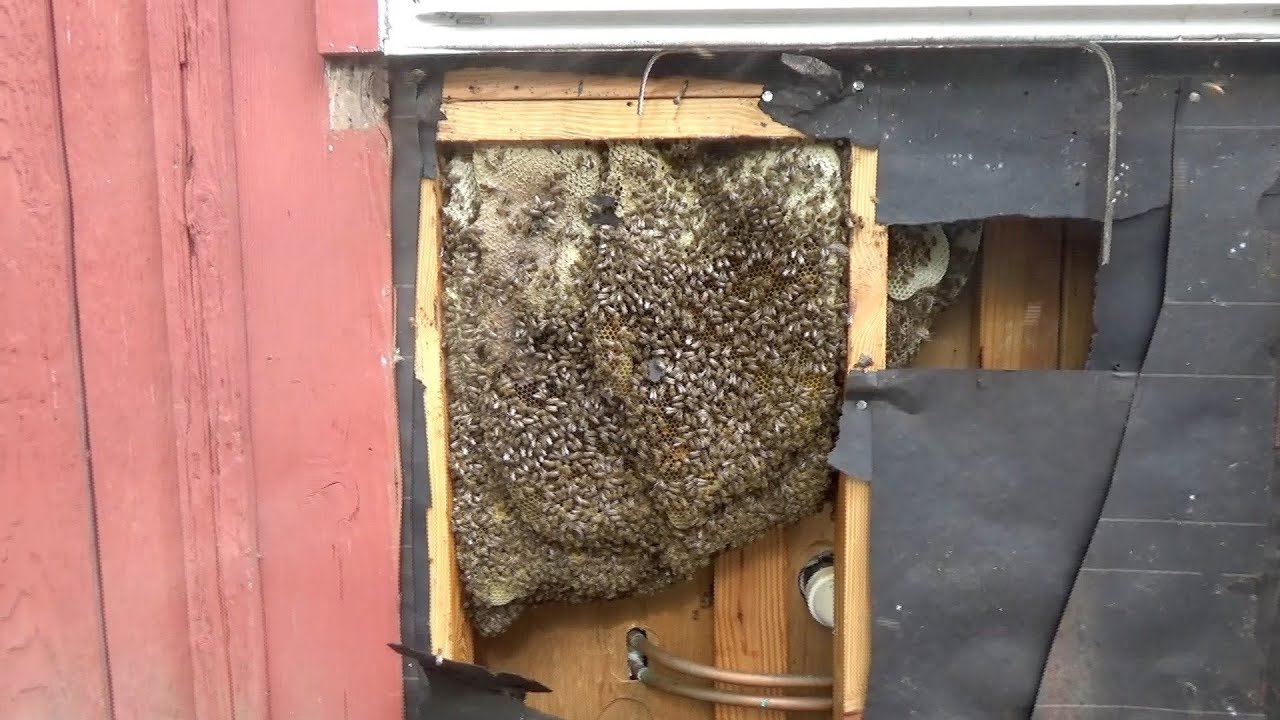
Honey bees removed from a wall and relocated elsewhere. That required cutting and patching the wall. You can’t see any difference after its patched.
Siding is easier because the carpenter can lift it up, remove the nails, and it will come off. It can be reinstalled over the patched wall without any damage.
I think hornet removal would be similar. Except they have to be killed before removing the nest.