While I don’t doubt that Bad Bunny met with NBC personnel to go over his set list, and there were likely numerous contracts signed to explicitly state that cussing on live television was verboten, those meetings were not for the purposes of creating subtitles.
I doubt even Halftime Acts of Super Bowl Past, who very frequently had pre-recorded music, submitted the audio for it to be subtitled. I believe that’s all outsourced to closed captioning companies to be done in real time.
I don’t know about broadcasts past. But the idea they were doing it entirely live seems unlikely to me based on my observations.
First, only the singing was transcribed. Whenever people spoke in Spanish outside of the music, the captions said “(Speaking in Spanish).” If they had Spanish speaking captioners who could handle the lyrics so well, it seems odd they would be unable to do so for the speech.
I did consider that maybe they Googled the lyrics ahead of time. But the problem with that is that they wouldn’t know how he would have altered the lyrics for broadcast. And it seems unlikely they would have broadcast the profanity themselves. And I did not notice any indication of bleeping out words.
I did not observe it myself, but @dolphinboy claims that the lyrics even sometimes were posted before they were sung. If so, that seems like a smoking gun.
I find it quite likely that whoever captioned the show for NBC had access to the altered lyrics.
Yes. Agree fully. “Oh no, I might encounter an untranslated foreign language as I move through my day, quelle tragédie.” No.
I will also add, relative to the above, that it’s quite amusing to be browsing a charming little roadside convenience store in, like, rural Albania, and realize that the background music on the overhead speakers is, say, the unexpurgated version of “Wet Ass Pussy.”
Living overseas has given me new perspective on just how easily and rapidly Americans allow themselves to be drawn into a twisted-panty frame of mind.
Funny… the dancing actually gave me some idea of what was going on. I agree, the words were lost on me, with my not speaking more than No hablo español, but that’s why I didn’t just listen with the sound in the background.
Pretty sure the twerking was part of what outraged the pearl-clutchers. But what did they expect from something titled “I Twerk Alone”?
I’d be quite impressed if the triggered magaflatearthers were even aware that Puerto Rican Spanish is different from what they may have been exposed to back when schools actually required study of a foreign language. Of course I’m not impressed by said magaflatearthers’ usual dishonesty.
I don’t think there’s any real consistency in what dialect of Spanish is taught in American schools. It’s likely to depend on how the teacher learned it, and many Spanish teachers are lifelong speakers of the language, who learned it naturally, rather than in school. The better teachers will make note of ways in which different dialects differ.
Does anybody remember that the performers at the 2022 and 2025 halftime shows were rappers? I’ll bet none of the people complaining about Bad Bunny’s Spanish could understand any of their English either.
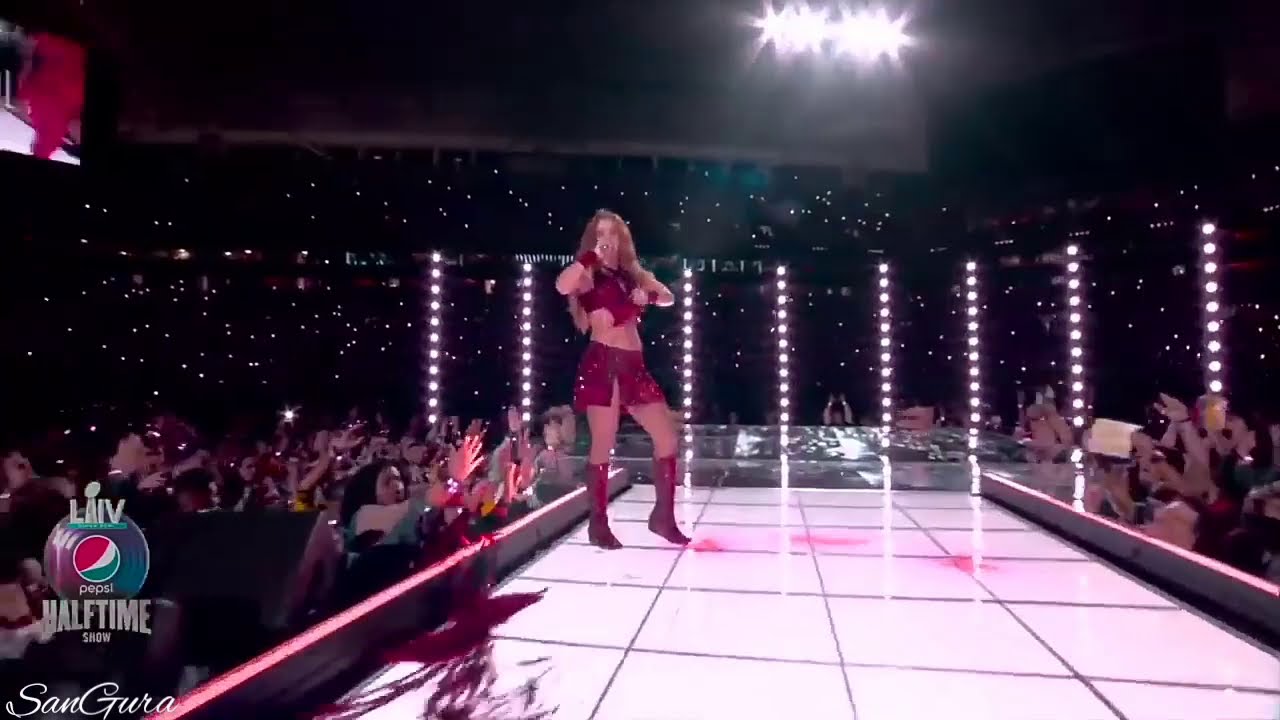
Another fact that I never saw mentioned in the several months of controversy leading up to the show is that Bad Bunny had already done a halftime show. In 2020, singing a duet with Shakira. In Spanish.
Unless that blond Swede had spoken against ICE, or the Regime, or had refused to perform in the mainland US because he/she was concerned about law enforcement hassling their fans.
As a data point, I note that my high school Spanish teacher learned in high school/college/grad school and is not a native speaker. Our textbooks stated that we were learning Castillian Spanish, but that they weren’t going to teach us the vosotros conjugations because most of the Hispanophones we were likely to speak to didn’t use it. I guess Castillian Spanish is more mutually intelligible across all Hispanophone places (excluding the vosotros conjugation) than, say, Mexican or Dominican Spanish.
AI has been doing real-time captions for a while-- it was doing them in the 1980s, when I was at Gallaudet, it wasn’t yet called AI, and it wasn’t doing them well; it is very much better now, but still doesn’t switch languages in real-time unless there is a human to tell it to. That’s why there is often a delay with no captions or “[unintelligible]” before it pops up “[speaking Spanish]” or “[speaking Hebrew]” or whatever it detects.
If it switched to captioning in the language it detected, it would detect the language, give you a bit of captioning in that language, then detect the primary language again, and switch back to the primary language, but with another delay, where it might post “[unintelligible]” or “[speaking English]” over a crucial line.
Translating the language it detects into the primary language it has been detecting is even more to pile on AI. It has to calculate by percentages what the primary language is, then detect that this language is no longer being produced, what language is now being produced, switch to interpreting it, post the interpretation, and then reverse the process as soon as the secondary language is no longer being produced.
If a human is present to click on boxes that tell it to start translating from Spanish to English, it could do it faster, because right now, AI is not doing it faster than people-- or, at any rate, fast enough within the budget of TV captions, to make it feasible.
Presumably, you could tell the AI at the start of the show “Most of the audience wants English, but some of the original audio will be in Spanish” (without needing quick button-fingers). Would that make it any easier for the AI?
That is a job that humans still do, and some very competently. Computers assist, but the humans do the real work and have the last word. For a thing like the half time show we are discussing they would cost in Germany: two interpreters, about 1,600 Euro, one technician, about 1,000 to 2,000 Euro, technical equipment, max. 5,000 Euro. I have seen it done at the last paralympics celebrated in Berlin some years ago, while I was in the Spanish booth besides them. I found it interesting how they did it.
I think this is peanuts for the Super Bowl, less than one tenth of a second of an advert (please don’t nitpick me on that number). I am not surprised the broadcasting network did not consider it worth the expense. This linguistic lack of professionalism is very common all over the world, not only in the USA.
Oh, and I was curious about what the whole controversy is about, so I watched the half time show on YouTube. Well, your native Castillian Spanish speaker here did not understand more than 60-70% of the words, and even less of the meaning. But the most offensive word I could discern was perreando: twerking.
In undergrad, my intensive Spanish language class was taught by a Puerto Rican woman, and I still can’t follow the Puerto Rican accent. There’s also a lot of vocab in there that stymies me - more than usual. I find it harder than any other accent I’ve heard. So fun to listen to, though! I really enjoyed that half time show and really didn’t need a direct translation to enjoy it. The message was loud and clear, I think, which is really what has these pearl-clutchers pissed off. Maybe not so much about what they didn’t understand so much as what they did understand. They want to punish him for daring to celebrate his culture when America is supposed to be white and English-speaking.
Glad this guy’s been exonerated. Stupid that he had to be.
I have a friend who is a native Spanish speaker, with parents who immigrated to the U.S. from Spain and taught here at the college level. He’s a pediatrician who joined a practice that was looking for a doctor with Spanish fluency to help serve the Spanish-speaking population of the area, which hails from many different places of origin.
I asked how easily he was able to handle the various dialects that he was exposed to in the course of work. He said that when the parents or patients addressed him directly, they usually were very formal in their tone and word selection. But when the parents would talk with each other, or their children, he would often miss key bits of slang or colloquialisms.