…and what it has to say may be the worst news you want to hear.
I’m normally an optimist about human endeavors and our ability to correct problems we create, but I fear global warming may be one problem we may soon be unable to correct. Early 21st century (and perhaps 2019 in particular) may soon be known as the Golden Human Era before the fall. And unfortunately the fall won’t just affect humans. We’re taking all advanced lifeforms down with us if we allow a runaway greenhouse effect to occur. Want to see our future? Look at Venus. You won’t find any cozy vacation spots on that planet.
If animals have a collective consciousness it’s probably thinking, those damned humans weren’t satisfied driving our species to extinction one at at time, now they’re driving us all to extinction in one fell swoop, including themselves. Good job, idiots.
We should be ashamed to be Earth’s apex species. Hopefully other life-bearing planets aren’t as stupid.
I don’t think it’ll get that bad. Life on Earth was doing pretty well back in the day when all that CO2 was in the atmosphere. It wasn’t always oil in the ground, and the dinosaurs and all the other stuff around back in those days managed just fine with that CO2 in the atmosphere. It might not be the best for all the billions of people living along the coasts and humanity in general, but life itself will be fine, even if we manage to burn every last barrel of oil.
I hope you are right and not me. But, I’d rather know we are safe instead of think we are safe.
We don’t have the ability to sterilize Earth, thank goodness. Our biosphere is too varied and ubiquitous for that. But we certainly have the ability to disinfect it of many lifeforms.
Earth’s biosphere is quite homeostatic and has a positive history of recovering from a long line of devastating natural disasters (thanks evolution). But, Earth never had to deal with us dirty humans before now. Let’s hope we don’t tip the scales to the point of unrecoverability.
One key marker of human happiness that seems to outweigh material plenty (not to say wretched excess) is the economic equality in one’s society. Societies that are more equal report greater levels of happiness than richer societies that are less equal. Economic equality in North America has worsened since the 1970s.
Anecdotal, but from my father: He was born in Hungary in 1931. Lived through the Nazis, WWII (as a child) and then Communism. He says that, bad as things are today, it doesn’t compare at all to how it was back then.
Imagine having no alternative to the music you and your neighbors could create! Now it’s the 1930’s and you can hear all sorts of things on the radio!
(People with access only to the music their community could create, plus the occasional wandering bard, were generally pretty happy with that, too. Music was a big part of most people’s lives, as creators as well as as passive listeners.)
Gee, we had radio and military bands in parades, marching bands at football games, street pianos, player pianos, dance bands, Big Bands, sing along at the movies, organ grinders and ubiquitous accordions playing polkas. Everybody from that era knew the pop melodies and lyrics. Consider that today, the game show “Name That Tune” would be impossible.
During WW2 popular music was a major propaganda vehicle because it reached everybody…
Nothing comes close today. There is no music at Walmart or Target. There are no record stores. There is no dance floor at the upscale hotels. Sure there’s music if you look for it, but it’s not like the 40s.
Indeed, if popular music still held to the high musicality of early 20th century compositions like Rhapsody in Blue (1924), the current musical landscape would be better for it.
With just a bit of reflection, I can recall the following patriotic titles from the 40s. I was never involved with music. It’s just what I absorbed at the time. Must have been a lot of music around then.
Coming In On a Wing and a Prayer
You’ll Be So Nice to Come Home To
I Had a Little Talk With the Lord
Praise the Lord and Pass the Ammunition
When The Lights Go On Again
Der Furher’s Face
We’ll Meet Again
The White Cliffs of Dover
God Bless America
The House I Live In
I’ll Be Home For Christmas
Bugle Boy
You’re in the Army Now
Tell It to the Marines
Bless’em All
G.I, Jive
Run Rabbit
You’re In The Army Mr. Jones
Somebody Else is Taking My Place
Don’t Sit Under the Apple Tree
I Left My Heart at the Stage Door Canteen
Remember Pearl Harbor
The Navy Gets the Gravy But the Army Gets the Beans
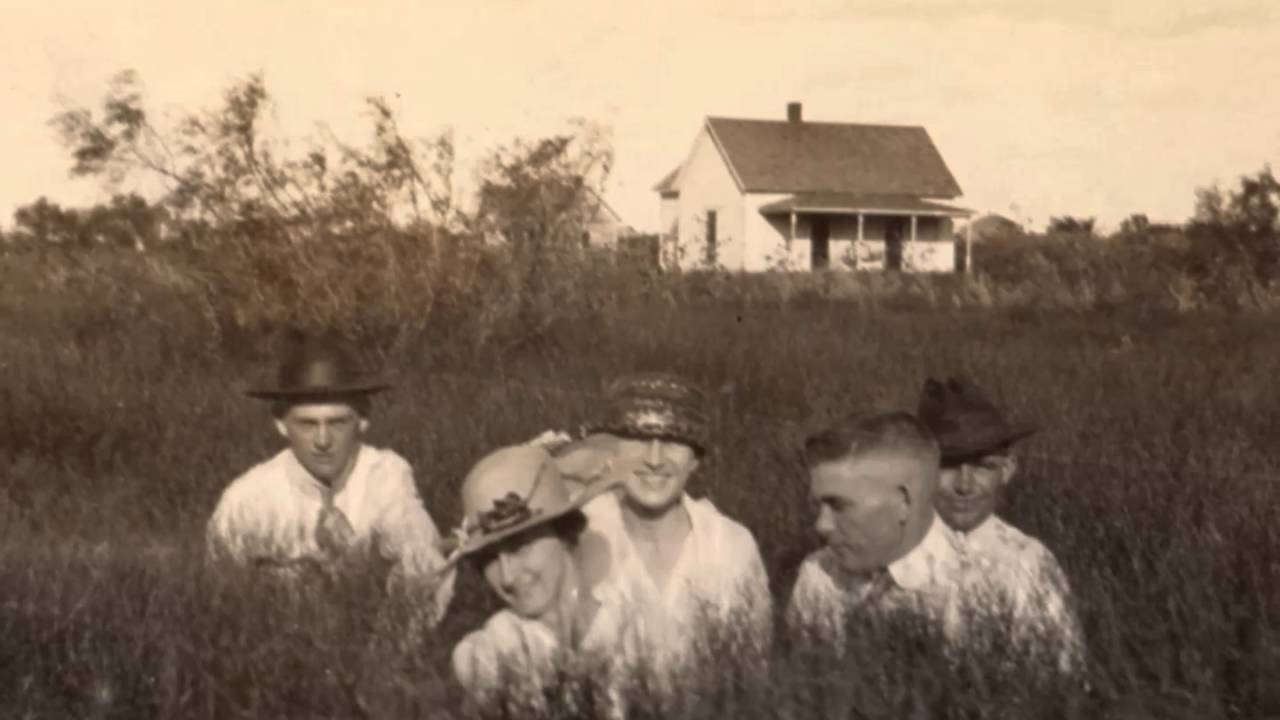
It wasn’t utopia, but the first half of 20th century was a time of craft, exploration and discovery. My uncle wrote, in the family letters, how he experienced seeing his first light bulb, car, steam engine, airplane and city (Medford Oklahoma). He was born in Indian Territory and died a business Executive in urban Chicago. The era had it’s upside.
The 40’s had some great music! Sure, you can find all sorts of silly songs. But when has that not been true? The 60-s and 70’s produced great music, but also crap like ‘Disco Duck’, “Yellow Polka Dot Bikini”, etc.
The 40’s was the Big Band era. Tommy Dorsey, Glenn Miller, The Andrews Sisters, Benny Goodman, Duke Ellington, etc. The 40’s was also the popular pinnacle of the Blues and Jazz. Swing Jazz music was popular. Frank Sinatra was the most popular male singer of the late 40’s.
Bebop,Jazz was all the rage, with artists like Charlie Parker, Dizzy Gillespie, and Thelonius Monk.
Living in the 40’s would be a pain for lots of reasons, but the music isn’t one of them.
During a session of “what would you rather do” (ala Family Guy) I asked some buddies “if you could wake up tomorrow with 1 billion dollars, but it was 1921 not 2021, and you had to live the rest of your life from that point on, would you take the deal?”
Surprisingly a few of them said they would.
I mean, WTF would you spend the money on? Most of us are in our late 50’s and early 60’s. By the time anything cool came around we’d either be too old to enjoy it or dead.
I think after a short period of time we’d be bored as hell with that time in history regardless of how much money we had.
But the same would probably not be true from 1960 (my birth year) to the present. With 1945-1960 being kind of up in the air.
By the end of 1948, Sinatra had slipped to fourth on DownBeat 's annual poll of most popular singers (behind Billy Eckstine, Frankie Laine, and Bing Crosby).[129] and in the following year he was pushed out of the top spots in polls for the first time since 1943.[130]Frankly Sentimental (1949) was panned by DownBeat , who commented that “for all his talent, it seldom comes to life”.[131]
In 1921 determining if there was a continuous road leading from coast to coast was an open question. If you had the money you could hop in your car and check it out. Everything was still open for exploration and development. Driving to the top of Pikes Peak was an adventure worthy of a windshield sticker. Same with visiting Niagara Falls or the Petrified Forest.
If boredom is the issue, I’d say people today suffer it more than those in the twenties, thirties and forties. Times may have been hard, but they were not boring. People were looking ahead, not into their cell phones.