No message.
While this is certainly true, I think we Brits often don’t realise how even our diverse accents still sound broadly ‘British’ to outside ears, so there must be something that connects them.
I was once having lunch in a restaurant in Provincetown with my wife. She has a strong south Welsh accent, whereas I am more RP with a slight hint of West Midlands. The US fellas we got chatting to starting mimicking my wife’s accent, coming back with their attempt at ‘posh English’. Which to us sounds NOTHING LIKE Welsh. She was genuinely quite shocked.
I’d be shocked too. Bloody rude of them.
There is no Melbourne accent. People here just speak normal 
Typical Australian accents do not articulate the consonants anywhere near as clearly as most American accents or BBC English.
I asked one of the people I worked with if his name was pronounced “Brendan” or “Brennan”, and he said it didn’t matter: when he said that I realized that of course, in the Melbourne accent, there is no difference.
And there are no "r"s in “Melbourne”. Conversely, my Queensland education material told me to listen for the “R” at the end of words like “sofa”.
Melbourne/SA/WA were rather similar when I was young. Accent becomes less British (Received/Home Counties/BBC) as you went East up through Sydney to Queensland.
Sydney is and was notoriously parochial, like NYC, and they thought that Melbourne and Perth accent wasn’t “Australian” like Sydney or Cairns.
Of course, Film and Radio demand that people speak with clear articulation, so anybody speaking with a “strong” Australian accent on film or radio is not speaking with an Australian accent. It’s just painful.
What SanVito said. You hear the regional differences because you are British. As an outsider the similarities are more apparent.
It’s like saying there’s no American accent because a Texan doesn’t sounds like a Californian. But to me they both sound American (albeit that I can detect the regional differences)
I agree that being English means I am used to hearing such regional accents and differentiating between them.
A couple of personal observations…
I’ve visited America a few times with my ‘Received Pronunciation English’ accent. I have been politely asked if I was:
- English
- Scottish
- Australian
- a New Zealander
- South African
Many Europeans speak English jolly well. I have had much success in distinguishing between three nationalities in particular donig that:
-German
- Dutch
- French
When referring to male friends, acquaintances, and just “other people,” I’ve noticed men from Australia tend to use the term “mate” much more frequently than men from Great Britain.
‘Easiest way to distinguish Australian accent from British?’
Well… the English accents sound English and the Australian ones sound Australian 

Another way is to count the syllables and distinct vowel sounds, and if someone says it with substantially less, then they are Australian. We notably shorten the words we do have - ‘arvo’, ‘brekky’,’servo’ etc etc, but also drop and smoosh syllables together and barely vocalise leading vowels.
Australia is commonly pronounced ‘Straya’, with ‘alia’ merged into a single sound and the final vowel is usually a fade rather than clearly pronounced.
There are many British accents. Twice I have been in a situation where I just could not understand anything the guy said. One was a porter in a south London rail station and I was trying to find out where the boat train to Paris (this was long pre-chunnel) left from. The second was a guy pumping gas (okay petrol) in a station in Harrow. Could. not. understand. a. word. I never had that experience in Australia.
See also:
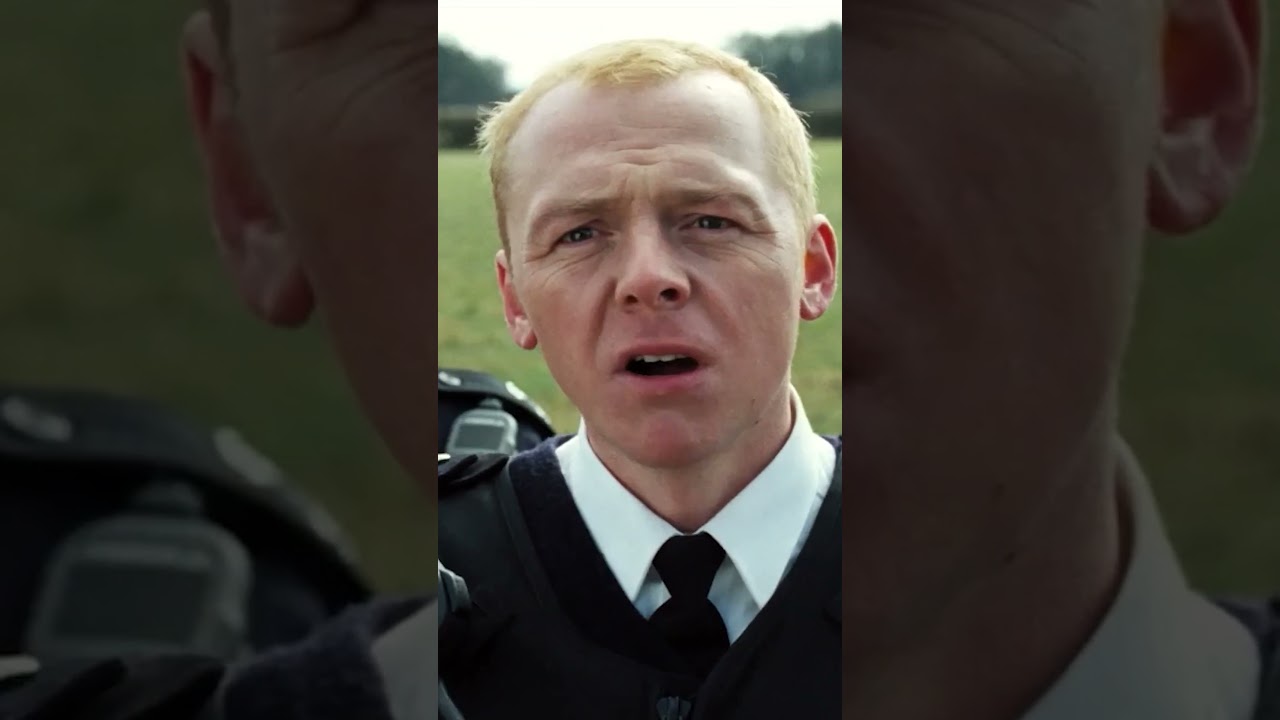
I need translation for all 4 characters.
I’m exaggerating, but only a bit. The lead policeman I mostly understand. The other coppers not so much, and the farmer not at all.
Are there any bits of the US where you have actual difficulties understanding the locals? There are many places in the UK where I, someone brought up here, genuinely cannot understand someone speaking in their normal accent. The accents that make it out of the country in the media are generally the very mild, more understandable versions (except in the odd skit like the ‘hot fuzz’ clip above).
There is far, far more variation in accent in the UK than the US as we’ve had communities which have existed -with most people staying in one place- for far longer. Aside from pronunciation, the level of dialect used almost pushes the boundary into being a new language in some cases.
Needing two locals of different generations to translate is an exaggeration, but only just. My mother couldn’t understand my Dad’s grandmother at all, and vice versa so they had to get him to translate. My parents grew up only about 80 miles apart. The accent my ggma had (broad Lancashire) has sadly died out, leaving only the milder form, but other accents that strong are still around. I have literally had to ask for a translation when groups from some areas of Newcastle came into my old workplace. The kids that live down the street from me now (in Scotland, which yes, is part of Britain) can’t understand my accent, and I can’t understand some of the people here. My supervisor told me her parents sent her to classes on how to speak RP as a kid because her native Glasgow accent was strong enough that it would be a major handicap working outside the city.
For a British person who has no trouble at all understanding an American or an Australian, but can only get an occasional word from a Geordie, being told that no, they have the same accent as said Geordie (or a Glaswegian) by an American who probably hasn’t actually met anyone with a real strong Newcastle or Glasgow accent feels a little silly.
Watch their movies or TV shows.
“Are You Being Served?,” “Keeping Up Appearances,” and the various Carry On films, among many other TV shows and films, give a nice overview of British accents.
Muriel’s Wedding, The Castle, Phar Lap, “Skippy the Bush Kangaroo,” and the soap opera “Neighbours” (which grabbed me back in the 1980s when it was shown here), give a nice overview of Australian accents.
I’ve been to both the UK and Australia, besides. There are differences, but in the end, and no matter where we are, we’re all speaking English. I see no need to distinguish accents when we all speak the same language.
It’s regional. It’s very common in London - a region which has had a strong influence on Australian accents
I suggest the TV show Rake for an example of more “mild” Australian accents:
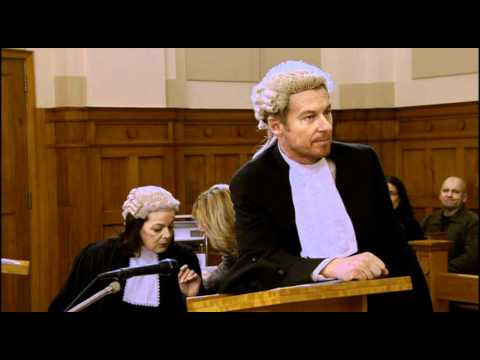
I have no problem telling any UK accent from anything “Down Under”; however, I cannot tell a Australian accent from a NZ accent. I really like Lucy Lawless’ current TV show *My Life Is Murder," and I get pretty much all the jokes, even puns.
But sometimes there’s an interaction where the conversation proceeds from someone recognizing another person’s accent as Australian in NZ, and I have about a 2 second delay in following. The show is currently set in NZ, and due to the first season being set in Australia (it moved to NZ because of COVID-- long story) Lucy Lawless’ character apparently speaks with an Australian accent for continuity. The character has been hand-waved to have dual citizenship.
So, apparently, for every Kiwi watching the show, Lucy Lawless is speaking with a different accent. It is entirely lost on me. Now, if she were speaking with a UK accent of any flavor, I’d get it. But an Aussie in NZ? I hear nothing
NZers hv evn fewer vwls. A line from the Brokenwood series: “You’re the ditictv - so ditict!”
An Australian once told me a colleague was due to meet a NZer at an airport for some business trip together. The NZer wanted to meet at the check-in counter. He eventually found the Australian at the KFC.

There are a few cities that seem to have taken accents, and even more so local slang, to very high levels. Concentrated mostly in working class / poor folks living in the city proper for generations; not so much the suburbanites. Akin to the motivation behind Cockney Rhyming slang, there deems to be a real motivation there for the scruffier locals to talk in code that “normies” from elsewhere, even just one county away, can’t follow.
Baltimore and Philadelphia are famous for this. The original Rocky movie displays some pretty thick Philadelphia accents in spots.
Of course, the USA being the USA, there’s a strong divide between how English is spoken by blacks and whites. There are black accents and vernaculars where the cadence of delivery, different word choices, different sentence structure and word conjugation, plus basic phoneme differences, makes it real hard for the “whiter” white folks to follow the “blacker” black folks.