Are we in an abusive relationship with the English language? 
In a reciprocal abusive relationship. English sufers too.
That’s right, I butcher it when I speak it, or so my son says (who learned English in youtube and/or speaking with native speakers in the internet instead of reading SF&F books, like me), the not-so-little-anymore prick.
Indeed – I took one semester of Old English in college, purely because of Borges’ “recommendation.” (I’m totally serious).
He did have a British grandmother, so that’s part of his connection.
Not in Scots English - those are all single vowels for us, which I think makes it easier for us to pronounce continental European languages correctly.
To my untrained ear they are homophones.
I don’t see əɪ anywhere on that Wiki page. Could you point it out?
One place is in the Wiktionary pronunciation guide for “Sight”:
The second pronunciation is what I and some others use.
Indeed when watching series/movies set in Northern England/Scotland I’ve been known to comment to my wife “these people speak correctly!” or words to that effect 
It’s right in the entry for “sight.” I guess I didn’t include the full URL, just the relevant detail, but if you go to Wiktionary and search for “sight,” that’s exactly where I pulled it from.
Here’s a whole article about it:
As I said before, my accent only does the “eye” raising and not the “ow” raising.
That doesn’t address my issue. I don’t know what əɪ sounds like or what other words it is used in, and the IPA key doesn’t give me that information.
I also explained it in a previous post before for the non-IPA folk.
The best way to describe it without audio clips is that I begin the diphthong for “sight” with an “uh” instead of the usual “ah”. So a crude approximation would be “sahyt” vs “suhyt” for
/saɪt/ and /səɪt/, with the latter being my pronunciation.
And here’s a video for you showing how it manifests itself in words like “eye” for “ice” where I personally raise and centralize the vowel “i” in “ice.” This should be queued up to the relevent time stamp and explains the “ah” vs “uh” difference I’ve been harping on abou.
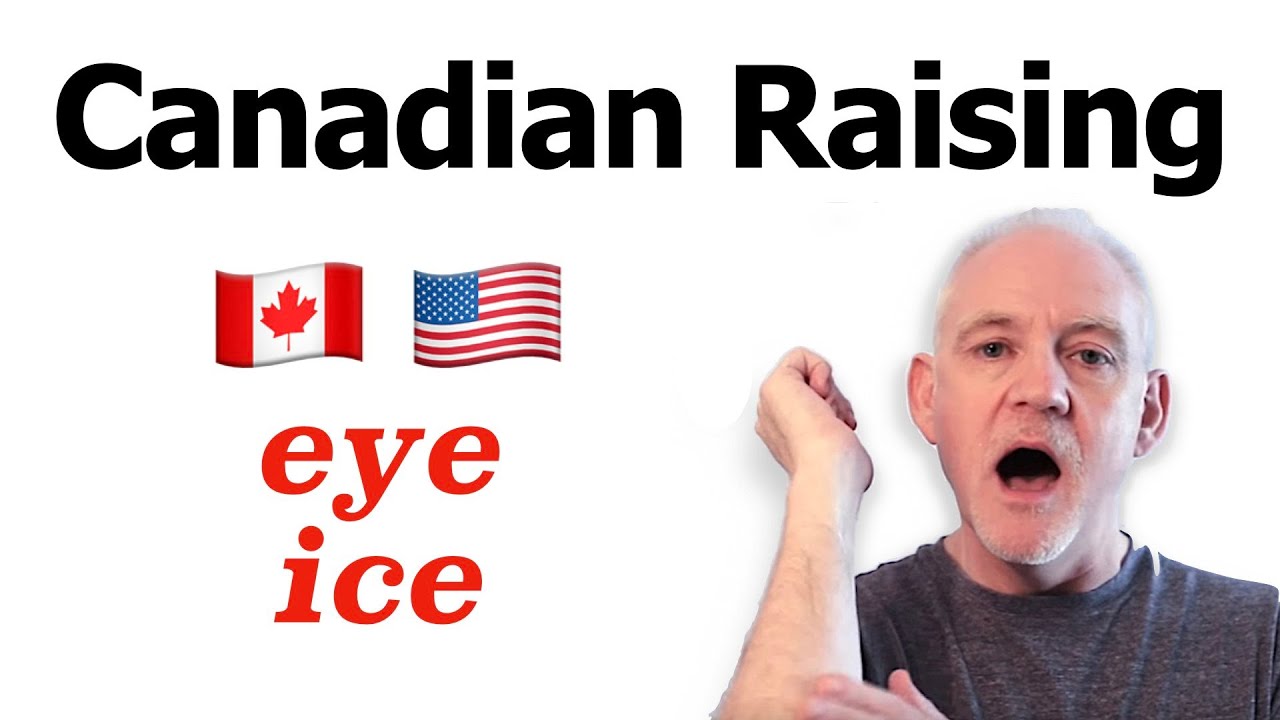
I’d say they are so different here that it could affect whether or not you are understood.
If you said “no, not that one, the one on the other side” but pronounced it like “sighed”, people would understand you but wonder why you had switched to an English accent at the end.
But if you said just “John sighed”, while pronouncing it like “side”, no one would understand what you meant, irrespective of what their own accent was.
As I say, every so often I hear an American pronouncing side, tight, night, etc exactly like Scottish people do. I find it quite funny as well as intriguing. It’s not like Canadians saying “aboot” - that sound is quite different from the various Scottish forms of “aboot”.
Do you mean Scots or Scottish English?
Both (or baith in Scots).
Or the brutal
HAY-ZEUS
nevermind the accent in over the u…
In the old TV series “Rawhide,” that was pretty much one character’s name. It was listed in the credits as “Hey Soos” although the actor was actually Chinese and . . . some other stuff.
Thanks for the video. I heard the uh-ah distinction but my ear just can’t make it apply to sight. I freely admit to having a bad ear in that way, but I usually hear the differences when emphasized. Not this one, though. Doesn’t explain it for me.
To another of my questions, I don’t know why “əɪ” wasn’t listed on the IPA page, but here’s an explanation.
The IPA sound [əɪ] is a diphthong pronounced “uh-ee,” starting with a neutral “uh” sound (/ə/ as in “bUt”) and gliding into a high-front “ee” sound (/ɪ/ as in “mId”). It is commonly used in Irish accents to replace /aɪ/ (e.g., “right” sounding like “royt”) and in Canadian English for raising, often used in words like “hike” or “hide”
There’s the “uh” you’ve been pushing.
I’ve never heard the alternate pronunciation even one time, but my knowledge of French is limited to about half a dozen words. LOL
That’s weird because while “hike” would have raising, “hide” shouldn’t.
I grew up speaking Great Lakes accent too, and I do not pronounce those differently at all. I lack the raising.
But then when I was young, sometimes hearers thought I had a foreign accent, even though I’d lived in Cleveland my entire life.