If that stop were the only stop, then yes. As it stands, it’s a preference. You’re planning your life to save a tiny bit of money, not planning your life to avoid being stranded.
I confess to being a bit confused about some things in your post.
Are you saying that ICE vehicles operate better than EV’s on rough roads? What evidence do you have for this?
Yes, cheaper EV’s will be necessary for them to compete with ICE cars. But affordable for someone earning less than $10/day? Probably not. I don’t think this radical a drop in price would be necessary for EV’s to outcompete ICE. I mean, I don’t think someone earning $10/day can afford an ICE car now, or in the future.
And finally, I do not know the logic behind thinking that more ICE vehicles would be needed to support resource demand. I agree that we need to reduce our resource demands, as we are using up too many various resources right now… but I fail to see how **MORE **ICE cars will help us with that.
Except for very expensive ones, EVs cannot handle steep inclines and rough roads. That’s why in many parts of the world, diesel-powered vehicles are still used.
Cheap EVs in Asia can cost less than $600, and are thus affordable by those earning less than $10, especially when they are used for side businesses. But they can only be used for side roads in towns and cities.
ICE vehicles will be needed to support resource demand because diesel-powered vehicles are critical in transporting heavy cargo across rough roads, a characteristic in most parts of the world. Similar applies to container ships that need to transport raw materials, components, and finished goods across extensive supply chains spanning thousands of km and dozens of countries, up to 70 pct of mining (which uses heavy equipment that also run on diesel), mechanized agriculture and manufacturing (with fossil fuels supplementing low energy returns from renewables), and more.
Finally, the point isn’t that ICE vehicles (among others) will decrease demand. Rather, they will be needed to meet increasing demand, especially from a growing global middle class.
In short, the world population will need more energy and resources to meet not just basic needs but even middle class conveniences like EVs: the equivalent of of at least one more earth.
This is simply not true. I had thought I had put all of the falsehoods about EV’s in my original post, so I guess I should thank you for coming up with a new one. This one is, quite frankly, ridiculous.
I believe you are not discussing an automobile, but rather some kind of electric powered cycle or rickshaw.
No, you are wrong. Large trucks for transporting materials are already being converted to electric. Ships are being converted to electric. There is no reason whatsoever that goods cannot be transported using electric vehicles.
Your entire premise is flawed, because you don’t understand some very basic things about EV’s
When I lived in China, I rode in a shitload of ICE vehicles over rough roads.
They broke down constantly. All the damned time. Because they were cheap shitty vehicles built so that stuff would just rattle itself out of alignment or whatever - like spark plug wires just falling off and so on.
An EV, having many fewer parts, would have been an improvement.
I think poster **ralfy **must be talking about an electric assist bicycle or something. Even then his posts make little sense.
I’d love to know where he got the idea that EV’s cannot handle rough roads or steep inclines. Very incorrect and odd.
I’ll agree that even the most rugged EVs can’t handle rough roads… where the charging stations are rare and distant. That qualifies MANY rough roads, and blue highways, too. To get an ICE past such barren stretches, carry jerry-cans of fuel. For an EV… what, load extra batteries in the trunk? Set out a solar panel array and wait a few hours or days? Hire a tow to the next charger? Early autos often included attachment points to harness horses teams so the motor carriage could be hauled out of mud or brush. How many EVs are so equipped?
EVs require a sturdy support infrastructure on a reliable power grid. That’ll be fine when it’s built-out. But I wouldn’t want to try driving a Tesla from California to Costa Rica anytime soon.
If it’s good enough for Mark Watney…
And of course, no ICE exists that could have made the trip that Watney needed to make.
I can understand the last part of your statement - obviously it’s going to be hard to drive an 500km range EV 1000 km if there are no charging stations in between whatsoever. I am still confused about the first part though.
I wonder if you can point me at any factual source that says that an ICE car can handle rough roads better than an EV car. Thanks.
And also, I wonder if you can point me at a drive I could do from point A to point B where there is no electrical infrastructure in between for a stretch over 500km. Somewhere with no access whatsoever to a 30 amp circuit suitable for an electrical stove or dryer.
Here are examples of EVs in the Asia:
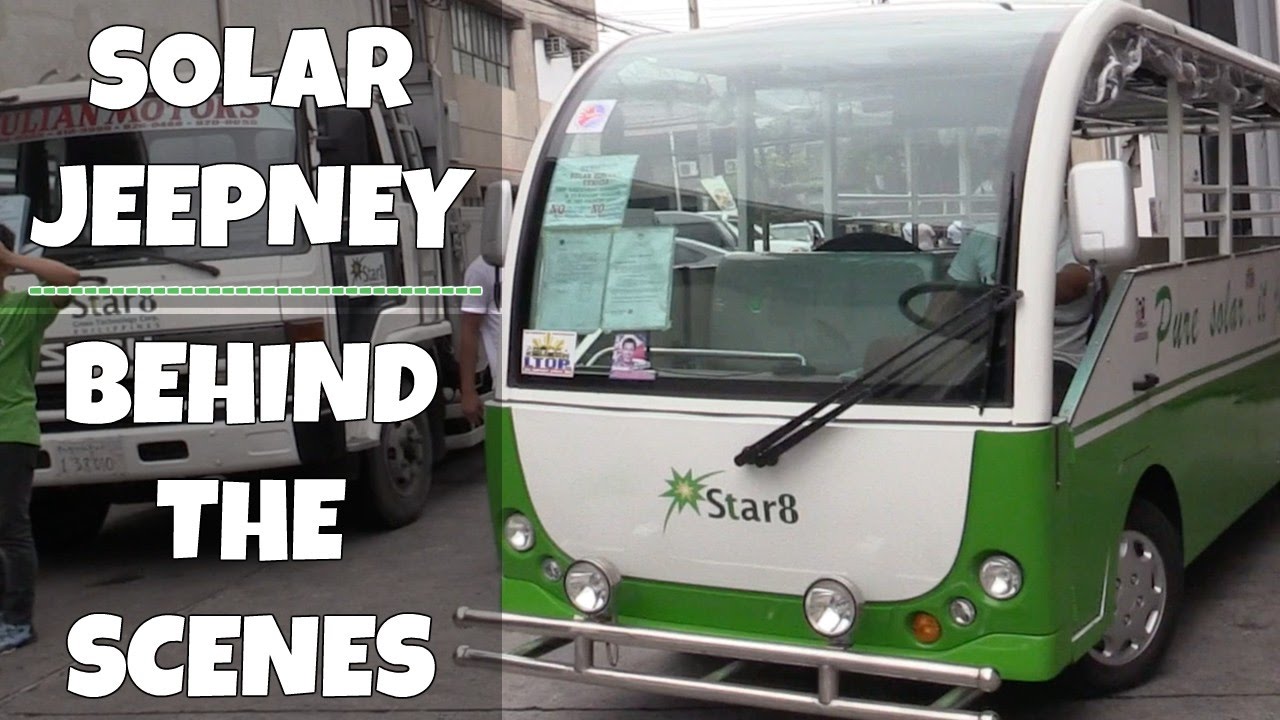
They cannot handle steep inclines, heavy loads, rough roads, or long distances. However, they are helpful for city and towns.
EV cycles and rickhsaws are EVs.
Are being converted. Not has been converted and used wide scale.
If you can refer to developing economies where large trucks and container ships are using electricity completely, then let me know. Otherwise, my argument stands.
It’s the other way round. You’re referring to expensive EVs and assume that the infrastructure needed for them is in place in most parts of the world. That is not true.
That’s what I think describes conditions in most parts of the world. Even the EVs made have to be cheap, and they are used mostly in towns and cities.
I think you know darn well we aren’t talking about glorified golf carts like those.
EVs used in most parts of the world consists of batteries attached to simpler systems. The video I shared above is from one country, and feature not just bicycles but tricycles, small, enclosed autos, and jitneys. Those, BTW, are vehicles sold to companies. For individuals, there are cheaper vehicles, especially from China.
They cannot handle rough roads, steep inclines, heavy loads, or long distances. But they are affordable for businesses in developing economies which make up the bulk of the world’s population. They are usually used in towns and cities because much of the countryside lacks roads, bridges, and even electricity. In fact, many of them even lack ICE vehicles.
The main workhorse for most people worldwide include ICE vehicles assembled using surplus parts from industrialized countries. Here’s one example:

Indeed. And ralfy is giving me a PERFECT EXAMPLE of what I was bitching about in my OP.
Someone takes an example of a freaking “Jeepney” Bus from the Phillipines, with a 16kW motor hauling 20 passengers, and uses that to “prove” that EV’s cannot handle inclines.
Jesus Christ on a pogo stick.
It’s like I went on an automobile forum and told everyone there that Gasoline powered vehicles were useless because they could not take more than one passenger, and were exposed to the elements. Then I posted this as proof.
They are not used as golf carts but are needed to replace jeepneys and tricycles, which contribute to air pollution.
I gave an example of a jeepney in one post. Here’s one about tricycles:

BTW, these tricycles also can’t handle rough roads or steep inclines, but they can be used for routes not covered by jeepneys as well as narrow streets and crowded towns and cities.
Conventional passenger cars also cannot handle rough roads, any loads, slight inclines, or moderate distances. Cite.
There are also plenty of construction vehicles which do even worse. Cite.
That’s because your OP refers to one instance in meeting the needs of the majority of people. That is, “They have enough range for a huge majority of people.” I’m assuming that “people” refers to people from different parts of the world. Or was I mistaken?
My view is that the majority of people worldwide earn less than $10 a day and lack electricity, transport, and infrastructure. They use jitneys, tricycles, and other means to go to school or work, carry farm produce, etc. In which case, the EVs used are as I described above.
As for the rest of your post, why are being so hostile? I never argued that EVs are useless, and there is nothing in your posts that contradicts what I said.
They can, but there are always limits:
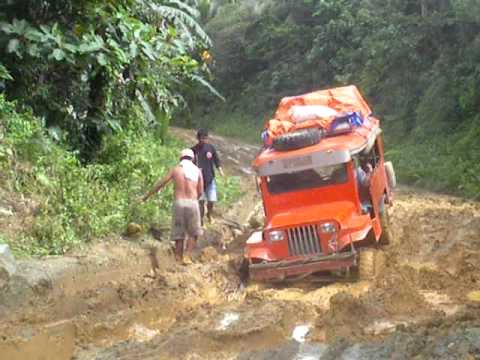
I’d like to add one more point because it’s connected to your OP.
Can we assume that your example is correct if most gasoline-powered vehicles don’t come in the form of skateboards with motors?
In which case, are you saying that most EVs worldwide are like Teslas or what are sold in the U.S. and not like the ones sold and used in Asia?
But cheap, shitty, electric vehicles may spontaneously combust. Hopefully you were just in a shitty brand. Chinese manufacturers have come a long freaking way in the last 10 years when it comes to quality. There should be no difference between a well-engineered vehicle with any drivetrain.