Because it’s there.
It’s been done.
What the point of seeing a redwood tree or visiting every US state or going whale watching? All those things have been done.
A thing flitted by on my phone yesterday saying that Jon Krakauer regretted climbing Everest, at least in part because of the people who died on his trip(less guilt and more trauma and grief), and because he feels like the article and then book he wrote Into Thin Air helped popularize and sensationalize climbing Everest. And he is highly critical of how commercialized it has become in the thirty years since then.
This inspired me to want to watch the movie Into Thin Air but if it’s available on something I have access to, so instead we watched the 2015 Everest movie. Which turned out to be about the 1996 expeditions. (Krakauer is a character, but not a major emphasis. He’s also does not like the way he and various others were portrayed).
I’ve never seen the appeal of climbing Everest, and watching that movie, being reminded how expensive it is (and I’m sure it’s only more so now), how much of your life you have to leave behind for how long to become acclimated first, the use of oxygen (which must be carried by somebody, not neccessarily you), and then, they showed people walking across a long, skinny, suspension bridge with nothing nearby underneath it. Nope. Not for me. And then later, walking across a metal ladder tied to another metal ladder? With crampons on your boots? No. You have to be insane.
I saw something that said many people don’t actually want to climb Everest. They just want to be able to say that the did climb Everest. And so, the details don’t much matter.
If you want to watch a movie about a really difficult climb, I recommend Meru (2015), about Conrad Anker, Jimmy Chin, and Renan Ozturk climbing a highly technical 20,000-foot peak in India. Those guys were crazy.
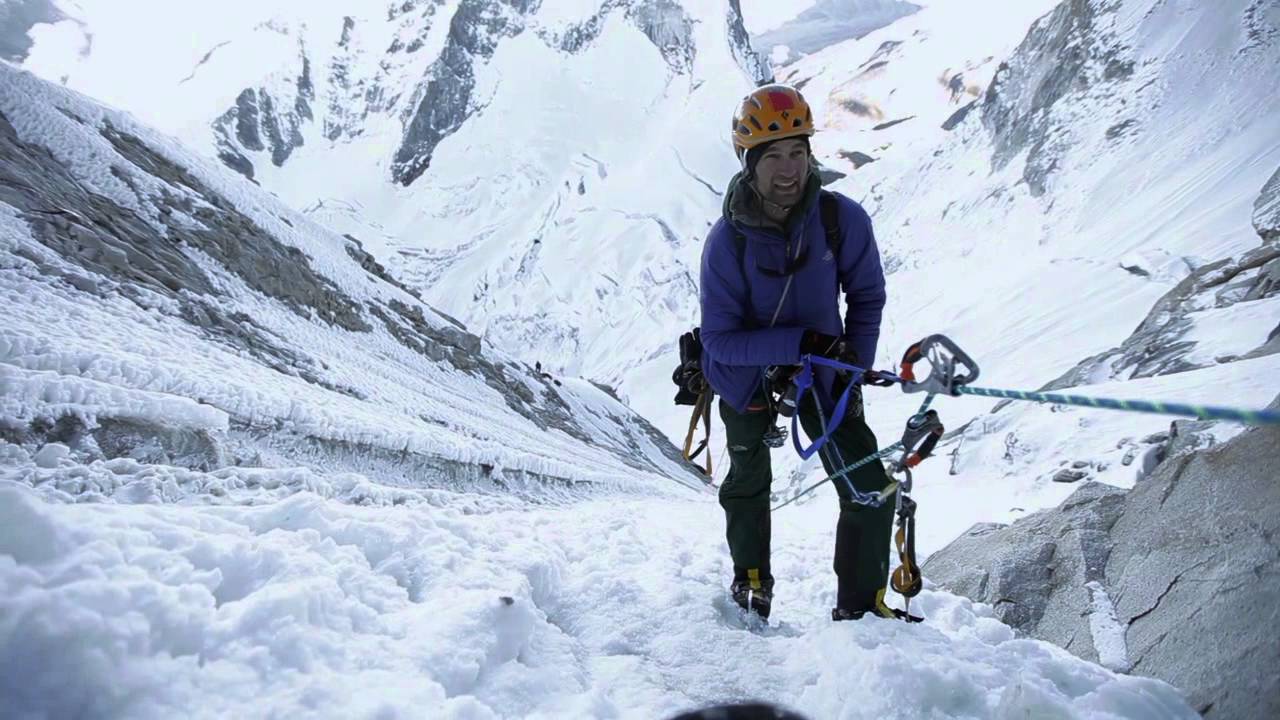
But not by the people doing it now. (Well, there are many repeats.)
So from one point of view, it is regrettable how commercialized it’s become, and the combination of huge numbers of climbers and the pressure for tour operators to get them to the top so they leave a good Yelp review has only made it riskier. On the other side, the whole “well I summitted back when it meant something, everyone after me is just a johnny-come-lately poser” smacks of elitism.
Yes, seconded. We just watched this recently and it’s a good movie. The three of them were pretty fucking nuts to go up a second time, particularly Ozturk.
Those things don’t put your own and other people’s lives at risk of injury or death. “I conquered Everest!” is rather a hollow boast when you did it being hauled up by a team of Sherpas along a conga line of other adventure tourists.
Those are good reasons not to do it, along with the expense and the risk to the climber and the time and the physical discomfort. But i totally understand why someone might want to stand at the top of Everest.
The first death of the year was only 35 years old.
And not even a wealthy tourist. Dang…
“Ghimire had already scaled the world’s highest peak and had lately been working as an expedition guide.”
One wonders if there are two standards of medical care there: the finest for the [high paying] tourists and a much lower standard for the low paying staff. And that if he had been a tourist he would still be alive [for example they might have sent up a helicopter].
I watched Meru last night.
I think I should have waited a few more days, put some space between people on a mountain in (largely self-imposed) peril.
I wished they’d have given me a little more information about how exactly they climbed and how much gear (and what kind of gear). And I wished they would have spent any time on what comes after the top of the mountain.
But the scenery was awesome, and I think part of the movie’s answer to the question of “why climb Everest or any giant scary mountain?” is that some people are just wired differently.
My dad, as a young college grad in the late 60’s, got a job in Colorado because he wanted to live in and hike the mountains. He did the tiniest bit of technical climbing, but generally preferred to hike, ski, snowshoe, etc. One of his old friends from that phase of his life has told him that “Many of [Dad’s] friends have died in the mountains”. My dad’s not so sure-- he thinks many of his friend’s friends died in the mountains, but he’s not so sure that he knew most of the well enough to call them friends.
Seeing the scenery in Meru definitely makes me wish I lived more convenient to mountains. But I prefer the kind of hiking with a nice hotel room at the end of the day.
Phura Gyaljen Sherpa was 21.
I have not seen that documentary in years (2026 − 2011 = 15), but, if I recall correctly, they were aid climbing— they did not attempt to free-climb the whole route!
I found thie report: Shark's Fin Full Report - Alpinist which has a bit more information:
This September Anker, Chin and Ozturk pushed through the bottom part of the route in a speedy six days. After climbing, hauling and jugging to the base of the overhanging Indian Ocean Wall, the team climbed steep aid sections with difficulties up to A4. These sections gave way to the Crystal Pitch, an overhanging and extremely exposed prow that they aided. A final section of mixed and aid climbing brought the team to the summit of Meru on October 2.
The team brought equipment for technical and alpine ice and rock in addition to a big-wall kit, rather than attempting the route alpine-style like the many teams before them.
There are a few photos there, in which you can clearly see them ascending a rope, and sitting on the summit with a bunch of cams and nuts clearly visible.
Apparently, they had a cup of coffee, then spent two days getting down 
We could all say that.
I’m waiting for the thrilling adventure movie about Sherpas who stay at the bottom of the mountain selling food and drinks to climbers.
I had to smile at that. Colorado has 58 peaks over 14,000 feet, granted from a higher base.
As I’ve told people, in the East any little lump is a mountain. In the West any little rivulet is a river.
When we were living in Carson City I hoped if I was a 49er I’d have the sense to acquire a big chunk of meadowland in Gardnerville, buy half-dead oxen for a song, fatten them up, and sell them for a handsome profit to people looking at the Sierras.

The average hiking elevation gain for the 14ers is 3000 to 5000 feet, although the biggest is over 7000 feet.
The average hiking elevation gain for the NH 4000ers is between 2500 and 4000 feet, the biggest is around 4500’.
Mount Washington kills and injures its share:
An ominous sign at the summit of New Hampshire’s Mount Washington warns of the conditions that gave rise to the mountain’s reputation for having the worst weather on earth. Those who hike, climb, and ski on the mountain are at risk of encountering record-breaking wind speeds, sudden temperature changes, and frigid conditions that persist into the summer months. Injuries and rescues are common.
But how dangerous is New England’s highest peak? Data compiled by an Oregon researcher shed light on how Mount Washington’s tally of accidents and deaths compares to other mountaineering destinations in the United States. According to this data, from 1947 through 2022, Mount Washington was tied for the fourth deadliest, and eighth for accidents causing injuries.
At a nearly 6,300-foot elevation, Mount Washington is considerably smaller than many peaks in the Western United States, which can be up to 14,500 feet. But conditions can be unpredictable, said Lieutenant Robert Mancini Jr. of the New Hampshire Fish and Game Department, which conducts search and rescue missions in the White Mountains. Sudden changes can happen “at any time of year.”
Though the weather at the base of the mountain may seem good, the conditions at the summit can be dramatically different. “Winter conditions exist on Mount Washington through the early summer,” he said.