Yes, I do. I’m not familiar with the movie, and haven’t heard much at all about it. And on a cursory Google search, the only mention I see of “hard SF” is someone saying that they prefer hard science fiction over things like it.
Wait a minute, why wouldn’t a vampire show up on the reverse camera? Need answer fast…
Some sources claim vampires don’t photograph, so BUC wouldn’t work? 
If my eyes can detect the light reflected from a vampire, why wouldn’t a camera? Someone needs to get to the bottom of this.
Vampires do not photograph because film contains silver (iodide). Silver’s magical property relates to the 30 pieces of silver that Judas Iscariot was paid for betraying Jesus. But modern digital cameras use CCDs, which typically do not contain silver (unless it is used in the wire leads, which is pretty rare). Hence, it should be possible to photograph a vampire with a digital camera, though any silver wire traces in the processing system would result in data degradation or loss.
This sounds suspiciously like, You can’t take my picture, because you’ll capture my soul. Maybe something to do with film?
And mirrors have silver backing. We’re onto something here.
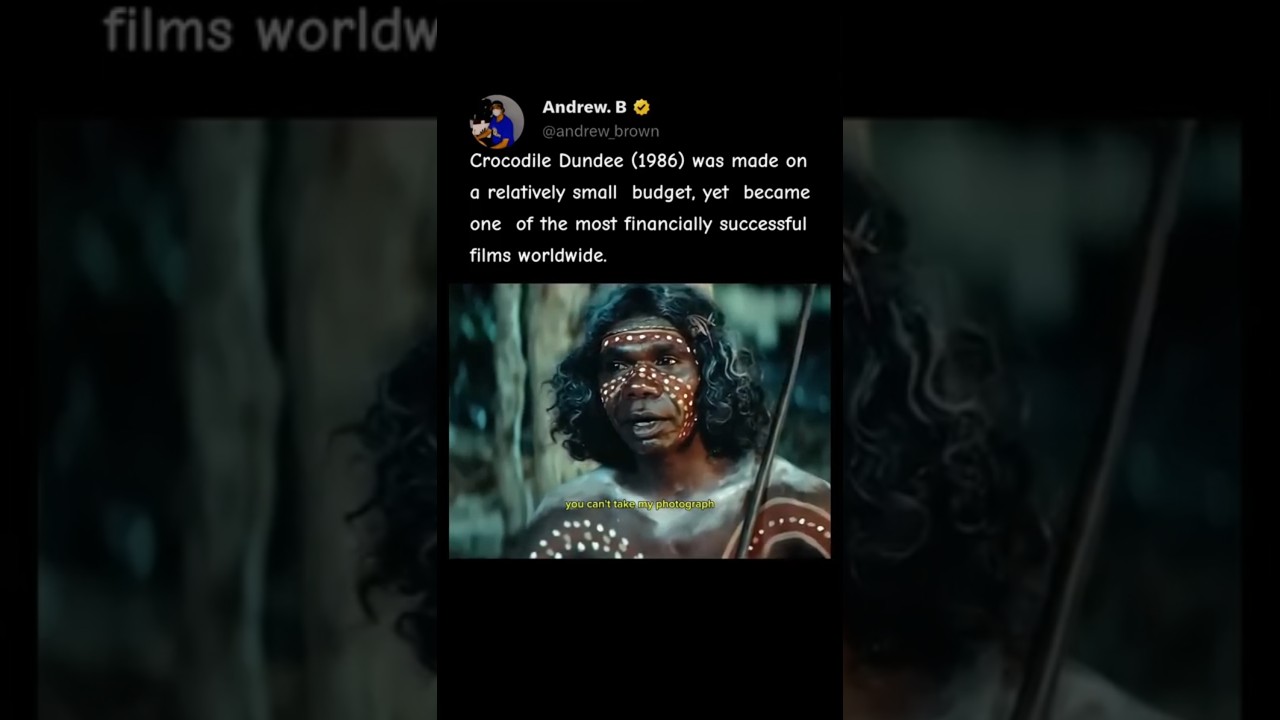
The native Australian said you can’t take my picture, because the lens cap was still on the camera.
Phobos, the larger moon, is close in, such that it has an orbital period of 7:39h. Mars has a day of 24:39h, so Phobos would present full 3 times a day. Deimos has a period of 30:19h, so it would present full about 4 times in 5 days. Thus, a Martian werewolf would spend most of its time being a dangerous raving creature, because it would have to keep transitioning every few hours, and it would be in its worst state at times when both moons are presenting full (but those times would be rather brief).
Wait a minute, I thought silver was the werewolf’s kryptonite, not the vampire’s. I’m beginning to think this is all bullshit.
In Space Seed, Captain Kirk dismisses charges against Khan and exiles him, his super-people and his girlfriend to “Ceti Alpha Five”. α Ceti is currently observed as a red giant, which places it post-main-sequence, having used up its core fuel. As of about 250 years ago. So Khan is sent to live on the fifth planet of a star that was in its death throes, last we looked. That is, by the time of the story, α Ceti will be close to half a millenium farther along than what we see now. Which, granted, is a astronomical instant, but we are not entirely sure when it is going to flash out.
Considering that Ceti Alpha 6 exploded six months later, that’s kind of a nitpick, isn’t it?
Curiously enough I once wrote a story about a werewolf on a planet with five moons; the poor thing was almost always a wolf.
In Carpathian lore, Mirrors and Silver are not special to Vampires. They have a reflection. They do hate the smell of garlic, and a holy man can keep them at bay- it is the strength of the belief, not the symbol itself. Or at least that is what my grandmother told us. They also are NOT sexy, their breath smells “like a charnel house”. They can not fly, turn into bats or any of that stuff. They rise to get revenge.
But there are dozens of different sets of vampire lore.
Original Trek was VERY bad at this. Remember Omicron Seti, around which the planet with the Happy Spores revolves? Also known as Miri the Wonderful, a pulsating red giant whose energy output varies by a factor of 1,000, on an approximate 11 Earth month cycle. So that will be MUCH more inimical to any colony on the planet than the fictional Berthold rays…
Other star systems are so far from Earth that is is doubtful that they are anywhere within or even close to the Federation, like Deneb, 1400-2400 light years away, which at maximum safe warp for the original Enterprise (warp 6, or 216 times the speed of light, would take 6-12 years to reach).
This is the key fault of many of these sci-fi franchises, from Dune, through Trek, StarWarses, Guardians, on ad infinitum: they just take traditional culture and paste it onto a framework of immensity and biodiversity that quite simply could never support the kind of cultural consistency that is being portrayed. Just the vast distances/times involved would make the cohesive story lines infeasible.
But, to write stories that are accessible to a large audience, they have to do this. Genuine stories about galactic exploration would be like what they say aboutpiloting an airplane: extremely long periods of boredom punctuated by brief moments of terror – but those brief moments would be incomprehensible to us.
I think they write the stories they want to tell.
Science Fiction writers are storytellers, not science explainers. If they want to write tales of galactic empires they’ll go ahead and do that, and make any actual science fit their story, not the other way around.
And a trifle unpleasant for as much as a week.
For a tiny Chelyabinsk-class asteroid of 20 m diameter that would be the equivalent of a 5 million Megaton bomb. For a dinosaur-killer Chixulub-class at 1 km, that would be 10^15 Megatons.
Guess I’d appreciate someone doing it the other way, starting with the science and going from there. Yes I am aware there are a few authors out there that do that.