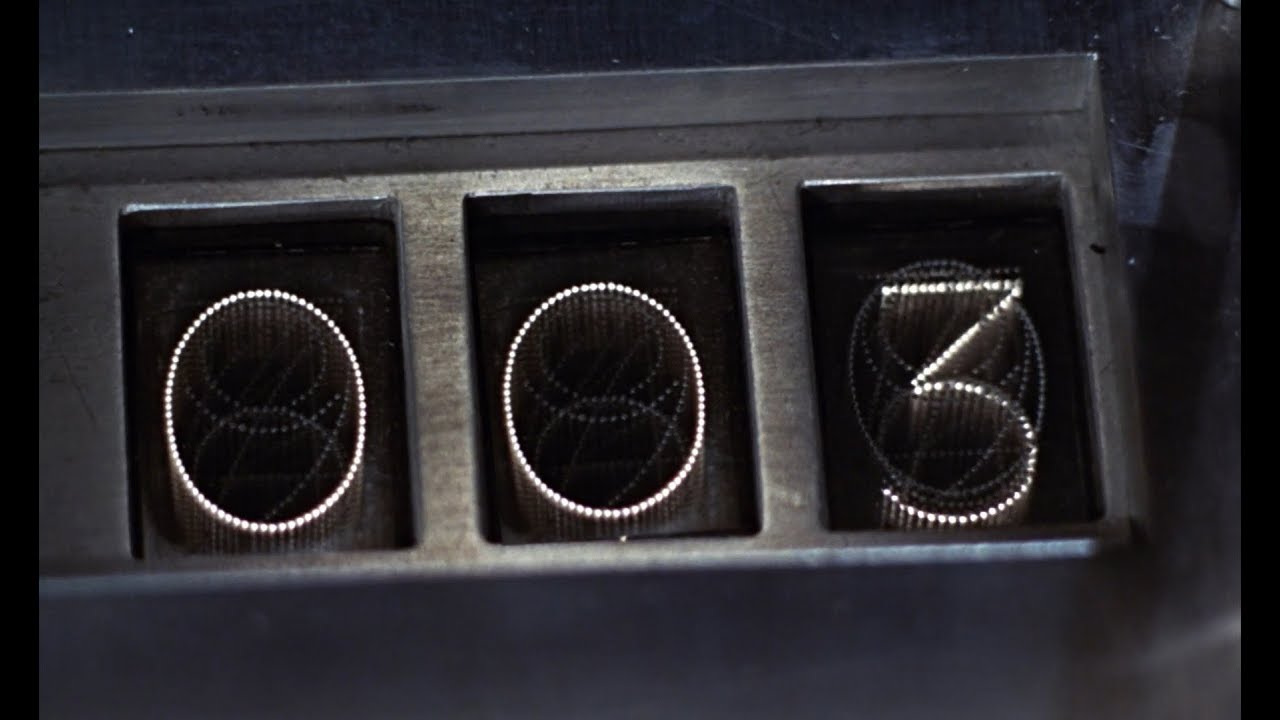
My mother still says “twenty past seven” and “five until eight” but I’ve long since changed to what seems like the American standard of 7:20, 7:55, etc.
I’m in my late 50s, she’s nearly 80. Both lived in the US for nearly 40 years now. I don’t recall any time in my life in the US when it was common to say “twenty past seven” or “a quarter past five” or even “half past six”.
When I was in fifth grade we had a concert, led by a cranky old lady. When asked by a student as to what time we were to show up, she said “Ten of seven”. We students looked at each other, puzzled, and no one dared question her about what she meant. Did she mean ten minutes before seven, or was that a way of saying ten minutes after seven. My mother decided it was ten to seven. It would have saved a lot of confusion if the cranky old lady just said “six fifty”.
I’m in my sixties, and grew up with telling time that way. I’m surprised you didn’t run into it.
Maybe not “20 past 7”. But certainly “quarter past 5” and “half past 6” .
And reading out “6:55” is certainly a digital clock thing. No one said that when i was little.
Maybe i shouldn’t be surprised. I got my first digital clock (a flippy one, like in Groundhog Day) as a teen. Using digital clocks caught on slowly, but cheap digital watches were coming by the time i was in college. A guess i learned time just before the big changeover.
Outside of a work environment where accurate timing is essential, I doubt that many people really need to know that the time is 11:58 or 07:12. We either want to know how much time we have before some event or how late we are.
When I look at a digital clock, I tend to round the time to the nearest quarter. My TV, currently burbling radio, shows the digital time on the screen, and it currently shows 09:58, which is near enough to nine o’clock for someone who doesn’t really care.
When I did radio, back in the early 1980s, all we had in the studio was a traditional clock, with a dial and hands. I got very good, as we all had to be, at saying things like, “Well, I see we’re at seven minutes to the top of the hour …”
A skill I still use today. If you ask me what time it is, I’ll look at my dial watch, and reply something like, “It’s fourteen minutes to four.”
Reading an analogue clock face was a thing I was explicitly taught to do in preschool - the teacher had a cardboard model of a clock face with movable hands and showed us what each hand meant and how it behaved, then showed us examples of various times displayed, then showed us more examples and asked us to read them, then gave us times and told us to move the hands to represent that time on the clock.
We had space to learn that sort of thing because personal computers hadn’t been invented and we had the need to learn that thing because although digital clocks had existed for a while, they were not as common as analogue clocks.
If that skill isn’t being taught at school now, then people aren’t going to find it so easy to just pick up.
We actually do teach our preschoolers basic clock reading, but most don’t count well enough for “twenty past eleven.” We just start them out with whole hours, then half hours, then quarter hours, and tell them when the big hand isn’t exactly on a number, to pick what it seems closest to-- whole, half, or quarter, and say it is “about” that time.
Then tell them they will learn more in kindergarten and first grade, or their parents will teach them.
I once had a three-yr-old, whose parents were already teaching her to tell time, proudly tell me it was a quarter to 11, when it was actually 5 to 9. I just told her “Good job!” she’s really a smart kid, who had it right within a week or so, and was reading chapter books at age 5-- got moved up from kindergarten to first grade after a couple of weeks, too, after being in our pre-K.
I think you may have a rounding problem there. Or else you really don’t care what time it is. It’s good to be retired.
Like most of us, I started out with all analog clocks & watches. Back then it was …
“Quarter after [previous hour number]”, “half past [previous hour number]”, “quarter to [upcoming hour number]”, “10 to [upcoming hour number]” and “5 to [upcoming hour number]” were all standard idioms. Anything else would be read off completely: 8:10 is “eight ten”, 8:40 is “eight forty”.
Almost universally we’d round the time to the nearest 5,10, or 15. Might signal the rounding by prefacing it with “about”. So 8:11 was “about a quarter past 8” So was 8:19.
I recall being surprised in high school German class to learn that American usage for the half-hour is “Half past [previous hour]” whereas in German it’s “Halb [upcoming hour]” with “Halb” being the obvious cognate to “half”. So “half 7” is a slightly nonstandard phrase for 0730, but “halb 7” is 0630.
That was then. Now?
I still sometimes round when precision isn’t relevant, but I spent a couple careers where exact minute precision was the norm all day every day. So the rounding is an afterthought if it happens at all. I always pronounce my time now as the displayed digits, no halves, quarters, “X 'til / to”, etc.
And, between the military and the transportation industry I use the 0830 style and pronounce the leading “oh” when writing or talking to myself or friends in the biz. And yes, in 24 hour time too. None of this primitive am/pm crap. Harrumph.
Confession: I recall in early elementary school when we were instructed that we had to do basic arithmetic in our heads I used to ‘cheat’ by looking up at the analog clock in the classroom and visually using the dial to count out basic addition and subtraction functions. The analog clock face was instrumental early on in teaching me basic arithmetic.
I associate “it’s [number] minutes past the hour” with NPR’s news programs, though apparently they stopped making those announcements over 20 years ago.
My local station still announces the time during the local new breaks (actually, I’m not sure if they still do now that you mention it, but they at least did until fairly recently). But they don’t use the “It’s X minutes past hour” format, they just say “It’s X:20” or “It’s X:40”. I’m always amused when they get to twenty minutes past four and announce “It’s 4:20”.
There are four different analog clocks on the walls of my house, including this one in my eight-year-old’s bedroom. I can’t remember if it was 1st or 2nd grade, but we got that for him not long before the subject of telling time came up in school, so he already had practice. He had an analog watch, too, but rarely wears it.
The big clock° in the front room / kitchen has Roman numerals, so he has a little practice reading those, too.
I always forget to just look on the wall when needing the time at home because everywhere else it’s just in my pocket.
°: the thing is giant, but its location belies its size except for two days a year when it’s terrifyingly huge, when I have to change it while 15 feet up a ladder.
I drove a 1963 Plymouth Valiant with the pushbuttons. It was rare enough that people who rode in my car were usually impressed the first time they saw them. Stylin’ indeed!
Personally, I think most digital clocks are ugly. Other than the “clocks” that come with appliances, like the microwave, I only have one digital clock in my house. All others are analog. And attractive.