How do criminals launder marked bills?

This is the problem with any “dribble it out” scheme. Sooner or later, one bill will be noticed. That will cause the feds to descend on the area and demand every bank check every bill. More are discovered. Bit by bit, they narrow down which businesses. For some businesses, a person spending $20 with one bill would be notable, back when McD hamburgers were 35¢. It would be like someone cashing a $100 bill today. The only difference would be a lot less credit cards, but my experience with relatives in the USA back then was they wrote a helluva lot of cheques, not cash.

Then the question would be, was he just passing through or is a lot of the money being spent in the area? How wide a geographic area? I would avoid smaller rural areas, I imagine the feds would be scrutinizing all white males between certain ages, and their history in that area (any new arrivals?) so you want to choose a city of a million or more.

But then you have the issue that you need to pay rent. I don’t know what a common rent would be, but certainly some decent multiple of $20 - so some landlord is depositing a significant number of those marked bills every month, and when the banks become alert for the bills, that will be one of the first things that raises flags.

I think the simplest thing would be to go back to your regular drudge job, and spend the money slowly as far from home as possible. However, this bring to mind those stories about serial killers, and how the location distribution of their murders helps pinpoint their home base - if the feds are looking for bills and they pop up here and there, because you are driving long distances to buy that colour TV or fancy fishing rod or whatever else that you can spend but can’t be easily tracked back… sooner or later a pattern will emerge.

IIRC, one thing almost all gift cards don’t allow you to do with them is get cash back; perhaps explicitly to avoid laundering.

I think mainly because a gift card is intended that you spend the money where the card intends. Plus, if it’s a gift, usually the giver wants to ensure (prefer?) that too.

A lot of restaurant gift cards don’t allow them to be used towards tips. Which means it’s going to cost the recipient money to use the gift you gave them. That kind of rubs me the wrong way. :enraged_face:

You can gift a plain old prepaid Visa card. Which can be spent anyplace.

Presumably, even more easy to trace than a wad of hot $20’s or that car paid with cash.

I haven’t had to buy one, but I read somewhere that thanks to online scams and money laundering issues, they are requiring ID to buy them now?

Presumably, even more easy to trace than a wad of hot $20’s or that car paid with cash.

I haven’t had to buy one, but I read somewhere that thanks to online scams and money laundering issues, they are requiring ID to buy them now?

I think I’ve mentioned this before, but if DB Cooper Jr had needed to launder that kind of money in the 90s or early 2000s, he could easily do it at a sports card show.

40-50 dealers from pretty far away descend on a mall or hotel conference room for a weekend. Spend a few hundred dollars at each table and by the end you have a pretty decent collection of cards that are completely untraceable.

You could then turn around and sell them to a local dealer for quick cash, or trickle them through for longer term with bigger returns. Or you could even buy a table at a different card show and sell them that way. Who would know?

With the rise of graded cards, this is no longer an option. But it would have absolutely worked 25 years ago.

I always wanted to write a 90s-set crime novel with this premise. Maybe someday.

The bank would call the FBI, and the FBI would investigate how come so much ransom $ was coming into one store.

Yes, bank did, and banks- for a while anyway- were on the lookout for those bills. Especially in the PNW.

They most certainly do. Quite some time ago, (before 1950) some employees stole some bills slated for destruction. Since then, every serial number is recorded.

Agree completely. Gift cards have been heavily locked down for a few years now.

My only point was pushing back on the idea that all prepaid cards are store-specific.

What about sending money via western union? You can purchase the wire transfer at the grocery store. I’m sure you have to show a drivers license, but what if you used a fake ID?

The only thing I will say is that if we can sit here and spitball ideas that could be used to moved tens of thousands easily, the actual bad guys and the actual police and the actual financial businesses will have thought about those ideas decades ago.

I know I don’t know WU’s procedures. But IMO if it was easy to use fake ID, they’d already have stopped offering the service, lest the Feds shut them down as an accessory to organized crime.

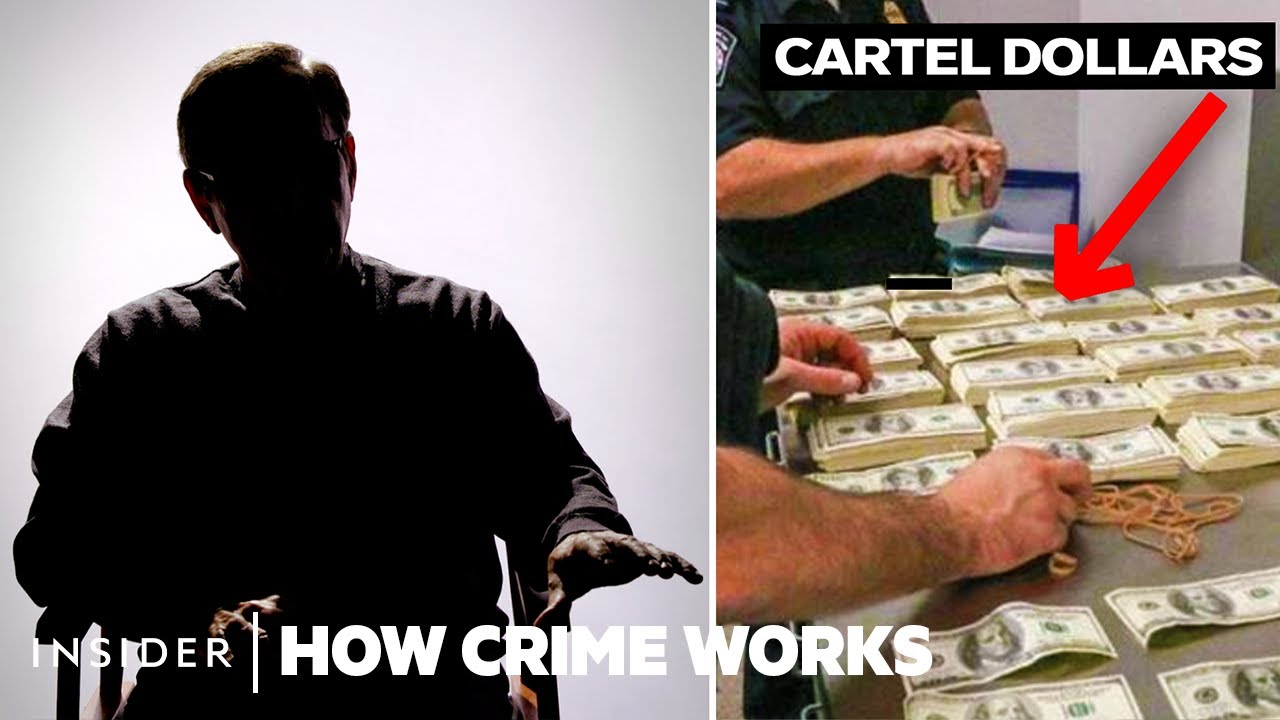
Here’s a video from how crime works on ones laundering.

Sure, that works, but the Treasury and Western Union and the retailer know who sent it and to whom.
And they will block you if you send too much $$.

Not a bad video.

I still assert this is true. I haven’t found a cite that directly shows this but look at the following:

The serial number includes a letter that identifies the issuing federal reserve bank. If serial numbers were recorded when destroyed then allocating destroyed bills to a particular reserve bank would be easy with modern systems. Instead, the above cite states, “No sort is made of the Bank of issue.”

I’ll keep looking for more cites if you guys insist.

Yes? That doesnt say the bills arent recorded when destroyed. I mean they really have to be, right?

Here’s an article about the D.B. Cooper serial numbers.

Do they?

By a guy who wants to sell his books, about who Cooper really was, a guy who he claims lived until 1994, and got to spend the money.

So if you want to show “Cooper” survived and spend some of the loot for decades, just make up an unidentified “treasury” source.

who says-
he had heard about the FBI’s request to search all their incoming twenties against the Cooper list.

He chuckled at the idea that the B & E would actually DO that, saying they received ‘truckloads’ of currency each week, and that any search for bills before the days of scanning and computers would not have gone on very long. It was an impossible task, he said. He said such an order would probably have been ignored anyway, and it certainly would not have gone on for ‘years,’ as Ralph Himmelsbach claimed. and … What does all this mean? It means that after about June 1972, no one was actually looking for the bills anymore, and Cooper could spend them at his leisure, or launder them off safely",.*

So Agent Himmelsbach claimed the money was searched, and note Ralph Himmelsbach. was the senior FBI agent in charge of the case. In other words, an actual expert, not just some author with a odd theory and books to sell.

But I am not saying any search was made of the 20s. Maybe there was, but that is not my claim.

The bills were simply briefly sorted, and those due to be destroyed were recorded- but NOT where they came from, etc. In other words, all they would know is that the bills came in, about what year- and that would have been around 10 years later. (The life of a $20 is 8-11 years)

So, just that the bill appeared, not from who, or anything. And Electronic scanning started before 1970. Of course microfilm, not computers.

D.B. Cooper: The phantom the FBI couldn’t catch, and how he survived – The Beacon.
Cooper never spent the money, as it would be nearly impossible to. Once the serial number was reported, the FBI would have known his approximate location. So, it is likely that Cooper hid the money with the intention to keep it hidden.