There are a number of standard mixes of gravel, sand, lime, etc. that might be affected by this also. Having no binder like cement the composition of the sand might be more critical for their purposes such as providing temporary drivable surfaces, substrates for dry laid stone, shoring up softer ground, etc.
Yeah, like Road Base. I use that too. Lot’s of sand in it. Can get kinda ‘muddy’ though.
.
title says it all:
… but my (uneducated) guess is: that will always be a niche-thing … I don’t see that becoming the standard anytime soon (say, the next 50 years or so)
Not exactly relevant to the OP but Australia exports camels to the Mideast.
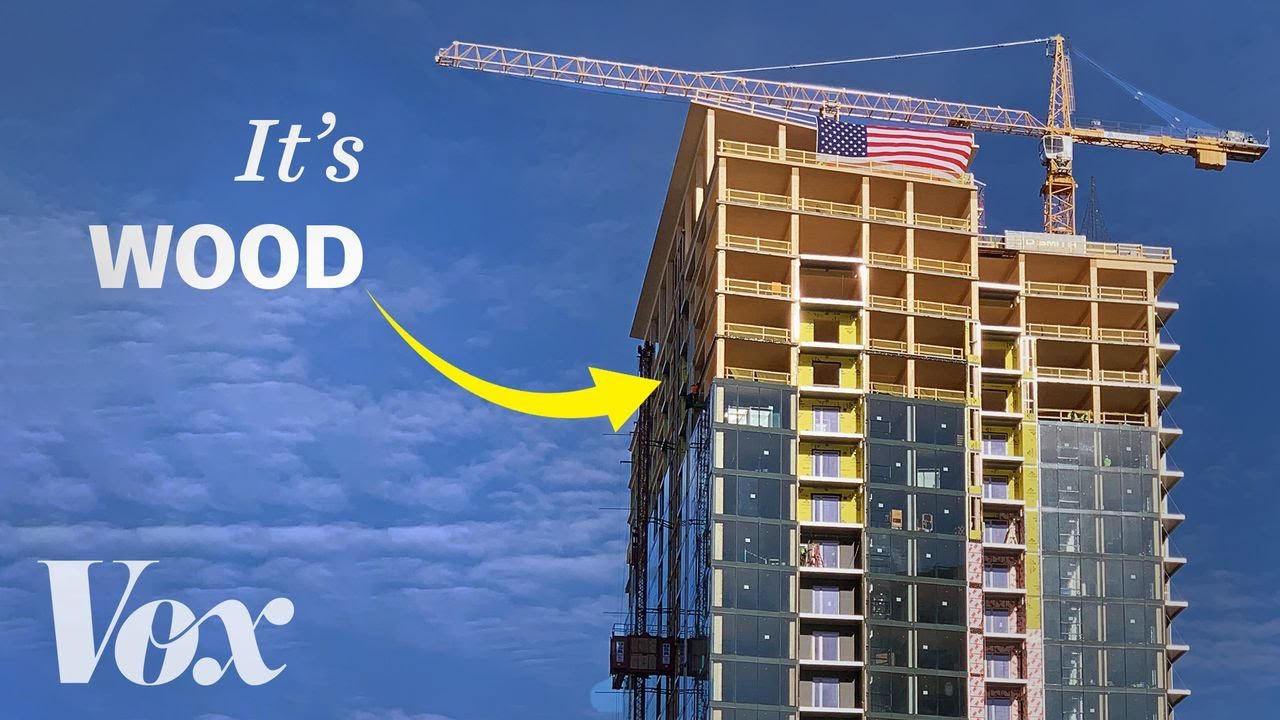
I think this one in Milwaukee is a bit bigger (if only barely…like less than 10 feet difference):
Full Title: The tallest mass timber building in the world is opening in downtown Milwaukee. It’s healthier for the planet. And you.
hahaha … great …
a “who got more wood” contest …
well, if it helps the industry to advance with those - ahem - tentpost projects, I am all for it
I just wonder how it will age over time. My experience with wood structures is they tend to warp as time passes. Not a year or two but a few decades . When amplified in a skyscraper that could be a real problem. I assume this was considered in its construction.
yea … even the laminate “engineerd” wood does that to a certain degree … but then again, that is def. an upside in seismic countries.
thats why its important to have those lighthouse project, and that’s a reason why I think transition (if at all) will be really slow … (“let’s see what happens to that thing in Vienna and come back in 40 years and do a critical evaluation”)
my (again, uninformed) opinion: wood is not the future, either - my guess is something along the line “airiated concrete 3D printed” along traditional steel structures for skyscrapers…
one of the reasons skyscrapers are relatively fast/cheap to build - is that you can partly industrialize their construction into factories, who deliver whole segments that will then be just installed.
I can totally see “smart” crawling 3D concrete-foam printers along those structures …
Here in Ohio we have ideal conditions to produce sand and gravel. Numerous glaciers scored the Canadian rocks and deposited the till in NE Ohio. Prehistoric lakes ground it down further. There are Many quarries in NE Ohio. Every county has several.
So (rambling Grandpa Simpson story) I live in an area called White Plains (not New York). I had assumed that the name had likely come from the large number of cotton farms in the area, but a few years back I learned that it came from large areas of white sand that are now gone. That surprised me a bit because I’ve always known the area for red clay soil. Giving it some thought I thought the sand might have been left behind from the lighter clay particles being washed away from cultivated land, so I took a shovel, bucket and water and washed some red clay from my yard until only sand was left, and found that the clay was somewhere around 10 percent by volume sand, so vast amounts of it.
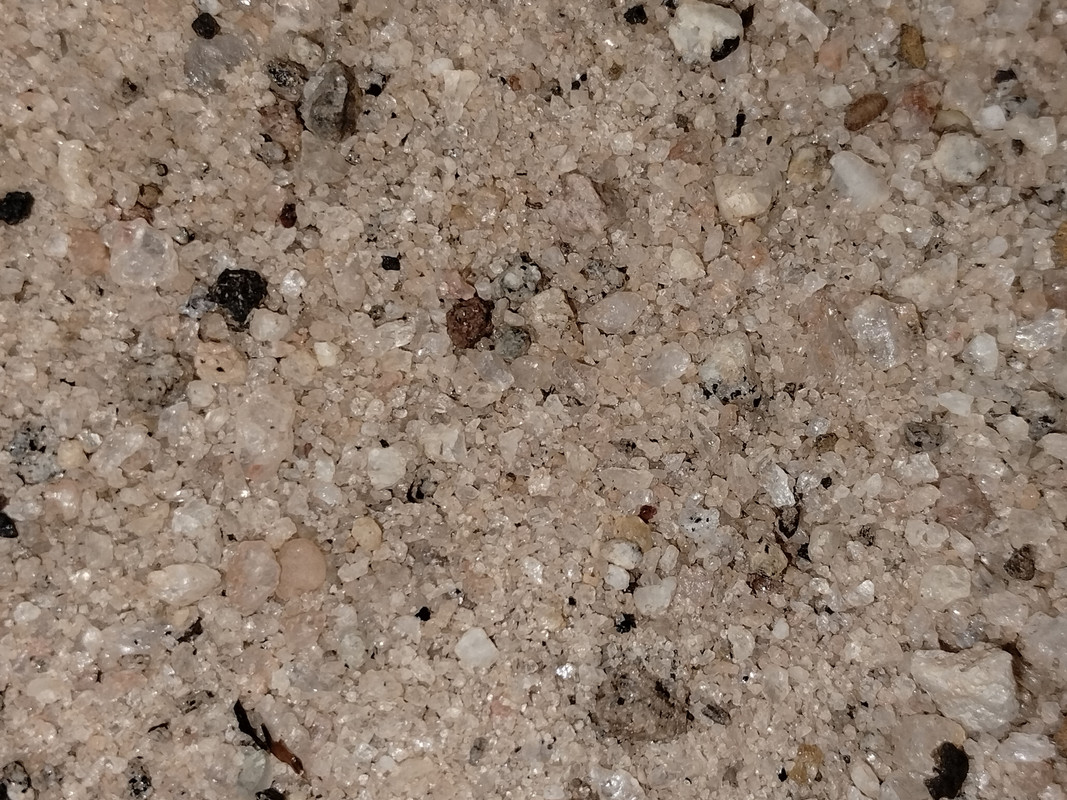
I decided to give the sand another look based on this thread. The grains are plenty jagged, but I think the overall size is too fine to be of use for concrete. (USB plug for scale.)

Even if the sand in African deserts was perfect for construction, which it ain’t, that hardly solves the problem. A cubic metre of sand might weigh 1.6 tons, so it isn’t cheap or easy to transport even when there is good infrastructure (roads and rail are rare in most deserts) to transport it.
The world has ample food. But that doesn’t make distribution easy or equal. Transporting heavy stuff ain’t cheap.
Rising water levels and erosion hardly help. Not to mention all those sandcastle competitions and wasteful Charles Atlas ads.
probably depends…
I recall that a nice long beach in Tenerife was nice and very “cliché” beige/sand colored, which is odd, as the island is obv. of volcanic origin.
Turns out they bring sand from the Sahara and dump it there, as tourists prefer the beige/yellow sand over the black, volcanic one …
So, if this can be done just to deposit it in the landscape, I guess a business case could be made to put it into (higher value) skyscrapers.
But logistics is def. a big cost driver.
on a related tangent: Do you know what item most determines the price of poultry? …
… the price of poultry food
I wonder to what extent heat absorbtion of black sand figures into that. I’ve gotten tender feet waking in beige sand beaches from the temperature.
I also remember walking around the dunes in the Sinai - in wind-blown dunes, the sand was so soft and not-sticky that you would sink up to your ankles; whereas beach sand I’m familiar with sticks together so well when wet you can build big sand castles.
Couldn’t find a banana?
Maybe it’s a USB banana.
Good question.
Most of the black sand beaches I’ve experienced, and it’s not a huge sample, had rather large & rather sharp grains. Fine in shoes, but miserable to walk on barefoot. I expect there are well-worn smooth small-grain black sand beaches someplace on this large good Earth. I haven’t encountered them much.
I was under the impression (based on minimal information) that most black beach sand was volcanic material, similar to stuff I use for sand blasting. Black river sand may have a high magnetite content making it good iron oar after some initial separation.
The compressive strength of sand must be important in concrete so it’s not just shape that makes sand suitable for concrete.
Sounds heavy. Don’t drop that!
 [Something that should be witty belongs here]
I visited a nickel mine and smelter once. There was a huge mountain of the residue from the smelting process. I reminded me of volcanic residue. I asked what was in it, and they told me it was about 50% iron. I suggested they could use it to make steel, and the engineer on the tour said it wasn’t worth it, that regular iron mines had ore that was much more concentrated, up to 80%.