There’s actually a robot in Japan that can play rock-paper-scissors with a 100% win rate, based on seeing what its opponent is throwing and reacting quickly.
Alex Dunphy made one in her robotics lab in Modern Family recently. Hilarity ensued. I wonder if that was the real one that they showed?
Now if only we could build a random numbat generator.
The big downside of most solutions above is that playing backgammon with a long pause to throw pebbles or whatever would be irritating. Backgammon also requires two dice, not one.
Making some equivalent of a die seems to me to be the only satisfactory way. It would not be hard to test for bias either, just throw for some agreed number of times and record the results. In any case, both players use the same dice so any bias would even out unless it was sufficiently large for one player to notice before the other one and alter his play accordingly.
If we had wombats, cubes for dice wouldn’t be in short supply…
I was going to propose something similar which included burying the rocks. Your system is much less labor-intensive and just as effective.
Also: Loving this thread, btw.
Fair. Your #17 is probably a better solution if the players really don’t trust each other. Although it does take slightly more effort.
I was mostly amused at the very involved solutions that involve secretly burying things or manufacturing nearly-fair coins.
Well, really I was just saying to find the closest rock to where the person dipped their finger. If there is contention as to which is closest (right in between two rocks), repeat the ‘roll’.
If you’re happy that pseudo-random ordering by one person and picking by the other is sufficiently random, I suggested many moons ago that you could “write” 1 through 6 using small things, have one person jumble and hide the small things under larger pebbles that are big enough to hide them, and then have the other person pick one. Counts of small seeds hidden under flat pebbles would work, sitting there right next to your backgammon board.
All that’s necessary is that the things symbolizing 1 through 6 are not permanently attached to the larger things that are hiding them, so that they can be jumbled differently each time.
What is burying things in sand supposed to add to improve this?
Humans are terrible at picking random numbers. Really, really awful. So the finger thing is fundamentally flawed. People will try to figure out the other person’s flaws and choose accordingly. Hence this is why Rock-Paper-Scissors is interesting. If RPS was truly random, why play it?
People typically have either a preference or an aversion (more common) to picking the same number twice in a row, for example.
The 6 stones under 6 plates is superficially interesting but human biases will muck it up. The hider will innately have subconscious prejudices and the picker will try to exploit that (or conversely, the hider can exploit the picker’s biases).
septimus still has the best method by far. (The coin pair stuff is a classic. Thermal noise from a zener diode at breakdown voltage is a geeky equivalent. The real trick is to handle drift of the output over time.)
Agreed, it would become a “game within a game” like rock paper scissors.
However, as I noted many posts ago the hiding-6-things-in-pseudo-random-order-and picking-one method is greatly improved by doing two or more iterations. The number of paths grows exponentially to a point where it’s impossible to use psychology to try to manipulate the outcome.
For two iterations, have two sets of 6 things hidden in pseudo-random order, one set up by each person. Person A picks from Person B’s setup, and the outcome determines which of Person A’s setup is then automatically picked. You could do more than two iterations, setting them all up beforehand, and going back and forth mechanically to reach a final outcome. I think that 3 iterations would certainly be effectively random, and probably 2 is enough.
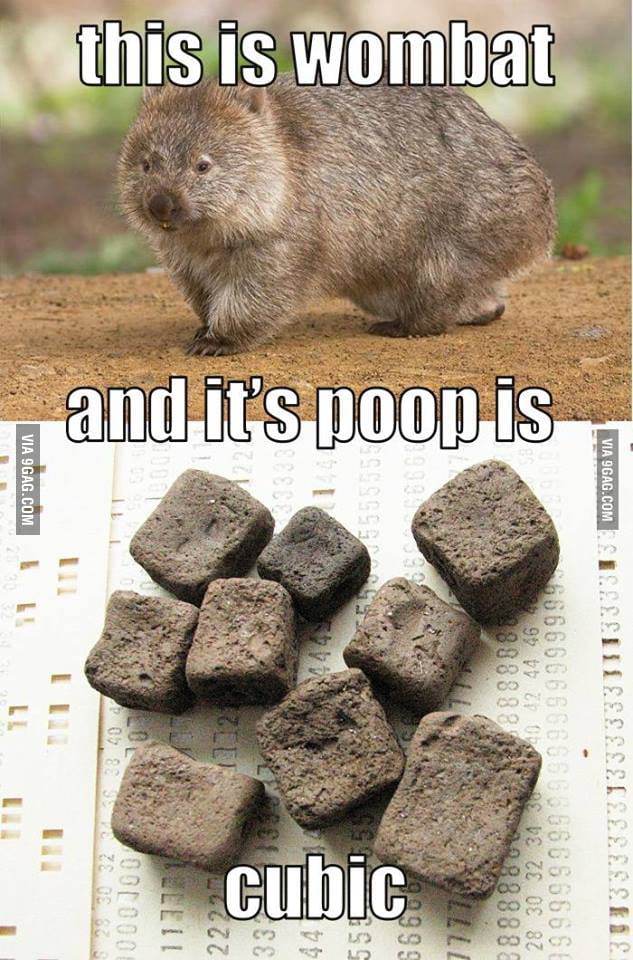
…I just realized: There’s a designer of dice online who calls herself (I think she’s a her, at least) “wombat”. Now, granted, not all of her dice are cubes, but…
EDIT:
Added link. And on double checking, he’s a him.
Bolding mine. Seriously I just skimmed some ideas. I didn’t quit get yours at first. Burying things in sand in an area where one is chosen is similar to your idea of covering things with flat rocks. I think it would be a bit quicker as well. :shrug: Admittedly, my system would work best with some sort of flat bottomed dish, or ad least hard ground that you could layer a flat covering of sand on.