When I was off at college, and would call my grandmother long-distance to wish her “happy birthday,” she got very antsy if the call lasted longer than a minute. “Don’t spend that kind of money!”
Cocaine has never really gone away, but what really undermined its reputation was crack– converting it into smokable rocks that became popular with the poor. Nothing like having something be a vice of poor minorities instead of wealthy yuppies to suddenly make it a priority problem. If you don’t hear as much about crack these days it’s probably only because meth has overtaken it.
My law firm used to do something like what you describe but ended it just a few years ago.
Prior to that, I worked for a big firm that would do a company picnic. That same firm took everybody on a cruise, as well.
…
When I was a kid, Old Spice aftershave (which I still use; it reminds me of my grandfather) came in a glass bottle.
When I was a kid, marijuana could get you sent to prison for life, but you could legally buy ephedrine and androstenedione (a precursor to testosterone made popular by Mark McGwire)
Speaking of workout supplements…
When I was a kid, steroids were used by professional bodybuilders, but not at the levels sometime seemed today. It was also not legal to just get a doctor to give them to you; now, it’s called “testosterone replacement therapy” and is widely advertised.
At least in my experience, the second era seemed to have lasted well into the '80s and early '90s. It still seemed to be a popular drug among yuppies of my acquaintance, and some of my co-workers at my first job, in that era.
There was a smoking area for students at the high school. The teacher’s lounge was the smokyest room in the building. They all chain smoked during breaks between classes and it reeked. Hell, everybody smoked everywhere, even pregnant women.
We kept our hunting guns in our cars in the school parking lot, nobody cared, school shootings were not yet a thing. Went hunting or plinking after class.
Still had a Drive-in-movie, a large parking lot with speakers you put in the car window. Movie would not start until the sun went down so if it was a triple showing you had a legitimate reason to bring your teenage girlfriend home at 2:30am.
Calling someone long distance on the telephone cost serious money. And that is all the telephne did, make phone calls.
Cars were not as well built. The engine tolerances were sloppy, and you always checked the oil because they would burn oil. If you got 40k miles out of one it was probably time for a rebuild.
TVs were crap and rarely recieved a clear picture. Cable was in its infancy. I didn’t own a color TV until I grew up and bought my own, it was expensive too! Now you go to Costco and buy a 60 inch smart TV for very little.
No 24hr news. The news came on 5pm or 6pm for about an hour and that was it. No more news until the next day. Few talking heads giving an opinion piece unless it was short. Unless it was what was known as a "special interest’ story you learned nothing much at all about what some celebrity was doing, there were magazines for that sort of thing.
Which reminded me: the prevalence of daily newspapers.
In the '60s and '70s, even smaller cities typically still had two or more newspapers; often one was a “broadsheet” and the other a “tabloid.” Frequently, one of the papers had a more conservative editorial stance, and the other had a more liberal/labor stance. And it wasn’t uncommon for a city to have both morning and afternoon papers.
We always had a newspaper subscription, and it was the norm for families, at least in our socio-economic stratum, to get at least one newspaper, either by subscription, or buy buying the daily paper at a newsstand. It was also common to be able to get copies of big out-of-town papers at newsstands or even at the grocery store: in Green Bay, you could easily get copies of the Chicago Tribune, the New York Times, the Milwaukee Journal, the Wisconsin State Journal (Madison), as well as the Wall Street Journal.
Wow, thanks for the memory jog: back in the day, The (Baltimore) Sun had a 6AM edition, a noon-time version and then The Evening Sun around 5PM. I might be slightly wrong on the times.
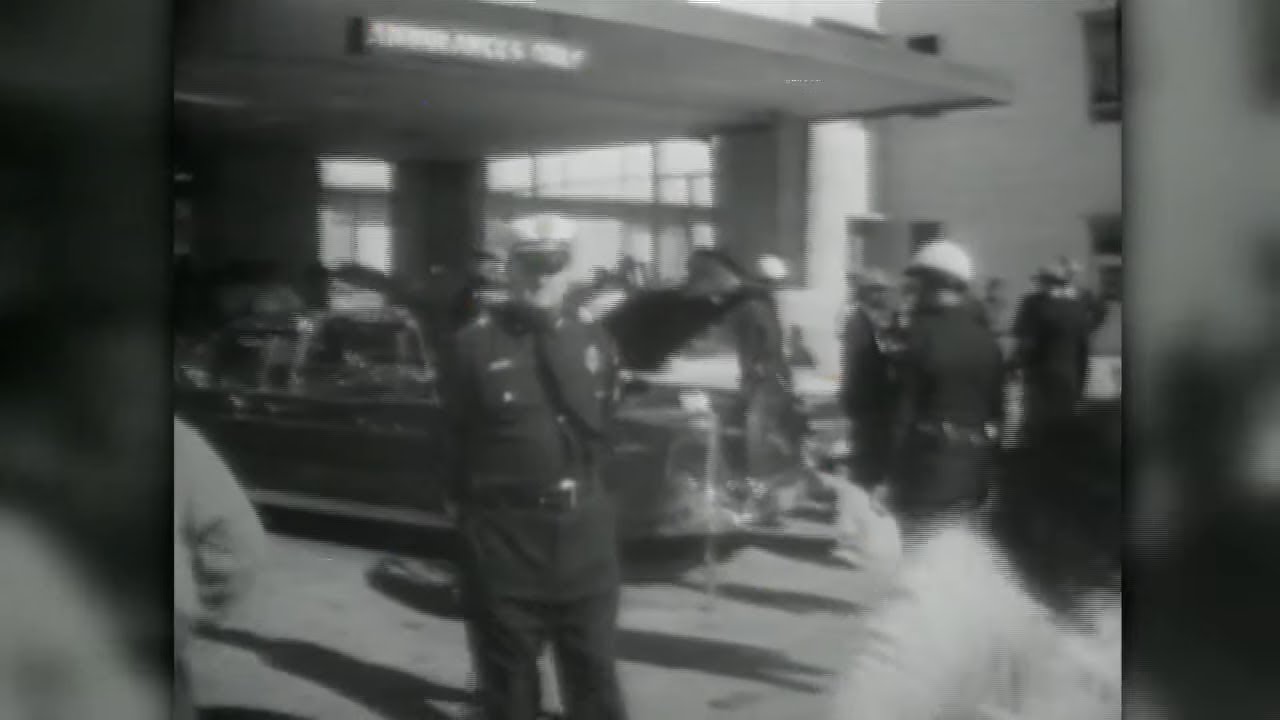
When something happened at other times, they would break into regular programming for a “special report.” Do they still do that?
For some reason I was just thinking of drive-in movies, and specifically the intermissions (prit’ near every drive-in did at least double features). When I was very young it was fairly common for cars to have a spotlight on the driver’s door — presumably to check addresses — so the theater would put a moving light on the screen that you were supposed to follow. The rest of the intermission was taken up with exhortations to visit the snack bar, interspersed with ads from local businesses and not-so-subtle hints that it would be a good idea to go to church on Sunday (never Saturday, that was for heathens).
As for a/c, we never had it in the house that my father bought before my older brother was born and from which he made his last trip to hospital. I still don’t have central air, but then it’s only been the last few years that even a portable unit has been helpful here in western Washington.
My uncle had one of those. IIRC, the gear ‘shifter’ was a series of big-ass buttons that you pushed in to shift gears. Something like this, I think:
Only 3 network TV stations.
AM radio ruled.
I don’t think this is all perspective. Compared to even thirty years ago it seems like there’s been a general infantilization of society. A century ago you’d have looked like an imbecile if you called 17-year olds “children”.
Heck, in the late sixties/ early seventies our family, by no means wealthy but highly valuing literacy, had four different sets of encyclopedias: Encyclopedia Britannica for adult reading level, World Book for when we were teens, and two different sets of children’s grade encyclopedias.
Of course, but we’re going to get a push notification on our phones as our first notice.
Here’s a particularly notable example of a breaking news report, from November of 1963
And a decade or so before that, you’d have looked that way if you called them “teenagers.”
We had five, three VHF, and two UHF, including the “educational” channel, but we needed a special, more expensive set with a hoop antenna to watch them. Also, my father could repair the TV by replacing vacuum tubes. A local drug store had this enormous console into which someone could plug a vacuum tube into the proper slot, push a button, and a needle would point to “good” or “bad”, and then a replacement could be bought.
The AM radio stations that played rock and roll limited themselves to the top 25, although they would introduce new songs from established musicians. The DJ would announce each song before and after playing it, unless they were using a new gimmick called by one station the “Twin-Spin” - two songs in a row!
Our record player had four speeds - 16, 33, 45, and 78. I never saw a 16 rpm record anywhere, or ever heard of anyone owning one or a store selling one. But it was fun sometimes playing records at different speeds.
When i was a kid, the only allergy medicine you could buy made you drowsy. So you had to choose between sneezing and sniffling all day in school, or being barely awake.
My mom used to tell me to “take a half” when she heard me sneezing in the morning.
Non drowsy allergy medicine was a game changer. I take a pill and a mist up my nose most mornings. It lets me function during hay fever season.
Apparently so. Here’s stuff from some place called Oxford.
The movie Mall Rats is about this phenomenon. Kids today wouldn’t relate.
Another I aspect of life in Southern England in the eighties was the existence France. Which all English teenagers knew existed purely to provide English teenagers with items that are restricted in the UK during school trips to France. Specifically bangers (firecrackers in the US), porn (actually just playing cards with naked women on the back), and for the especially cool* kids switchblades.
I have no evidence these same items are not routinely procured with impunity by English school kids in France, but I don’t think so.
‘*’ as in destined to a life of petty crime and menial jobs without leaving the nearest small town
Until I was 10, we lived in suburban Chicago, where we were spoiled by having stations for the three major networks, a PBS station, and three or four independent stations. Three of those four were on UHF, and could be harder to pull in, but between WGN (channel 9) and WFLD (channel 32), there was lots of programming for kids in the morning, and afternoon.
We then moved to Green Bay, where there was just ABC, NBC, CBS, and PBS stations. It wasn’t until I was in high school (around 1981) when the area got an independent (low wattage UHF) station.
My understanding is, to the extent that 16 RPM records were made, it was mostly for spoken-word recordings. The slow speed meant the fidelity wasn’t great for music, but it was used for audiobooks for the hearing impaired, religious recordings, recordings of political speeches, etc., 16 RPM was also sometimes used for background music (for offices, restaurants, etc.) – a lot of the Seeburg background-music “jukeboxes” played special 16 RPM records.
Back when comedy albums were a thing, what speed did they typically play at?