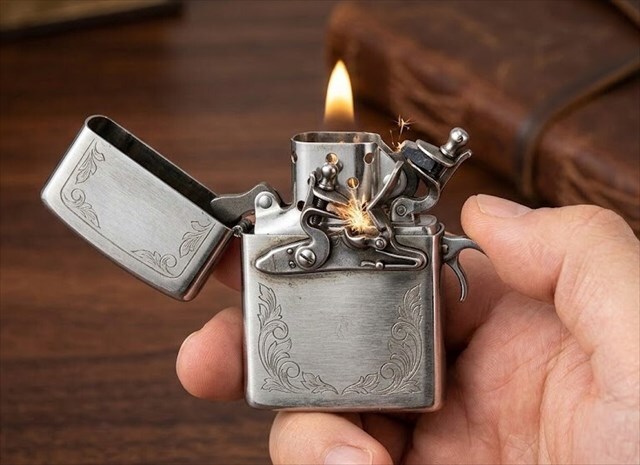
So if regular flint doesn’t work with the existing wheel in the Zippo (it might), a sufficiently skilled blacksmith could fabricate a replacement out of wrought iron and that probably would spark in conjunction with natural flint.
Or pyrite might work as a replacement - it was used in wheel lock guns, which are basically the same mechanism as a lighter.
The stuff called “flint” in modern lighters is NOT the same as the natural rock called flint. It’s actually an alloy based on the metal cerium and has been known by various names such as mischmetal or ferrocerium (because the alloy often includes iron), and firestarters based on it are variously known as ferrorod, firesteel, etc. In modern lighters you’re scraping sparks off the ferrocerium using a hard steel striker; with natural flint and steel you’re striking sparks off the steel using the hard flint.
For firestarting this is a big deal because of one huge fact: the sparks struck with natural flint and steel aren’t hot enough to reach the flash point of most flammable volitiles. They were hot enough to ignite black powder obviously but usually were only able to get pre-charred material to start smoldering as an ember, which could then be used to get tinder to light. Mischmetal sparks are much hotter and can produce flame directly, either with volitiles or so-called “flash” tinder such as cotton lint that is finely divided enough that it will catch directly. So I would say that without advanced chemistry you’re not going to be able to renew your Zippo “flints” once they’re gone.
ETA: and so said multiple comments before me. Oh well.
If you are interested in the spark producing stones there is a nice chapter in Primo Levi’s book “The Periodic Table” about cerium and how he and another inmate in a concentration camp work to carve flintstones for the black market from a bigger piece of cerium, with lots of sparks produced in the process. Here is the story, page 139 if the link is not set at that point:
The whole book is nerdy to read, but that chapter really got me. It’s been a long while, I hope I have given the content more or less correctly. Imagine a world where a flintstone for lighters is so valuable that you risk your life at night in a concentration camp to get one right.
That and the account about potassium (page 50 ff.). Which, you know, does interesting things with water, particularly when you don’t expect it. I had to laugh (handbasket and so on, yes).
Can you enjoy the book without deeper knowledge in chemistry? Though I had chemistry classes at school and college (EE), I’m really not an expert in that field. But I could follow the chapter about cerium quite well, now that I’ve learned what it is.
ETA: one of my best friends is a chemical engineer. We live 500 km apart and usually don’t exchange gifts for Christmas or birthdays, but if the need/opportunity will ever arise, I now know what book to give him.
Yes, it a personal account, not a chemistry handbook at all. Primo Levi uses the elements mostly as hooks for stories about things that happened to him. He tells about them, does not assume you have a chemistry degree.