Back of the envelope, a baseball thrown at 100 mph has enough energy to accelerate a neutrino to faster than 0.999 999 999 999 999 999 999 999 999 999 of the speed of light
So neutrinos are the Neapolitan ice cream of subatomic particles?
Welding suppliers. It’s used (a lot) for inert-gas welding. 700,000 tonnes a year are produced.
ETA: damn, zombie.
Not that much of a zombie, I’m not dead yet just busy! This whole discussion just leads to more questions, in a really interesting way! Never thought about places like Liquid Aire or industrial suppliers. Makes sense.
As answered above, you can just buy it, and that’s the plan in this case. However, during early planning, the idea was on the table to just construct an argon extraction facility on site and get the argon straight from the air. That ended up being less cost effective.
It is expected that we are bathed in very low energy neutrinos from the early universe. In the same way that the cosmic microwave background radiation is a heavily redshifted glow from the time that the universe first became transparent to photons, so too is there a cosmic neutrino background made of the neutrinos streaming through the universe since the time that it became transparent to neutrinos.
These neutrinos have never been detected, but there are many pieces of experimental data and theoretical connections in physics, astrophysics, and cosmology that break if they’re not there, so… there’s a high confidence that they’re there.
The neutrinos are still very light, so they’re not quite sitting still in the local rest frame of the neutrino background, but from an energy perspective they may as well be. And the detection approaches wouldn’t change much if they were slower.
There are active experimental efforts underway to detect these neutrinos. The most promising scheme is to use these neutrinos to induce tritium decay and to detect the electrons so emitted, as these electrons would have a telltale unique energy. Normal tritium decay produces electrons that can have any energy over a wide range, but there is a maximum due to energy conservation. In comparison, very low-energy-neutrino-induced tritium decay leads to an outgoing electron with a specific energy that sits just above the regular tritium decay electrons’ maximum energy by an amount of twice the neutrino mass (times c2). Significant engineering challenges exist, though, one of which is being able to measure the energies of the decay electrons precisely enough to separate the rare neutrino-induced decay from the zillions of regular tritium decays that would be also happening all the time.
If it were truly stopped in the lab, yeah, it would just fall through the floor and begin orbiting.
While true, you don’t need a neutrino to have such an impressive string of 9s because a baseball at 100 mph has a LOT of energy compared to any known particle’s rest mass. The pedestrian proton with that amount of energy would have a speed around 0.999 999 999 999 999 999 999 999 c.
If this works, can you use it to “weigh” neutrinos?
In principle, yes, but you get that along the way anyway in a much “easier” way. The maximum energy of the electrons from normal tritium decay is set by energy conservation, but since a neutrino has finite mass and a neutrino has to be created in the normal decay process (beta decay), this maximum electron energy is shifted down by one unit of neutrino mass (times c2) from the theoretical zero-neutrino-mass maximum. Direct measurements of neutrino mass use this feature as their measurement principle.
Graphically:
                         m_nu   m_nu
                        <====> <====>

########################------.------$--        <-- electron energy axis
                       M      T      C
The hashes (#) represent the range over which normal tritium decay electron’s can have energies (highly not to scale; that part of the graph needs to be about 4000x longer). “M” marks the maximum energy they can have. “T” marks the theoretical maximum energy they could have if the neutrino were massless. The gap between M and T is exactly the neutrino mass. Then, in the novel low-energy neutrino capture (C) process, the neutrino (and its mass) is being added to the system instead of created out of whole cloth, so you get another gap between T and the C (where capture-produced electrons all live). Definitively observing “C” events is pretty much strictly harder than measuring the M-to-T gap using normal decay.
Very true - I misunderstood the OP to some extent; I thought he was suggesting that neutrinos would require a lot of energy to travel at the (less than c) speed that they are travelling at, but he was thinking they were actually travelling at the speed of light, not lower than it. A fastball was just the first small (by human standards) measure of energy that came to mind.
Thanks for this every interesting an well informed discussion. The / in my post after unlikely was a typo that was supposed to be a ? indicating that I was unsure whether or not they were likely to exist. So I was curios about the answer.
When you say “very low” how low do you mean. Do you mean low as in 10% the speed of light or low as in measurable in km/hr without a lot of zeros.
The former, so still far from sitting-on-a-lab-bench slow. A typical kinetic energy would be circa 0.0001 eV. Picking a neutrino mass around the current upper limits from terrestrial measurements, a typical relic neutrino (as they are also called) would be moving around 1% c. Picking a neutrino mass around the current cosmology-based limits gives a factor of three faster neutrinos, so around 3% c. Assuming the neutrinos are as light as they possibly can be and still be compatible with neutrino oscillation measurements (which are the only measurements to date that demonstrate non-zero neutrino mass), the heaviest neutrino type would be moving around 6% c and the lightest neutrino type could have any speed up to c since its mass could be anything down to zero.
As an aside, I recall reading that if our sun went supernova (I know it will not) the thing that would scour the earth of life would be the neutrino burst. That’s not to say there wouldn’t be other lethal problems from the supernova but neutrinos are what would kill you (and everything else). As weakly interacting as they are there would just be so many it’s sort of a cosmic sandblaster (which is saying something since there are somewhere around 100 trillion/second passing through you now).
I think neutrinos have already been detected. See video below (jump to around @5:30 in the video if you want the shorter version).
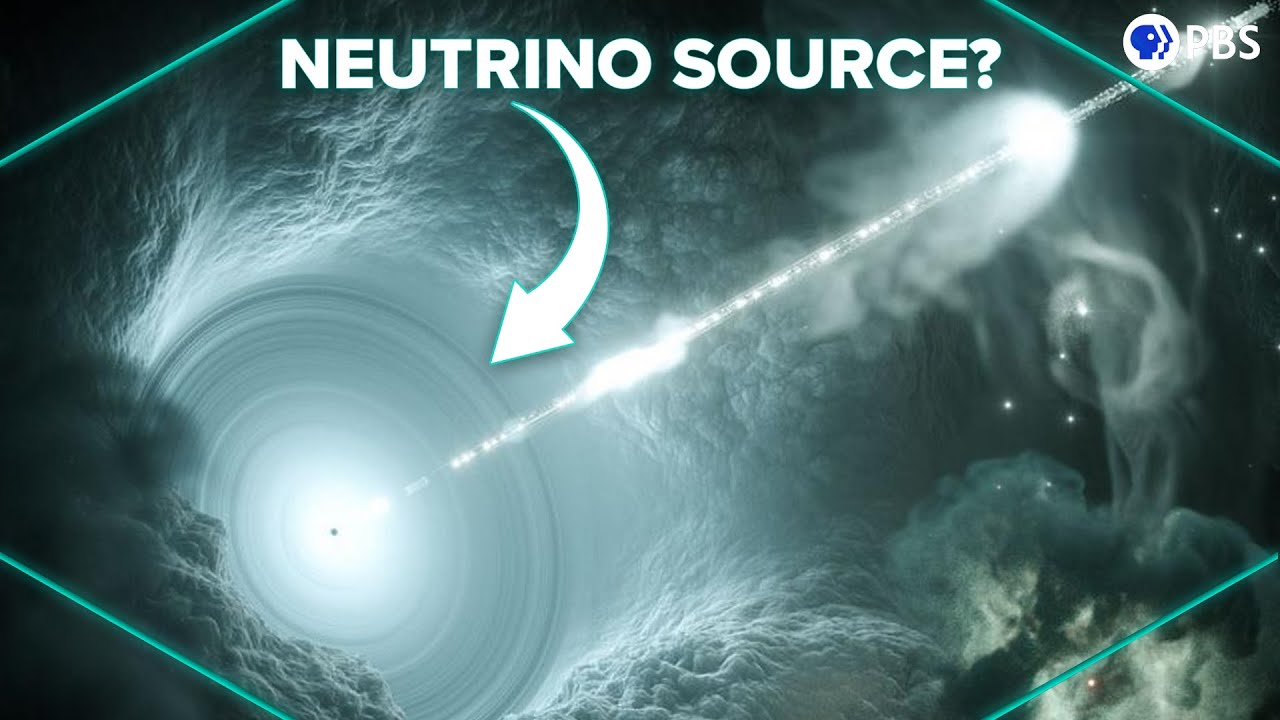
Yes. When astrophysicists first tried to model supernovae, they had trouble getting the model to go boom. Just didn’t have enough energy to overcome the gravity. Until they incorporated the neutrinos into the models.
They certainly have, many times from many sources using many techniques across many decades (first in the 1950s). My post was specifically about relic neutrinos, a.k.a. the cosmic neutrino background (in analogy with the cosmic microwave background), which have yet not been detected. This was in reply to @Buck_Godot’s exploration of the idea of a low-speed neutrino.
While you are correct that earlier models didn’t go boom, it wasn’t because of lack of neutrinos. Neutrinos were always included. They represent 99% of the energy released in a core-collapse supernova, so you can’t pretend to do anything sensible without them. The lack of boom was much more subtle. For instance, to ease computational complexity, symmetries were often imposed, but one really does need the full hydrodynamically complexity of the 3D explosion, with all the turbulence and non-uniform material distributions within the stellar medium to ensure the shock doesn’t stall out.
I don’t think that is quite right, in that if the sun went super nova everything in the solar system would be utterly obliterated. What you are probably remembering is this XKCD article.
The idea of neutrino radiation damage reinforces just how big supernovae are. If you observed a supernova from 1 AU away—and you somehow avoided being being incinerated, vaporized, and converted to some type of exotic plasma—even the flood of ghostly neutrinos would be dense enough to kill you.
IIRC the article (I cannot find it now, sorry) said the thing is neutrinos are moving very, very nearly the speed of light. Of course, light will reach the earth first and, if you are on the sunny side of the planet, you will be blasted. But, if you are protected (indoors or, better, on the other side of the planet, the dark side) then the light will not be an immediate problem.
But, ever so close on the heels of the photons are the neutrinos. And they don’t care about structures or the planet…they go right through them (mostly). So, those people are wrecked by the neutrino burst and most will die from that no matter where they are. Sure, all the other stuff will get you too but the first thing and unavoidable thing that gets most (all?) are the neutrinos.
But yeah…one way or another it would be over for the earth and measuring an extra second or minutes is of little difference.
Just to highlight this point:
The lowest-energy neutrinos we’ve ever detected have so much energy that their speed must be, at minimum, 99.99999999995% the speed of light, which means that they can move no slower than 299,792,457.99985 meters-per-second. Even over cosmic distances, when we’ve observed neutrinos arriving from galaxies other than the Milky Way, we’ve detected absolutely no difference between a neutrino’s speed and the speed of light. - SOURCE
So, the photons would have basically no time to get to work on you (certainly imperceptible to a person) before the neutrinos came in and ended all life on the planet.
I guess its a question of how long death by neutrino radiation takes. Assuming that the XKCD is correct and there is an inverse square law for Neutrino radiation, you will receive about 5.3 times the lethal dose of radiation. Which I think would certainly cause irreversable death but do so in the normal way that radiation does through DNA damage leading to eventual cell death in days or weeks. So you would be a dead man walking from the neutrinos but probably not an actual dead man before you are vaporized by the energy of the light propagating through what is left of the planet.
In any case I think we can all agree with a surgeon general’s warning that states that solar supernovas are bad for one’s health.
The biggest difficulty, I imagine, is in measuring (or calculating) the baseline “normal” decays. It’s not like you can just shield your experiment from the cosmic neutrino background: Every beta decay experiment ever done has been conducted in the same neutrino background.
High-energy neutrinos have been detected (it’s very difficult, but it’s been done for many decades). Low-energy neutrinos, however, have not been.
The problem there was actually that the earliest models assumed spherical symmetry for simplicity. Once we committed to just throwing enough supercomputer time at the problem that we didn’t need that simplification, the model supernovas kaboomed just fine. Purely coincidentally, this was first done at supercomputer facilities associated with the US nuclear weapons program.
And the neutrinos in a supernova would kill you (at a 1-AU distance) well before the light had a chance. For practical purposes, at these distances, the speeds are identical. But before the particles (neutrinos or photons) can cross space, they have to get out of the star. To the neutrinos, that’s no different than crossing empty space, but to any other way of carrying energy, that’ll take considerably longer than all of the empty-space distance.
The normal decays are very well known. Relic neutrinos amount to an insanely negligible rate of events (like twenty-orders-of-magnitude negligible). For trying to detect the relic neutrinos, the separation in energy as diagrammed above is the key. That is, the challenge isn’t in knowing what the normal decay spectrum looks like but rather having the precision to measure the decay electrons’ energies well enough to observe them as energetically distinct from all the overwhelming normal decays.
To give an example of an energy measuring challenge here: To get the most chance of relic neutrino interactions you can, you want a lot of tritium. However, the very presence of the tritium means that electrons exiting a decay may collide with other tritium, smearing their energies and washing away the monoenergetic signature one is looking for. So, you can’t have very dense tritium. Which means you need to spread it out over a larger volume. Which introduces inhomogeneities, costs, limitations on sensing methods, etc. Even more extreme: tritium is diatomic and thus has intramolecular vibrational and rotational modes with energies on the scale of 0.1 - 1 eV. This means that an exiting electron’s energy is smeared on that scale. If you’re trying to measure features on that scale, that’s annoying. For certainly viable neutrino mass scenarios, it may be that monatomic tritium gas is needed, which introduces a big layer of complexity on an already complex experimental concept.
(The above issues affect direct neutrino mass measurements as well as potential future relic neutrino searches. Tritium density is a consideration already in the mass measurements, but so far the upper limits on mass aren’t down to the level that molecular tritium’s complications are a limiting factor. In the lowest mass scenarios, though, it will be.)
The delay is measured in hours, so if the above dosage estimates are right (I haven’t checked), you’d still live long enough to see your EM- and ejecta-based death.