Sorry @Stanislaus, my last post was not actually a reply to you, this version of the forum still catches me out sometimes.
This always makes me think of Game of Thrones, where the good, honest Stark men all speak with Yorkshire accents (Ned, Robb, John Snow - despite in reality, being of noble stock they would be speaking RP), but the evil Lannisters all ‘speak posh’.
Interestingly, the Stark women all ‘speak posh’ - rough local accents obviously aren’t for nice ladies. Unless you’re wildling - John Snow’s girlfriend had a Lancashire accent. Interesting touch, as Lancashire and Yorkshire have a centuries old rivalry.
No worries.
I have a very musical ear - I quickly pick up the accent of the place I’m in. So when I first left Scotland’s Central Belt for Durham, I sounded distinctly Scottish to my university classmates and incomprehensible to the locals*. But when I came back to Scotland after the first year people who didn’t know me thought I was English. (When I spent some time in New Zealand I came back with an extraordinary mish-mash of an accent, which most people pegged as Canadian.) I could actually hear some of the changes in how I spoke - “because” turned into “becuz” for example without ever consciously choosing that pronunciation.
I’m lucky, in that both my original and adapted accents are “acceptable” - soft Scots, as mentioned above, is considered trustworthy and intelligent and my relatively neutral English ditto. Just as well because what I can’t do - which a lot of people who are exposed to multiple accents can - is deliberately switch. Code switching can be really powerful because a) it lets you mix with a wider group of people and b) a measured dose of the “wrong” accent - e.g. suddenly going all Geordie with the posh boys - can really take people aback and get them to listen to you.
*E,g if we wanted to press clothes we had to collect the kit from the front desk, leading to the following dialogue:
Me: I’d like an iron please?
Porter: A what?
Me: An Irron.
Porter: What?
Me: An Irrron.
Porter: ???
Me: An irrrrrron. For takin’ crrreases out yer clothes.
Me: Literally mimes ironing
Porter: Oh, an i’on?
Me: Yes, yes, an i’on.
And this also plays on perceptions of accents, in that the Starks are bluff, no-nonsense men of their word who can’t be doing with all the flummery of court and the Lannisters are smooth, well-connected, privileged and convinced of their own fitness to rule over everyone else.
Quite so!
FWIW, my perception of your accent is in no way ‘posh’ - I hear it as neutral, standard English, with no trace of Hampshire - if anything I thought I detected a southeast England hint, but clearly not (at least by geography). Then again, I don’t think I have a particularly good ear for accents, and being from Bristol myself, which has some features in common with a Hampshire accent, means I may have simply missed those cues, being used to them.
When I hear myself speak I sound ‘posher’ than I imagine, despite living near Bristol all my life - my dad is not from the area and was privately educated so that must have had a lot of influence I think. I can code switch to some extent (I think most people speak differently with their mates down the pub compared with on the phone to their gran, after all) but more often I will catch myself unconsciously imitating someone’s manner of speaking - or indeed laughing. I think I usually notice before they do, there’s a fine line between speaking ‘in sympathy’ with someone and appearing to take the piss (which is never my intention).
Thanks - I never really thought of my own speech as ‘posh’ either. I do slightly pride myself on my vocabulary, but really, that’s a trick anyone can perform - this, people sometimes perceive as pretension or an air of superiority, but in truth, I just love words. I love the fact that our language has a hundred different ways to say the same thing.
If you live in an area with a strong or at least recognisable accent and you develop a different one it can be seen as a deliberate attempt to put distance between you and the people who kept the local accent. It sets you apart and some people will take that as rejection and/or a claim to higher status (not, as we’ve seen, entirely without foundation in that it does at least open doors.) In fact, often its the idea that their are doors, and you might want to open them, and leave either geographically or socially, that people feel unhappy about.
If we want to broaden the topic to other countries, I’d say that much of what has been said so far also applies to the United States.
A strong redneck accent definitely labels you, and people will assume that you are less educated, maybe a farmer, a gun-owner and a Trump supporter,
In america, a strong southern drawl means that you are from a white family with several generations of roots in the deep South. You will not automatically be accepted as a friend within a group of theater critics in New York…
And a Boston accent sounds like what the British call “posh”.
The difference between American and England is that England has a long history, with many more accents, most of which are identified with very,very precise locations, and clear social classes…
America has only about 4 or 5 accents, which cover very broad
geographical areas, and are also a little less rigidly associated with class status.
I would have said that a Boston accent sounds more “working class.” In fact, this was a minor plot point in the Ray Donovan TV series, when the protagonist’s wife feels self-conscious about her accent and seeks to practice it away so as to better blend in in Los Angeles.
I think that in the US, speaking in African-American Vernacular English may affect one’s social mobility and economic opportunities. As a white person, in some cases I find that the pronunciation of AAVE makes it almost impossible for me to understand what words are even being said.
Ther are upper class and lower class Boston accents.
Can you link to an example of each on YouTube?
Think Charles Emerson Winchester vs. Good Will Hunting.
Yes, Maj. Charles Emerson Winchester III from M.A.S.H. is probably the most prominent example of a Boston Brahmin (upper class) accent.
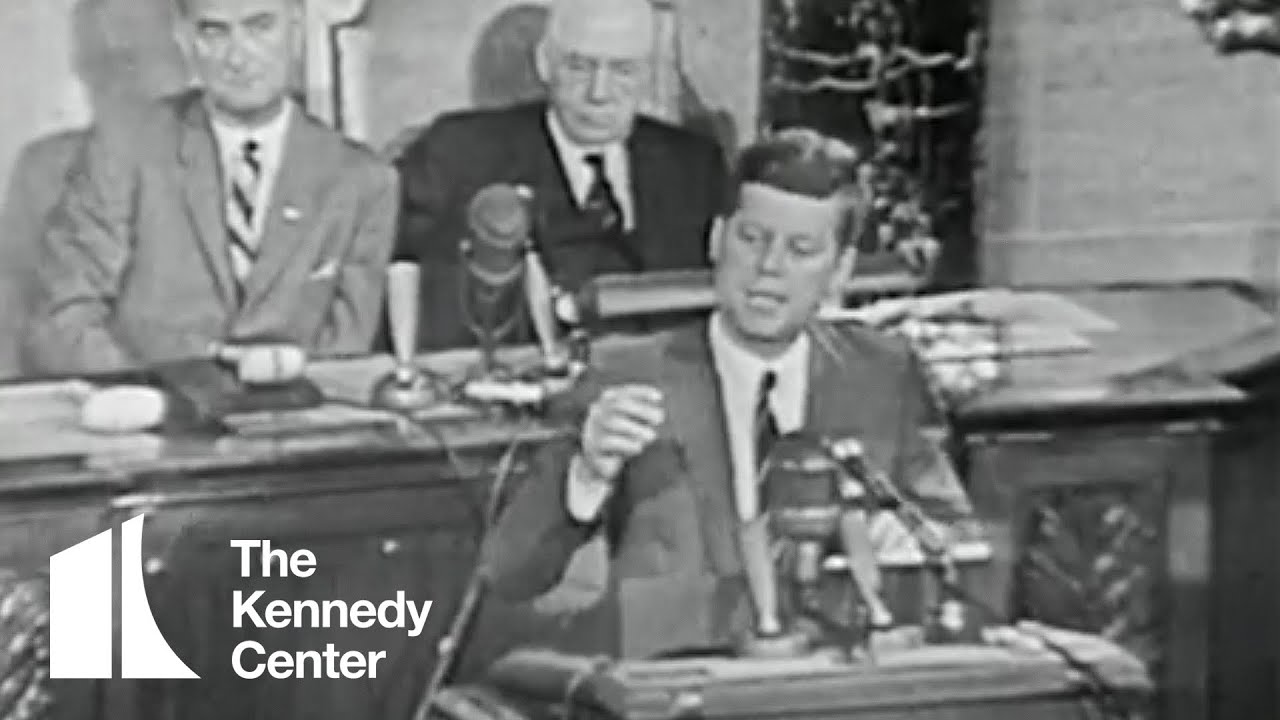
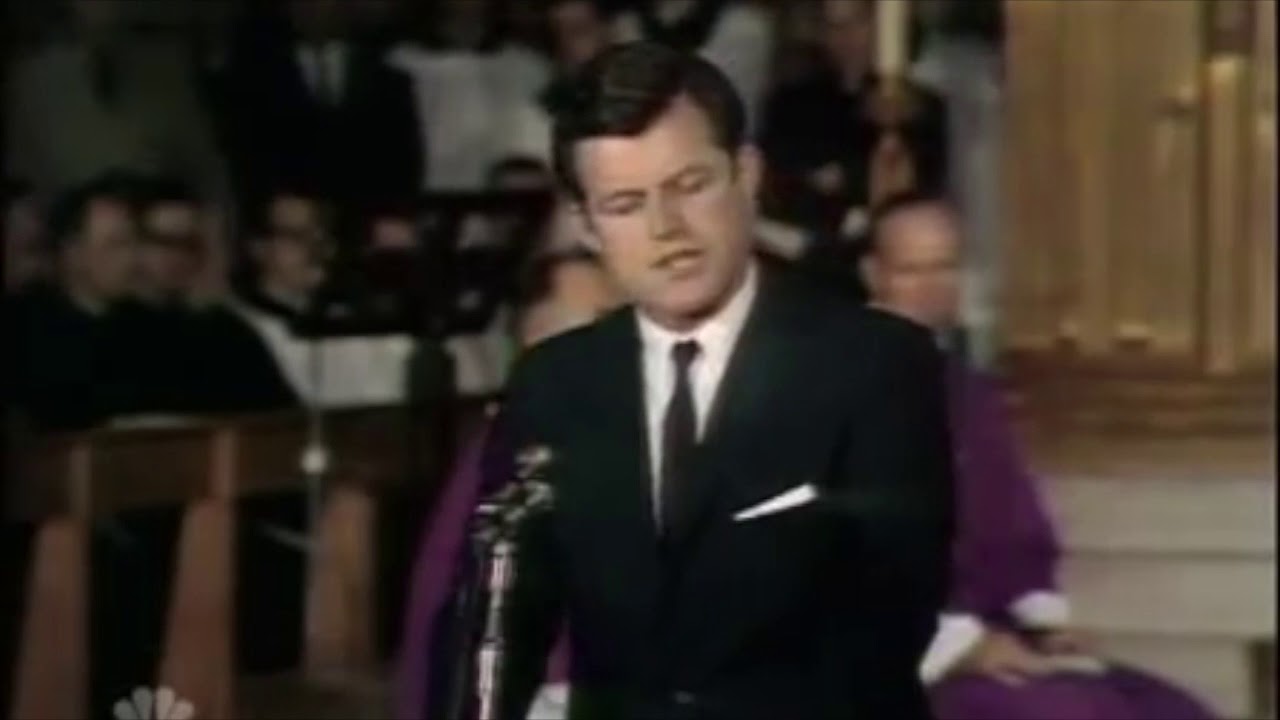
Also, the Kennedys –
John Kennedy –
Edward Kennedy –
A couple of old Boston Brahmins –

A working class Boston accent –
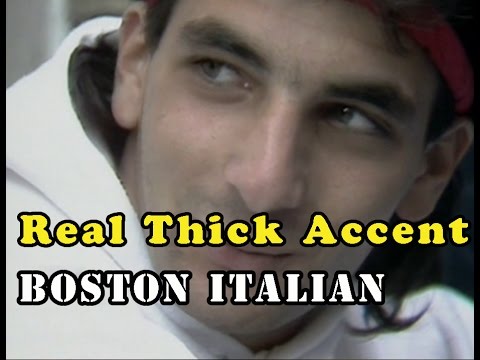
Indeed, the same reaction is sometimes seen against the first few people in a group who attend university, or just toward people who show an interest in reading, learning, music, culture, etc. It’s actually just snobbery of its own kind.
Yes, and of course the link with accent shift and university is not purely correlational.
Also, you can see here the push/pull factors that maintain the stereotypes about accents: people with modified accents are, for better or worse, people who have “gone somewhere” and people with unmodified accents are those “left behind”. It’s less to do with actual intelligence but does reflect the OP title -social mobility and economic opportunity - more closely (but not absolutely!).
I think there certainly used to be until some decades ago. Since then a certain amount of “reverse discrimination” has perhaps set in, as Political Correctness has gained traction in media and government.
I think there is probably still some unconscious bias, though. I will confess that in my reckless youth (well past the statute of limitations, officer!) I have gotten away with things I probably shouldn’t have, such as being stopped in my car at a roadblock check while, um, less than sober, but once the assured BBC accent came out I was just waved through…
A posh accent can be either and asset or a liability depending on the circumstances.
The Crown TV series has some interesting attempts at the constipated version of the English prevalent amongst Royalty. It does veer into ‘upper class twit’ territory. The English ‘Public School’ accent is well spoken English without a localised character. Speaking accentless English is a class indicator. Should you be in any doubt that their parents could afford £42,501 per year in school fees, they will refer to their chums as ‘Old Boy’, say ‘One’ instead of ‘You’ , wear an old shcool tie and drop in the odd Latin phrase into conversation.
A very good example is Jacob Rees-Mogg. Here he is explaining how as a politician, he is a man of the people, presumably thr prople that understand Latin. Cameron, Gove and Boris Johnson are all from the same social network. This can be a liability if your poltical message is intended to appeal to the wider electorate. Stinking of privilege is not a good look and Rees Mogg is especially challenged:

What is the US equivalent? Preppies?
Here is a posh young actress struggling to master a London accent full of challenging ‘glottal stops’ that will give her the street credibily required for a role in gritty dramas full of working class heroes.

London is a good place to start to find an accent that makes the speaker sound totally dumb.
In places with strong regional accents, socially ambitious parents send their kids to ‘elecution’ lessons to learn how to speak ‘proper’.
That’s partly because there are a fair few Yorkshire folk who rarely pass up an opportunity to tell us all so.
I’d say Manchester. The sitcom Lunch Monkeys is my cite. And Karl Pilkington.
Wow. I’m honestly impressed by how that sounds like a parody.