An iPhone 17 Pro Max battery stores just under 20Wh. A typical BEV with a battery capacity of say 75kWh could recharge that phone from 0 to 100% 3,750 times on a full charge.
An inductive burner, on the other hand, might well pull 1500w, which would drain a fully charged 75kWh battery in a mere 50hrs of continuous use.
You don’t want to compare amp-hours across batteries with different voltages, because it’s a measure of current delivery and the amount of energy a given amount of current carries varies with the voltage driving it. By my math, the Model 3 battery is somewhere around 187Ah, because it’s got a 400V architecture. Wh=Ah*V You want to convert everything to watt hours, which are a measure of stored power.
The rechargeable battery industry did us dirty by rating phone batteries in Ah instead of Wh and making people think that was a proper measure of battery capacity.
That’s what I was worried about. I was just assuming everything had 3.65 volts, because that’s the voltage of the cells in the Model 3. I know it’s a 400 volt architecture, but I found things claiming that the battery actually has 350 volts, but maybe that is just per string, or something.
A briefly lived show, Car Mythbusters or something like that, with Tory and Kari, found that on a fixed loop a car had more battery drain while charging a phone than not. That result seemed absurd, because maybe the phone is drawing a continuous 10 watts during an hour loop. I don’t know that car’s percent charge display is even capable of the resolution needed to depict that amount of drain.
Yeah, the cell voltage is 3.6 but batteries are, well, batteries of cells. A hundred or more in series, and then those chains of cells in parallel.
Anyways, it’s better to just not use Ah at all when talking about battery capacity, unless maybe you’re picking which pack of AAs to buy. You’re interested in power. Use the measure of power. Current is related via Ohm’s Law, but it is not the same thing.
As for charging phones from BEVs, it’s going to be a rounding error. It actually wouldn’t shock me if the draw from charging a phone is less than the standby current consumption the car uses to keep itself online etc.
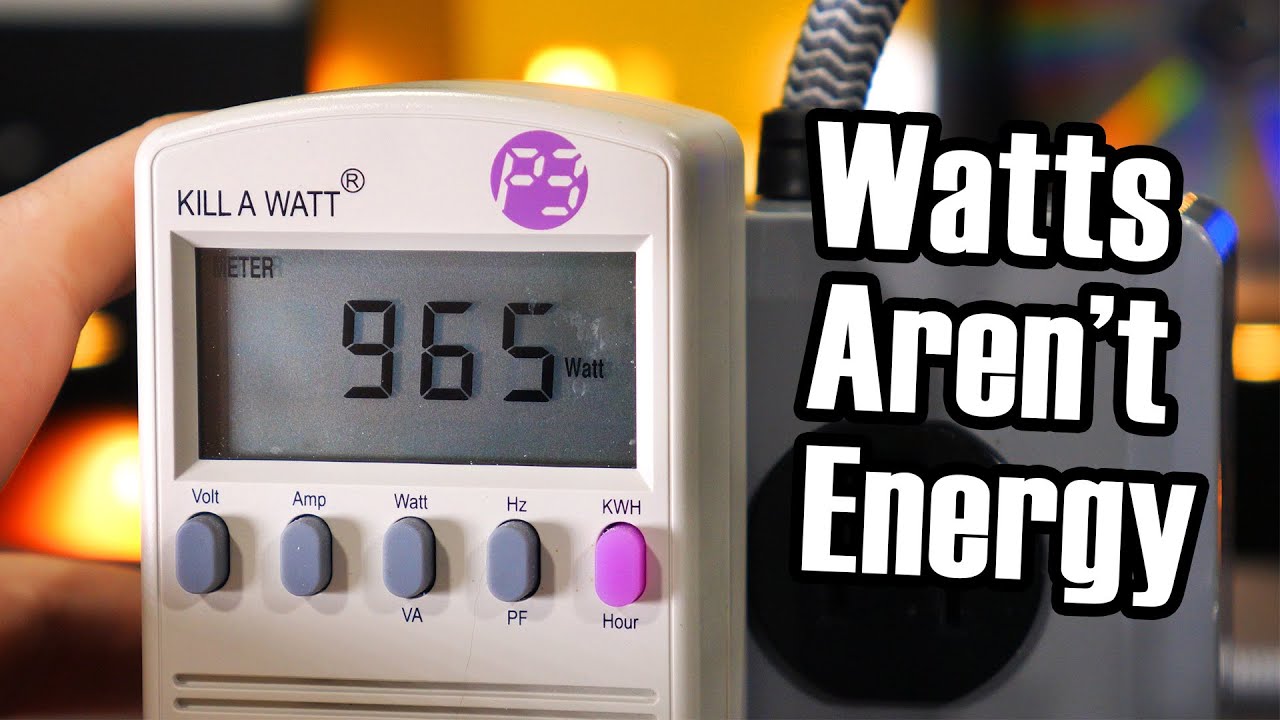
Correction – the important unit is energy – power is how fast you use energy.
Long diatribe on the difference:
But the point of the post is correct – phones uses so much less energy than a EV car that it isn’t a factor.
FYI I am seriously considering using induction for my hypothetical teardrop trailer. It would likely be the only reason I would have an inverter** – lighting and fans would run on 12V – maybe a 12V electric blanket. Maybe POTA* activities.
Brian
* Parks On The Air. Amateur Radio activity where you make contacts to other hams while at a park.
** Possibly a popcorn popper, rice cooker, or other appliance. But most of the time the inverter would be off
That’s my wife and I. But will probably change now that we are retired. We don’t HAVE to be anywhere. It’s very nice. It’s been hard to get used to that. Relax dammit.
One thing I was thinking about, and I promise I’m not trying to hijack, so please don’t dig too deeply into the analogy here:
As horrific as Trump’s immigration/secret police/concentration camp rollout has been, it’s demonstrated something valuable: the government can move fast on domestic policy when it’s motivated. Infrastructure things can happen in a matter of weeks, not decades!
If/when domestic policy returns to the hands of the relatively sane, and if/when Biden’s infrastructure bill, with its funding for charger build out, is restored, lawmakers need to take a lesson from the ICE rampage, and do shit fast. If that means bullying some local officials, if that means finding ways to cut through red tape, if that means cutting corners on process, all that should be weighed against the possibility of not finishing the project in a reasonable timeframe.
I’m having trouble finding the cite, but my understanding is that the subsidies for charger buildout were signed into law about four years ago, but a vanishingly small number of chargers have been built. That’s unacceptable, and that needs to change.
We are far from the point where public chargers availability is the limit of EV growth. The market of households with home charging easily achievable, for whom long distance travel is not a real concern (have another car, don’t do it by car, infrastructure is in place in their travel corridors, etc.) is still mostly unexploited.
The extensive infrastructure is the rate limiting step only after that market segment is more fully saturated. We are years from that. And if we can move fast in that when needed then there is no rush to do it now.
I think you’re looking at the logistics, and not the psychology. From the NPR article I linked above:
Elizabeth Krear of J.D. Power has been closely tracking why people who are thinking of buying an EV choose not to take the plunge. This pool includes plenty of people who are fully convinced of EVs’ green virtues.
“Those top reasons for rejection consistently, month over month, all have to do with charging,” she says. “Having the ability to charge in public, having enough stations readily available and visible, speed of charging.”
And over time, these non-environmental factors will get only more important, many analysts say.
“That first wave of [EV] ownership, they did believe in those environmental benefits, and that was one thing that pushed them towards ownership,” says Gordon, of Ipsos. “This next wave … that’s not what’s going to push them to ownership. Instead, what’s pushing them into ownership is going to be longer ranges, faster charging times, lower costs, better charging infrastructure.”
People don’t take a ton of road trips, but those road trips have a hugely outsized influence on vehicle-buying decisions. Improving fast-charging infrastructure will go a long way toward removing some of those key doubts.
Given that the infrastructure is helpful anyway and the money is already approved, and that the marketing is currently failing, and that the experts in the field are saying that the infrastructure is what’s going to work, I’m going with infrastructure.
This is true. I fill my Subaru Forester twice a year, for two trips i do every year. And when i went shopping for that car, i brought the bulkiest piece of equipment i need to haul with me, and literally tested each car to see how well it fit.
My husband suggested we buy a smaller, more efficient car and rent for those two trips. But i thought about how stressed i am during the prep right before we go, and annoying it would be to also need to rent a car, probably a day in advance for packing… And bought the giant one.
Financially, we’d have been ahead with the “buy a small car and rent twice a year” model. But maximizing financial efficiency isn’t the only goal.
I just bought an electric car because i still have that Forester, and will still use it on those two trips.
I remain skeptical. Fact of the matter there may actually already be adequate infrastructure in place for me to drive from Chicago to NJ and back, my most frequent road trip, with a next car. My being convinced of that is another thing. No matter how much infrastructure is there you need to sell people on making a change.
Also, people are used to the hassle of buying gas all the time, and don’t think about it. It’s not until i drive a PHEV for a few months that i realized how much more convenient it is to charge at home than to buy gas. In fact, it really wasn’t until i traded in that car for a gas car that i realized it.
I don’t think marketing makes you understand what’s actually easy. What cool, sure. But not what’s convenient.