A friend of mine born in 1978 (and thus much younger than me) was told in 2nd grade that her city was so industrially useful to the US that in case of nuclear war, it was sure to be obliterated. Thanks, teach!
I wasn’t worried. I was occasionally concerned. I paid little attention to it, except for it sporadically being a topic of conversation in headlines or on TV. After a while it didn’t seem like it ever would happen so I could forget about it.
Until they handed the keys to a sad orange lunatic, then I had an uptick in pessimism again.
I think most of us growing up back then “knew” where the local targets were and our proximity to same. We lived just downwind from a Navy Weapons Station.
Pretty much every podunk town has some local industry that this is said about.
And they’re all true. When you’ve got 7000 nukes, you can scrape the bottom of that barrel pretty deep on your target selection. OK, Washington DC and New York and the other top-priority targets probably had several nukes assigned to each, but even with that, there’s still plenty to go around.
Pittsburgh, in this case (thus steel)
Oh, OK, yeah, Pittsburgh was probably high enough on the list to have multiple bombs with its name on them. But it’s still true of the podunk towns, too.
I had spaced out the Cuban Missile Crisis when I replied above. I do remember being afraid when that was going on and that it was a huge relief when Russia blinked first.
Heh, yeah. I remember reading a scenario where the Soviets were expected to use high altitude air bursts over central and northern rural Texas in an effort to use them as anti-aircraft weapons against B-52s that would be taking off from San Antonio and heading their way over the polar ice cap.
I had read Alas, Babylon, by Pat Frank, and was terrified about what might happen, especially since I lived close enough to a major US city that was likely to be nuked.
Born in '81. So, for context, I am a good deal younger than most people posting in the thread. For the poll I selected “not afraid.”
Being a child of the '80s I have some very vague memories of seeing Reagan on television and knowing that he was “The President” but only having a young child’s understanding of what that meant. And expanding on that idea, I also knew that the Soviet Union existed and what nuclear weapons were, but all of that seemed so far from my world growing up in the Midwest as a child that none of that really penetrated my day-to-day thinking. As a matter of fact one of my earliest politically aware memories is of watching the Berlin Wall coming down on television in '89. I think I would have been seven or eight at the time. I didn’t understand the significance of it of course, but based on the way adults around me were talking I think I may have had some kind of intuitive understanding that I was watching history unfold in front of me. A couple of years later of course was the collapse of the Soviet Union, I would have been 11 or 12 at that point, and again I think I may have had an intuitive understanding that “big things” were happening but I lacked the knowledge or perspective to understand the ramifications of that.
As the 90s progressed and I entered my teenage years I think these two events happening as young as I was may have precipitated an interest in politics and world events. I knew things were going on that were important, but I didn’t understand them and I have always had an overwhelming urge to understand the world around me. It’s still a thing to this day. Nuclear war was an idea. Not a reality to me. It was something I watched in movies and read about in books. But I had been given to understand that the worst possibilities were in the past. Nuclear war was not a subject that was ever discussed during my school days. I may have been too young to have experienced that. We never did duck and cover drills. We had fire drills of course, and living at the northern end of Tornado Alley we regularly had tornado drills at school as well. But nothing related to any sort of nuclear exchange.
As others have noted previously, I’m far more concerned about a nuclear exchange today then I was growing up. But to be frank, it feels like a much more intellectual exercise than it does some sort of existential threat. I chalk that up to not having actually lived through the heyday of the cold war. The sense of immediacy and real danger just isn’t there for me, even now. Maybe that makes me naive? I don’t know. What I do know is that the general state of the world and the international order feels much more chaotic and uncertain now than it did in 1996 or 2006. (And I don’t select those years for any specific reason, just as a way to illustrate how much it feels like things have changed even in the course of my much shorter life compared to other posters.)
(psst…that hasn’t changed.)
I was born in the late 60s. Nuclear war was never a fear of mine. As a small child I was very afraid of tornadoes which was strange for a kid living in Jersey but I didn’t claim that it was rational. As an adult I was stationed in Germany in a unit that would attempt to plug the Fulda Gap after the 11th ACR got rolled over. There was a lot of training and many alerts in the middle of the night (Lariat Advance IYKYK). Then the Berlin Wall fell while I was there and things changed. Through all of it through all of it I wasn’t scared. I just didn’t think about it much.
This editorial cartoon won a Pulitzer Prize in 1963.
I was born in the early 60s and was never worried about nuclear war because I grew up Mormon.
We knew that the end times were coming, but it was going to be a battle between good and evil and we were the chosen people, destined to save the world. You can’t do that if you are nuked, duh.
If there were to be a nuclear war, God would have saved Salt Lake City.
Agree. To pick an example at random: Alcoa, Tennessee has only 10,000 inhabitants - but as the name suggests, it’s got a big aluminum plant, so it’s toast.
In western Kentucky, the Paducah Gaseous Diffusion Plant was one of three sites in the U.S. to make weapons-grade enriched uranium.. The other two were in Oak Ridge, Tennessee and Portsmouth, Ohio.
A plant that critical to national defense, you’d think the government would try to keep it a secret.
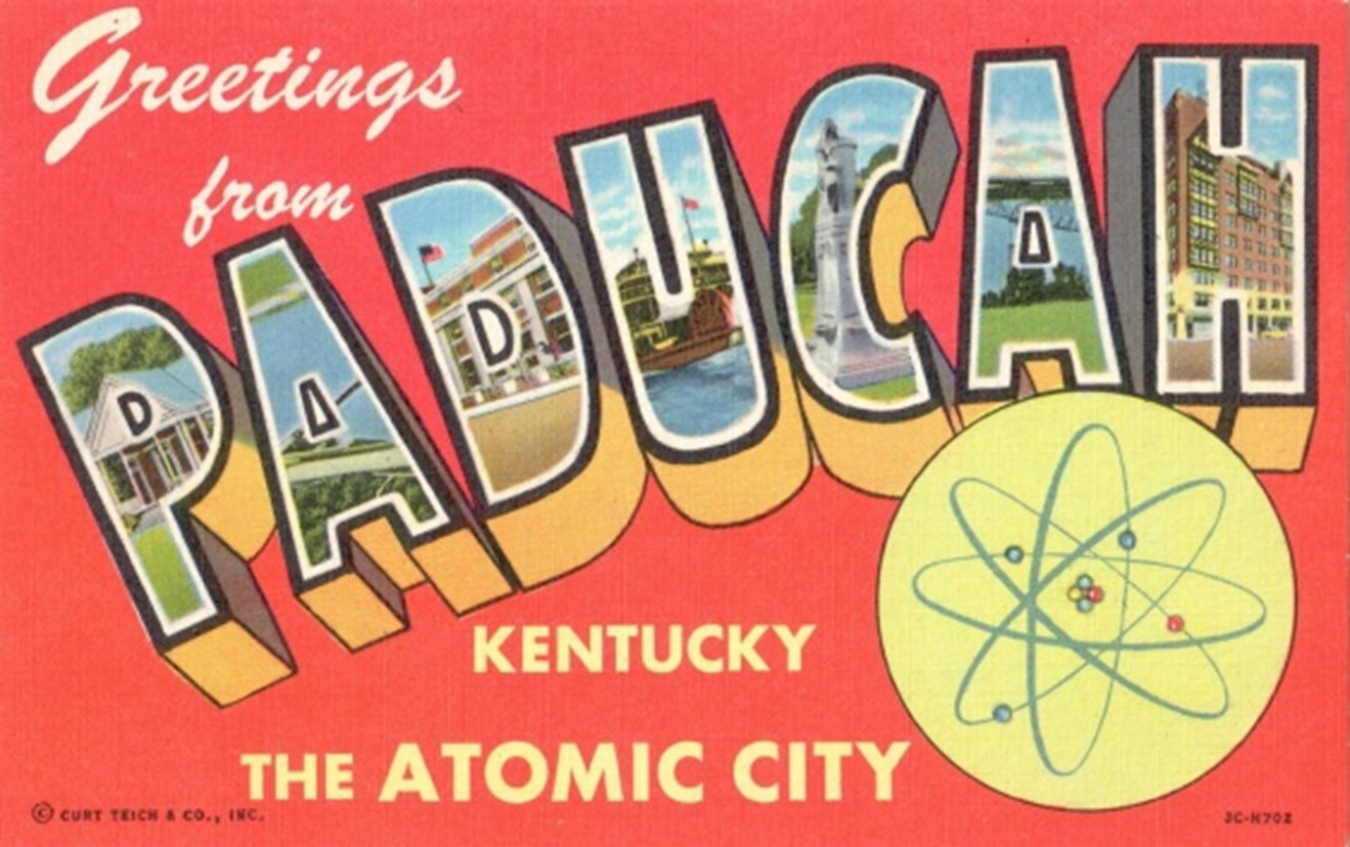


Booster club were the greatest threat to national secrecy until video game fans started revealing classified information to win arguments on discussion boards
The Soviet spies sure must have had a hard time figuring that out. 
Slight nitpick - the SAC bases in Texas were always Dyess AFB in Abilene and Carswell AFB in Fort Worth. Both were bomber bases. So probably just trying to hit them directly.
San Antonio was always training (Lackland, Randolph, and Brooks) and logistics (Kelly). Bergstrom (Austin) was TAC (Tactical Air Command), meaning fighters and tactical strike aircraft.
One thing that occurred to me earlier (we had a spate of bad thunderstorms here today) is that they used to do those Emergency Broadcast System tests at random on TV and radio, and at least for me, those always kept the apprehension a little higher than lukewarm. You’d be watching TV, and then that awful tone would sound, and you’d never know if it was them announcing that the missiles were flying or not. Now it’s a different system, and they announce that it’s a test ahead of time, and they use it all the time for bad weather, which they did NOT do during the Cold War.
Ehhh, the most famous is probably Sheppard up by Wichita Falls, where Chrome Dome missions were flown from. During the 50s/60s, SAC dispersed the bombers just about everywhere. Bergstrom in Austin had the 335th and 340th bombing wings for awhile, for instance. But I think both were moved to Biggs in El Paso eventually.
Either way, the scenario was from before I was born, and the analyst may have been incorrect about (or I may have misremembered) the particulars. But I am pretty certain they stated that it was going to be an attempt to knock the B-52s out of the air, and it wasn’t over the city that I’ve lived in almost all of my life that was already an obvious target. That’s what made it stick in my head. An attempt to hit the air force base (with a military aircraft plant literally next door) or the naval base across town would have been a “duh, totally obvious” fact, and I would not have remembered it as being new to me.