I dimly remember a cartoon with the characters tiptoeing past a dam about to burst. It bursts. My vague recollection is parts of the William Tell Overture playing throughout the cartoon. Is this something you’re referring to?
Doesn’t ring a bell - the only cartoon I know featuring more of the “William Tell” Overture than the standard snippets is The Band Concert.
The first section is also used in the animated intro to the classic point and click adventure Day Of The Tentacle (also in a calm, peaceful, Morning Mood kind of way).
(Many examples in this thread are, at least to me, completely standard classical music pieces - I, for one, do not think about 2001 when I hear Also Sprach Zaratusthra, or the Blue Danube.)
And they did the same with Evita. So it was an established strategy.
Also, the hit single from the show in the UK wasn’t “One Night In Bangkok”; it was “I Know Him So Well” sung by Elaine Page and Barbara Dickson.
What I always found funny about that is that, absent context, the irony of the title is lost. In the play, each of the characters singing is convinced that the protagonist will choose the other one because they “know him so well”. Which clearly they don’t.
I heard a bawdy version of this song when I was living in England fifty years ago. Sadly, I remember only that it was about something other than Grandfather’s “clock.” 
I was looking up The Blue Danube. According to Wikipedia…
“Strauss adapted it into a purely orchestral version for the 1867 Paris World’s Fair, and it became a great success in this form. The instrumental version is by far the most commonly performed today”.
These are a bit more obscure, but some of you may be old enough to be familiar with the original references.
Melody in Moccasins used in the British game show “What’s My Line”
Holiday for Strings originally was the theme from the Red Skelton show.
Both these similar light-orchestral instrumentals have well outlived their original context, but survived as atmospheric backdrops for commercials and vignettes that want to evoke the feeling of “1950’s housewife taking care of the 1950’s household with the newest 1950s appliances.”
I think you’re wrong here. I looked up Holiday for Strings quite a while ago. David Rose wrote it in 1942 and recorded it the same year. Red Skelton’s show began running in 1951, so the piece was clearly not written to be the music for the show. Rose obviously took his existing work and used it for Skelton’s show. I still don’t know exactly why Rose wrote the piece, or what it was used for in the decade before Red Skelton.
Another piece of music repeatedly played on TV (and whose origins are probably still obscure to lots of people) is the music that “plate spinner” Erich Brenn used on The Ed Sullivan Show to go with his act. It’s actually the Sabre Dance from Aram Khachaturian’s ballet Gayane (from which Stanley Kubrick used other pieces as music for his film 2001). It was composed in 1942. I didn’t learn its name or origin for a long time, and assumed it was much older, maybe even a traditional piece, but it’s relativel recent. It ended up being used in circuses and the like.
Even though it seemed to me hat Brenn was always on Ed Sullivan spinning those damned plates to Khachaturian’s frenetic music, the internet says he only appeared on the show eight times.
By the way – the clip on the above site doesn’t use the Sabre Dance – evidently there’s some issue with copyrights.
Here’s the actual music, without the spinning plates:
That’s fair enough to say, but in context of the OP title “music that outlived what it was originally associated with”, it’s definitely a fit. It was associated with Red Skelton for 20 years, has outlived it by a considerable margin, and nobody seems to know of any other major association or purpose prior to that.
Same for me. I heard that song on the radio, it was mentioned it was from the Chess soundtrack, and my tween brain thought “a film or play called Chess makes no sense, and certainly not with this weird song about Bangkok, so I’m ignoring it.”
Fair enough enough. I’ve been assuming we’ve been talking about pieces originally composed for some other purpose, rather than simply identified with a particular work.
As for “Holiday for Strings”, I grew up on the damned thing, and I kniw it was used frequently on TV for things other than Red Skelton’s show. It seemed to be “go to” music for any circumstance that called for light background music (although maybe it was mostly thing David Rose was associated with), so it ended up being used a lot. The reason I looked it up, as soon as I learned its title, was because I wanted to know what this piece of music was.
I’ve never seen the Ed Sullivan Show, being German and too young, but I’ve always known this piece from countless uses in animation and other films, usually in chase scenes. I even knew the title, but not it’s composer. I also assumed it was older than 1942. Here’s Lilo Pulver dancing to it in Billy Wilder’s “One, Two, Three”:

Yeah, I’m not sure if we can count classical pieces. They were originally written as classical pieces, and if they were used later, in movies, TV, and Broadway, yet lived on as classical pieces … well, they are still classical pieces.
I’m taking the OP as asking about a piece of music that was commissioned for a film or stage performance. Or maybe a TV show. But the music lived on after the show was cancelled.
The Blue Danube waltz was not written to go with 2001: A Space Odyssey; it was written long before, and very well-known before the film, but it became associated with the film. Thus, it did not outlive the film, it continues today despite the film.
I’ll always associate it with this scene:

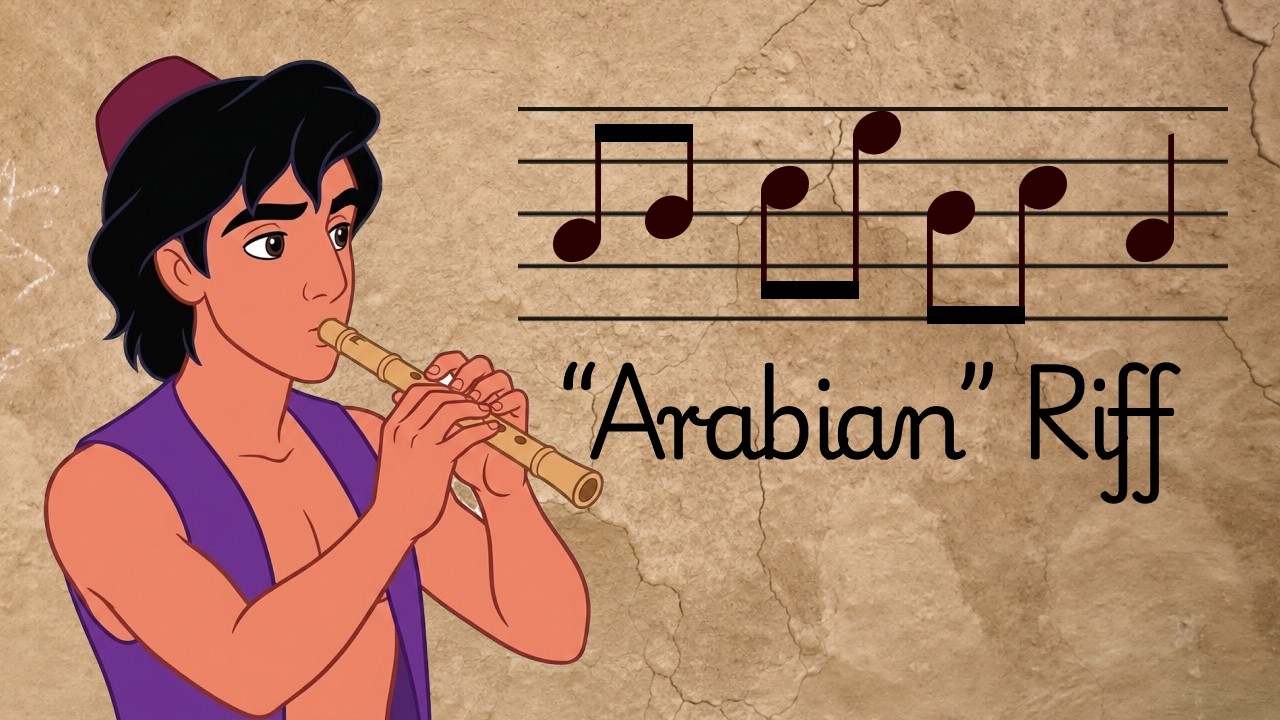
Here’s a little piece of music I think we’ve all heard, but I bet few, if any, know the origin of. I think of it as ‘the snake charmer song’. It’s also known as ‘The Arabian Riff’. It has an interesting history:
The famous “snake charmer song”—officially known as the “Arabian Riff” or “The Streets of Cairo”—traces its roots to a 17th-century Algerian tune called Kradoudja. It gained massive Western popularity in 1893 when entertainment promoter Sol Bloom arranged it for the “Street in Cairo” exhibit at the Chicago World’s Fair.
Blondie’s classic 80’s hit Call Me was the theme to the less-remembered American Gigolo.
I had no idea until earlier this year when I heard a DJ talk about it before playing the song. Apparently it wasn’t even available on a Blondie album though you could get a single.