Well, take “Landslide” by Stevie Nicks and compare the version she and Lindsay Buckingham did with the one by the Dixie Chicks. I prefer the Dixie Chicks version better, and not just because of the difference in instrumentation; it’s also in a higher key, which for whatever reason, sounds more hopeful to me. There’s also the glorious harmonies of course. People need to adjust songs to their own vocal ranges, but doing so also alters the feel of the song somewhat. Not better or worse, necessarily, but different. I think people hear it and respond to it, whether or not they can quantify what it is that’s different.
This, exactly. Very well put.
Resolving is a function of music theory within a key, even if that place is set in between normal keys, where it is not named, or even at a frequency defined by an irrational number. You will still understand it. It is independent of any meaning a key might have in terms of cycles per second. In fact it is demonstrative of the pattern seeking in people that makes music happen, regardless of key.
"It does seem like certain keys have different emotional responses in humans. " is this just a feeling that you have? I’ve been trying to get a cite for this and there are no takers. If I had the opposite feeling about a key than you did, what would that mean for that theory
Stevie Nicks:
Dixie Chicks:
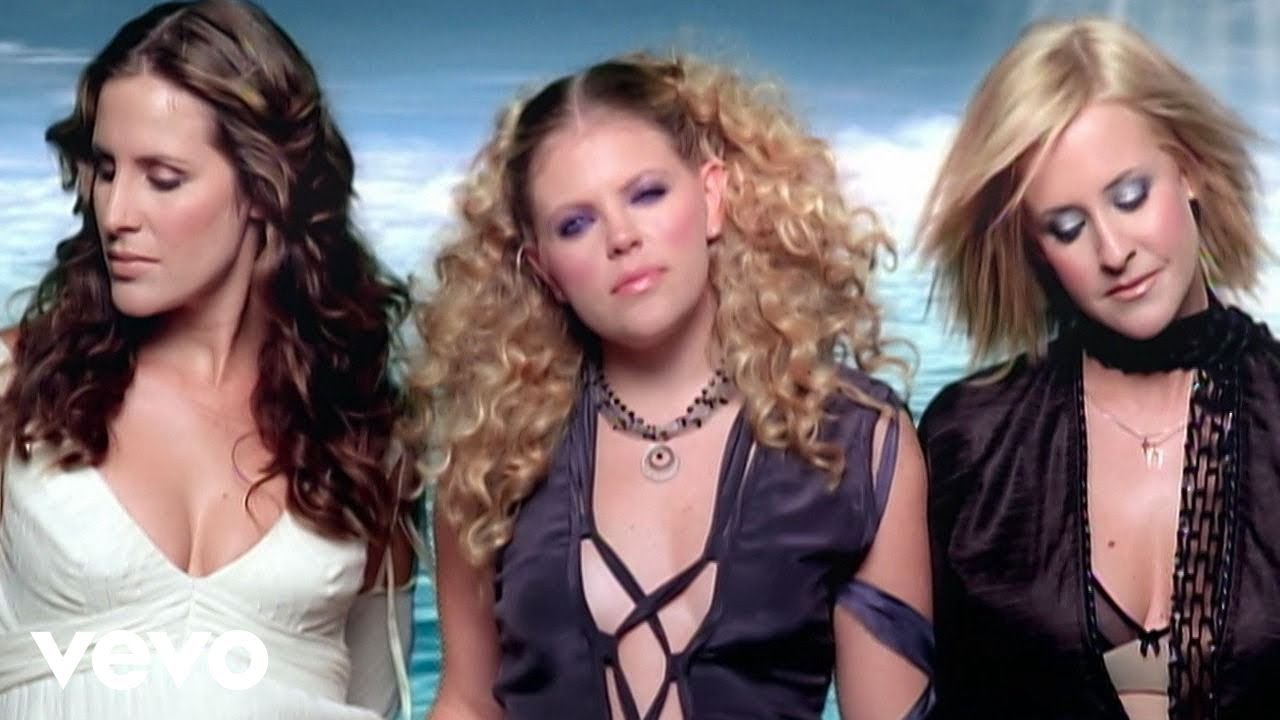
Okay,* this*, maybe so, under certain circumstances. But you would have had the same reaction to a change from F to A, as you would have had from G to B.
Some in this thread are claiming otherwise.
There is no such thing as a “higher key.” It is a circular system. I could have sung that song in the new key, by going low. Everything depends on your range as a singer, and has nothing to do with pitch identities.
I’d love to see one cite that changing the key changes the song. It would be best if the post didn’t have the word “feel” in it. That is where all this goes off the rails. “Feel” alone isn’t real.
And what about, say, Persian-Hindu music? Do they have micro-feelings with their micro-tones? (“Micro” only from a Western perspective, of course).
Not to mention the key implied by the combined tones of the wind rushing by my ears and the cars whooshing by me as I type this. Do I get “childish” feelings when these ambient sounds happen to approximate a C Major triad?
I think you’re misunderstanding the point here. I am not saying that a song is not itself when done in a different key. Or that a black and white picture of Van Gogh’s Sunflowers is not recognizable as, in some ways, a representation of Van Gogh’s Sunflowers. Just that it is, in fact, a qualitatively different experience that is perceivable and describable. Frere Jacques is still Frere Jacques no matter what pitch you start with. But many listeners are of course going to listen and say things like: “this is a very high pitched version of this song.” And, those same people might prefer their Frere Jacques to be at a lower or higher pitch.
When you say “no one is prone to hearing pitches (As distinct from hearing the relationships and dynamics between scale degrees, or music.) except those with perfect pitch.” I think that’s just a made up (and wrong) opinion, that ignores the fact that people can indeed have an opinion about the highness or lowness of a specific pitch out of context.
The fact that the degree of precision in our perception of those differences is clearly, on average, less than our ability to perceive differences in color does not mean that those differences don’t exist, or are meaningless differences when discussing music. Nor does the inability of some to have an opinion or develop vocabulary/interest mean that those who do are just making the differences up.
Is timbre meaningless? If I play a piece on a piano or a clarinet, are they not “qualitatively diffferent for my perceptual abilities in musical contexts”? Why is pitch different?
Take a color gradient. Points close to each other become indistinguishable to the human eye. That does not mean that the difference between color is an illusion.
Pitches close to each other become indistinguishable to the human ear. That does not mean that the difference between pitch is an illusion.
(Sorry if some of the above gets repetitive; I’m struggling with reconciling the dueling ideas that A) there is such a thing as pitch that humans can hear and B) different pitches sound the same as each other).
But those are two different songs by two completely different artists. It’s really hard to separate the orchestration from the the key it happens to be in. OK, I can play Linus and Lucy in C or Ab on the piano. I have no emotional preference for either key. They both sound like Linus and Lucy, and they both sound just as jolly and fun to me. Now, you may just be much more sensitive to keys or have something approaching perfect pitch that makes you more “in tune” with various keys and their qualities.
You seem to be arguing that, since the harmonic relationships don’t change, there is no difference. This is only true if you arbitrarily assign all differences outside harmonic relationship as meaningless. Is music defined exclusively as “fractional relationships between pitches”?
If Connie Francis and Patsy Cline both sing “Stupid Cupid”, even in the same key, hasn’t the music been “changed” just by virtue of using different instruments with different timbres?
If Billy Joel is doing Piano Man down a step these days, and someone says, “I like the sound of that lower key” are they lying? Do they actually not hear a difference?
Funny that you chose -1 as the transpose value…I used that for a good stretch of my keyboard gig-playing time as well. Most of the bands I’ve played in are blues-based but guitar-centric, so many of the songs were in E, A, D, etc. Blues soloing works better off the “flat” keys (heading in the F direction from C in the circle of fithts) on piano/keyboard because it gives you the convenience of sliding down with one finger from a (black key) flatted-third to a (white) major-third for all the keys from G to Eb in the circle, and from white-to-white in Ab and Db (two fingers but easier), instead of needing two fingers to slide “up” from white to black piano key.
So, yeah, even though I’m making efforts to stop (mostly because I play two keyboards now and the function on the 2nd isn’t so easy to set and/or keep track of) I “cheated” many times by hitting that transpose button to play a song that the band is playing in B to my C, or E to F, etc., not because I couldn’t handle playing the three chords and comping in the original key, but it made my solos more impressive (note that the “-1” transpose means that you play up a half-step from the the original key to compensate).
And yes, like pulykamell I had been caught a few times in the wrong key forgetting that I was still transposed…pretty easy to hear right off the bat as long as your not leading off the tune.
Lots of New Orleans music is in the flat keys, as not only piano players but horn players prefer these too. Take a look at Professor Longhair’s fakebook; everything’s in Bb, Eb, etc.
Still wondering how Chuck Leavell pulls of his soloing in “Jessica” (key of A).
Oh, let me also raise my hand as “pianist who’s been caught with his pants down by an errant ‘transpose’ selection.”
I find myself playing a lot of cabarets and such with little to no lead time. I’m often presented with a book of sheet music with some songs just having transpositions scribbled up at the top. There are maybe some players who will just do that on sight, for a performance, as a solo accompanist for a singer, I’m not going to take the risk of screwing it up. I’ve learned to go through my book and not only mark the transpositions, but write in nice big letters to ‘un-transpose’ the keyboard on the top of the subsequent song.
The last time I whiffed it was when a singer wanted to do a last minute run-through of her song right before the house opened. She was singing it down a step, and so I used the keyboard to do that for me. Well, rushing that in at the last minute, I forgot to reset the keyboard. The opening singer got maybe 30 seconds tops through her song before crashing and burning. We had to start again, and fortunately I also could hear/feel something was off on my end, realized what was up, and put the instrument back into normal key and we did the song. I felt awful, and completely owned up to it to the vocalist after the fact. Ugh.
Mixolydian, that’s funny, to me I feel like a lot of the country music piano style (which is loosely where I’d put Leavell and ‘Jessica’) fits much more naturally under sharp keys. Pentatonic shapes/runs, hammer-ons from 2 to 3 and 5 to 6, all feel much cleaner and more natural with the 3rd and 6th scale degrees up on the black keys, while the 1 and 4 are on the white keys.
As said a few posts ago, IF you have heard a particular recording of a song dozens or hundreds of times, AND you have a pretty good ear and/or some musical training or experience, AND nothing else has changed but the key (almost impossible for vocals, since* timbre *is so tightly linked to pitch range for individual singers), AND the new key is *at least *two whole steps away (i.e., a third) from the a original, THEN yes, you might perceive a difference.
Otherwise, no.
(For a good example of changing a song’s key by a step or two AFTER recording it, precisely to give the vocals a more youthful timbre mostly due to the SPEEDING UP of the larynx vibrating and only minimally due to the higher pitches, see the Beatles’ “When I’m Sixty-Four.”)
(Lest I be misunderstood, I was referring to the vibrato in the larynx. Not the “speed” of the vibrating voice box, generating sound waves — that obviously changes with different pitches, too — indeed, that’s what “different pitch” means — regardless of timbre change.)
When I heard Billy Joel last time he was in town, everything was lowered by a whole step. It hadn’t occurred to me that anyone would go to the trouble of detuning an entire grand piano by two half step. I thought maybe the whole band had relearned the songs in new keys, but that wasn’t it. It felt like the right songs, voicing wise, but the feel was not quite right. I guess it’s one way to make up for not being able to sing as high as as one gets older. Still, an entire grand piano, unless he had one custom built. That would be a huge difference on the tension in the sound board.
You’re telling me you can’t hear a difference in this, from what you’re used to hearing?
I’d also like to clarify that when I said different keys had different characteristics/feelings, I was talking about key signatures. I never asserted that a C by itself sounds “childlike”, nor could someone name the note without having a good sense of pitch. But ABSOLUTELY there is something between distinguishing pitches and having perfect pitch, and it’s silly to say otherwise. I don’t have perfect pitch, yet I can name certain pitches if they strike me on a good day, and I can tell if a song has been transposed. I’m sure tons of people fall somewhere on the spectrum, just like people have varying degrees of color sensitivity, as has been discussed.
THAT’S exactly what I’m talking about. I don’t know your musical background, or if you have one, but that’s all I’ve been saying all along; that someone might not know what is “off”, but they know something is off.
ETA: P.S. Yes, the entire band, including Billy, is playing in the new keys; the piano isn’t detuned. For guys at that level, playing in different keys on the spot is business as usual.
So, if all those things are true except the new key is less than a third away, then a person will not perceive a difference? Again, this is the sort of absolute declaration that demands, I think, some kind of scientific study/citation.
You’re on to something a little, I think, when you mention listing to a recording a lot. Like any pattern recognition, practice/exposure is part of it. What listening to a recording of a piece over and over again does is not only building pitch memory for that piece, but building pitch memory for other pieces that share the same pitches. I think that, if anything, it proves that absolute pitch is, in fact, a functional and identifiable variable and choice when making music.
And, timbre is always linked to pitch range (among other things) for all instruments, not just vocals. So in one sense, this is part of the hitch upon which it all rests. In the real world, instruments sound different at different pitches (producing different sets of overtones at differing volumes).
Somewhere in this thread (or maybe another, I’m getting a little sense of deja vu) drad dog made the argument that harmonic relationship is much more important than absolute pitch in music. I think that’s totally true; the bones, the essence of a piece of music is contained in its relative harmonic and rhythmic information (though even that can be elusive; re-harmonizing a melody is pretty common; is it still the same song?). However, there are other things that color a musical piece: timbre, absolute pitch, instrumentation, tempo, etc etc. We can hear and tell the difference between all of these things (again, with varying degrees of precision, and with various degrees of attention and practice): why insist that pitch is somehow ineffable? Where’s the evidence?
Can you tell the difference between a clarinet and a saxophone? How about a bass clarinet and alto clarinet? Do you think that it’s possible? If not, why?
Speaking of “cheating”, Irving Berlin used a transposing piano, which had something like a crank that moved the keys side to side, so that he could always play in the same key, but have it come out in others. He seemed to do OK despite the cheat.
I believe that Berlin used different keys to fit the range of the tune into the range of singers, not because the keys sounded different. Supposedly, though, E-flat Major is the heroic key. I don’t know why that is, and it could just be woo. Because of tempered tuning, (I think) the ratios of the notes in different keys should be the same, so I don’t understand how anyone without perfect pitch could tell the difference.