Here.
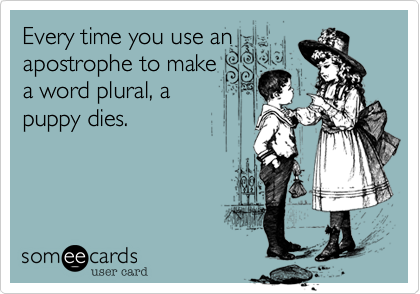
Autocorrect has a irritating habit of adding a 's. I try to catch the error but it sometimes slips by.
I won’t turn it off because it saves a lot of typing on this terrible glass keyboard on my phone.
All 19. The river question I hesitated on, as I remember the Amazon and the Nile going back and forth as the longest, but I guessed the right one.
17/19. I forgot Nairobi was in Kenya, and so just picked the one city I didn’t know. And for some reason, I always get Lenin and Khrushchev mixed up. As in, I think there was a Lenin after Stalin.
As for what I think an actual fifth grader would know, I’d not expect them to be taught about Hawking’s book. I also suspect most would not be taught the capitals of Africa, though I admit I was. (I went to a Montessori school, and we learned the countries and capitals of the world, along with the US and Australian states and the Canadian provinces and and the capitals of all of them.) I also would not be surprised if the end of World War I was only mentioned in passing, but I’d bet they could pick based on the general time frame.
Edit: Surprised people weren’t sure about the Nile. That was one thing that they emphasized multiple times in my history and geography classes.
That’s the point. They spread because the people who can do it want to brag. They don’t get spread if you didn’t do very well.
I know that, if I’d gotten, say, 15/19, I’d have just not mentioned it here at all.
18 out of 19. I wasn’t sure if it was the Nile or the Amazon that was the longest river and guessed incorrectly. Otherwise, this was pretty darned easy.
I got all 19. The last one took a little thinking, but I figured it out. I always thought the Nile River was longest, but the Amazon carried a larger volume of water.
While I did get it right, Google it and you’ll see the answer isn’t clear-cut.
Got 19/19. All were pretty easy except the last one. Had to use pen and paper to find
the answer.
I got two wrong, longest river and capital of Kenya. But for the most part, this was not a test of smarts, but of memorization of dull facts. Only the last one required actual thinking.
I thought, ‘Oh come on, who wouldn’t know about Nixon and Watergate?’
It’s hard for me to realize that there’s a whole generation who thinks of Watergate the way I think of Teapot Dome.
That’s the one I missed, because the last I heard, it’s an ongoing debate. It sort of depends on how you measure, and whether you count the fact that the Nile is a tad longer when it has its yearly flood, but it doesn’t last; the Amazon is longer most of the year.
I figured it would be a trick question-- they’d expect people to put Nile, so it’d be Amazon, and I picked Amazon, and I missed it. The last one took me a long time and paper and a pencil, though.
Anyway, 18, for what it’s worth.
But if asked simply “What US president is associated with the Teapot Dome scandal?” you’d know the answer, right?
^ Well, Harding (I had to look it up) doesn’t have his own life-supporting head-tank on Futurama.
Or…does he?
Well sure I would, but others…
18/19. I got the Nile/Amazon question wrong. The quiz seemed rather oriented to Americans.
19/19.
I thought some of them weren’t exactly standard kid stuff. Why would even a middle schooler be expected to know the capitals of the less significant countries such as Kenya? Why is the author of “A Brief History of Time” basic information? And unscrambling words…really?? (I got that one because I thought, “there aren’t that many oceans, let me try them first” and having made that choice, it was obvious.)
I’ll grant that Watergate, the Statue of Liberty, and maybe* Pearl ‘Harbour’ were U.S.-oriented. Other than those, they seemed to be pretty neutral.
*For Europe, obviously September 1, 1939 was more key than December 7, 1941. But the latter was still pretty important even from a European perspective, since it got the U.S. off the sidelines and into the war.
18/19 here, stuffed up on the sound in space question. But I did also ponder a while on the Nile/Amazon comparison…picked Nile thinking it was worth a shot.