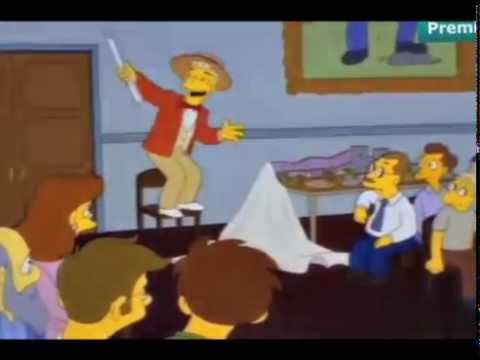
I was rehearsing pretty much the entire Evita musical in my head earlier today, and this stanza, where Evita rejects the upper classes, struck me differently than it did in my teens:
The actress hasn’t learned the lines you’d like to hear She won’t join your clubs, she won’t dance in your halls She won’t help the hungry once a month at your tombolas She’ll simply take control as you disappear
The word “disappear” is probably not figurative, as the dictatorship of Juan Perón was responsible for a lot of people “disappearing.”
The disappeared were intellectuals, union men and peronists who opposed the dictatorship of the markedly anti-peronists US-backed military in 1976-1983.
There were enough authoritarian measures during all of Peron’s constitutional governments 1945-1955 and 1973-1974 (he won the democratic elections 3 times) that you could sorta call him a dictator, but there were not “disappeared” and no mass killings.
After I posted that I went and read through the Wikipedia article on him and yeah, my thought was inaccurate. It looks like things really ramped up after his death.
I wonder what Argentinians thought of Evita (the musical.)
I hadn’t, but I was just reviewing the synopsis on Wikipedia. I guess, Randy becomes a hippy drug guy after The Outsiders repulsed him from the whole class v class thing. He rebels, drops out, turns on and tunes in.
If it were me, I’d have Randy go to San Francisco to become a hippy so he would be encouraged to come out so he could properly mourn the only boy he ever truly loved - or who ever really made him a gimp power bottom, like Bob did. That’s just me - you picture it how you want.
I didn’t see it because I share Homer Simpson’s opinion that musicals are humanity’s lowest form of entertainment.
Among those who did (and those who didn’t but nevertheless felt entitled to an opinion) reactions ran the gamut from indignation against the “slurs against Evita” from ultraperonists, to indignation against the “sanctification of ‘that woman’” from ultra-antiperonists and all possible opinions in-between.
Well, I like musicals. The way they burst into song whenever they have a strong feeling is very relatable to me. Of course you can’t hold all your feelings inside!
Evita was my jam in high school because Madonna. Evita and Madonna apparently shared in common a penchant for social climbing, sexual manipulation and trying to rule the world, which is why Madonna begged for the part. (I don’t know how accurate that characterization of Evita is, but it’s spot-on for Madonna.)
They just showed a restored print in IMAX format last night! I’d never seen it, so it was a treat.
And… I have an answer. Jack’s going crazy, and totally focused on finding his son in the maze. That’s what the axe is for, it’s a weapon, not a tool; he’s not thinking rationally.
And he’s limping on a sprained/broken ankle from his tumble down the stairs. He’s also holding his chest and screaming.
Nicholson was perfectly cast, and really sold Jack as becoming increasingly obsessed. Including that effect of “What does someone like that do when they can’t get what they’re obsessed with? They deflate, they give up.”
Oh, also, the kid had played in the maze (who knows how many times) and knew his way out. Jack knew he was lost. And had lost.
I would also add that an ax is probably not the optimal tool for chopping one’s way out of a maze like that, especially in the bitter cold when everything is covered in snow and you have a very limited time before you freeze to death. I suspect he would be doomed to failure even if he tried.
Of course, logic dictates that he try anyway. It’s his only chance, slight though that chance might be. But as noted, he wouldn’t be thinking logically. In his mind, the ax is simply a weapon.