No, they never mention what supposed ethnicity the character is in the movie.
What about Eddie Murphy in the “White Like Me” short film on SNL? Or the Wayans brothers in “White Chicks”?
I still enjoy his performance as the old Jewish guy in Coming to America. (Dan Aykroyd in disguise as a Rasta in Trading Places, though…)
I recall similar criticism in 2005 when three Chinese actresses were cast in the lead roles in Memoirs of a Geisha.
Interesting performances were given by Toshiro Mifune as a Mexican in The Important Man (1961) and Tatsuya Nakadai as a Mexican-Indian bandit in the Spaghetti Western Today We Kill…Tomorrow We Die (1968). Japanese or Mexican audiences might be more sensitive to any cringe-worthy aspects of the castings than I am.
Used to be, but also mostly because many actors were on contract, and it was cheaper to cast a white actor you had on contract, then to cast an unknown Native American or Asian.
Yeah, and that gets a little crazy- I mean Charlize Theron- very beautiful- was cast as Aileen Wuornos in Monster. Should we require showrunners to cast plain actors in not so good looking parts? Or if the biographical part calls for a brunette, is it okay to cast a blonde who dies their hair?
Yes, blackface/etc for the point of bigotry is wrong. But if it is satire?? I mean they cast Jewish (and Italian) actors as the “Hekawi” as a joke or satire (altho I think “One of the lost Tribes” was mentioned once in F troop).
One of Our Dinosaurs is Missing (1975)
After a nice stretch of movies that were readily available on Disney+ and often pre-screencapped, we’re back into the land of the obscure. And hoo boy, if you’re one of the people who keeps commenting demanding that I stop pointing out old fashioned Disney racism…. might wanna skip this review because there will be a lot of that here. Also no I will not stop. There’s a reason you probably haven’t heard about this movie. The original novel, The Great Dinosaur Robbery by David Forrest, tells the story of a group of wacky nannies battling Chinese Communists in Cold War Era New York. It’s so astoundingly racist that I am ashamed of having borrowed it from the library, packed full of painful Engrish dialects and references to “Dear Leader” that made me cringe every other page. The authors of the book (actually two men named Robert Forrest Webb and David Eliades) were very disappointed with Disney’s decision to move the setting to post World War I London to avoid having to tackle politics. But they weren’t so afraid of politics that they didn’t cast white men in every Chinese role, plastering them in appalling makeup and making the accents even more incomprehensible. Even from the stills I’m seeing during the research phase, it’s appalling. Like, it makes Song of the South look like a sensitive portrayal of other races, that’s how bad it is.
Yes, it was true, as a kid I remember that I laughed a lot because of the funny action secuences, but nowadays it is appalling that it featured no Asian actors. Instead, the studio opted to use white European actors in yellowface to play all the Chinese characters.
I think stage productions get a lot more leeway than movies. If I went to see King Lear as played by a Scotsman and his three daughters were played by an Argentinian, a Chinese woman, and a Texan, each one of them with thick accents from their native lands, it wouldn’t bother me a bit.
agreed. No one made a big deal about Leslie Odom Jr. as Aaron Burr in the Broadway edition of Hamilton
Al Jolson made a career in Blackface, but his most cringeworthy role was in Wonder Bar", with the showstopping number “Going to Heaven on a Mule,” which managed to include every possible racist cliche known to the Klan. Plus, as a bonus, an antisemitic one.
Marlon Brando, of all people, played a Japanese houseboy in Teahouse of the August Moon.
In The Bitter Tea of General Yan, the General and most of the Chinese characters were played by white actors. One role, Mah-li was played by Toshia Mori, who was Japanese. To Hollywood, all East Asians were interchangeable.
It was a 1975 film and not very popular or often watched- the Wiki article on it is sparse. Not much of a target, that guy seems to hate Disney, especially as he leads with
Tales of the worst, most overt racism to hit the big screen since the infamous Song of the South.
So, Song of the South is not racist. Nor is that obscure film he spends WAY too much time retelling. Yes, it uses "Yellowface’ which was pretty much standard in 1975. Not that this makes it good, mind you, but it doesnt make it racist either.
Hmm, does having black actors play white historical characters make it “whiteface”, “racist” or social commentary? I guess social commentary.
As I’m sure you’ve gathered, it’s a far more complex issue than a single issue or standard. There’s a huge amount of history behind such casting, and about the decisions about who to cast and why.
Yeah. I mean, Mickey Rooney in Breakfast at Tiffanies has always been a prime example, but he was a known actor, put in for broad slapstick comedy. If they had put a Asian actor there, it might even have been worse- would an Asian actor want to do that role- it was pretty offensive. Better yet would have not made it such a offensive caricature. So, the real issue is not poor Rooney, but making the role such a offensive caricature.
We wouldn’t think twice of having an Englishman play a Frenchman, would we? Or an American playing a German? I don’t think Chinese actors playing Japanese geishas is quite the same problem as Warner Oland playing Charlie Chan.
How about Billy Crystal as Sammy Davis Jr.?
In a sort of boomerang brownface, take a close look at the actor in the purple dress in this scene from 1961’s West Side Story. That’s Nobuko Miyamoto, aka Joanne Maya, a Japanese-American, interned during World War 2, as the Puerto Rican Francesca.

Not a movie, but cringeworthy enough to note, Dawn Wells playing a Native American in an episode of Bonanza.
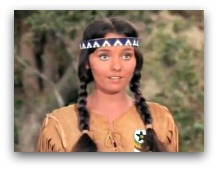
And this pic won’t link, but check out Marlo Thomas as a Chinese woman, also from Bonanza.
https://www.imdb.com/title/tt0529478/mediaviewer/rm2661324289/?ref_=tt_ph_1_1

Elizabeth Keohane-Burbridge, history teacher at Woodward Academy in Georgia explains.
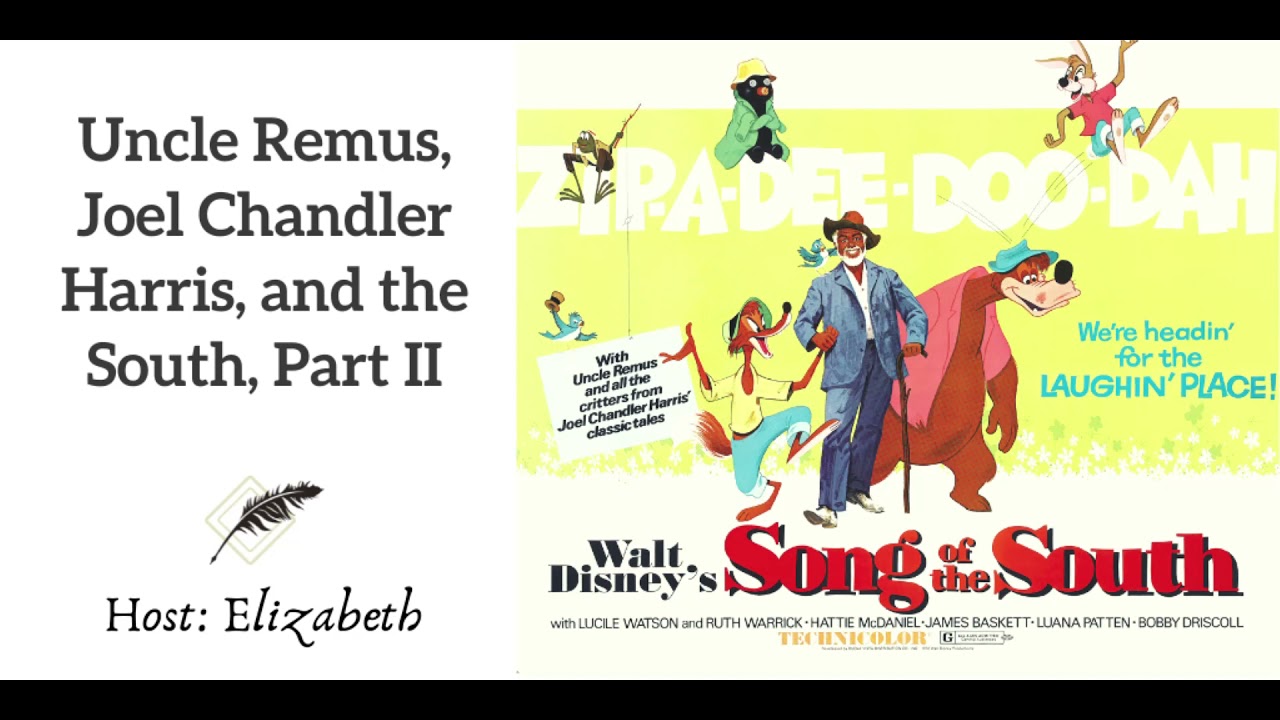
We know that Harris based these stories on folktales he learned in the quarters of enslaved peoples on the Turnwold Plantation. What is possible that Harris didn’t realize, and almost certain that Disney didn’t, is that these folktales were created and shared by enslaved people as a way to help provide solace and advice to each other. Br’er Rabbit survives on his wits. He can’t take on Br’er Bear or Br’er Fox, nor could an enslaved person take on their master or an overseer - but he could try to outsmart them. We know that many enslaved people, for example, pretended to be unintelligent or slow workers to trick their masters - it was a form of resistance that fed into the white supremacist stereotypes that slaveowners had but that also turned the tables on them. And, so, by carrying on these stories, Harris was - knowingly or not - preserving these tales of resistance.
But, that isn’t what Disney’s movie did. Uncle Remus’s tales ended up not being of resistance, but, rather, a promotion of the Lost Cause Narrative as it’s difficult to tell from the movie whether slavery is still legal and all of the Black people are very happy to work on plantations. According to Daniel Stein, “the film neglects many of the cultural specificities of the animal tales, including the lessons that self-interest overrides neighborliness, that the amorality of the animals trumps the false morality of the slaveholder, and that life on the plantation is one of terror rather than inter racial harmony.
Now, as a child of the 1980s, I’m familiar with the way that this movie was critiqued in the latter half of the twentieth-century, but, what I didn’t know was it actually received criticism on its racial depictions right from the moment it was released. For example, as soon as the movie was released in New York, Walter White, president of the NAACP, put out the following announcement that was picked up and carried in many newspapers, “The National Association for the Advancement of Colored People recognizes in Song of the South remarkable artistic merit in the music and in the combination of live actors and the cartoon technique. It regrets, however, that in an effort to neither offend audiences in the north or south, the production helps to perpetuate a dangerously glorified picture of slavery. Making use of the beautiful Uncle Remus folklore, Song of the South unfortunately gives the impression of an idyllic master-slave relationship which is a distortion of the facts.”
Enid Blyton wrote several volumes of Br’er Rabbit stories, in which the American-ness of them is pretty much erased.
Burt Kwouk pretty much cornered the market in Asiatic characters in British TV and films. He took the view that somebody was going make money playing these roles, and it might as well be him. Chinese, Japanese, he took it all.
Actually, the tales of Br’er Rabbit and others are recognizable African folktales. You can find them in books on African mythology. The people who told them weren’t creating the stories – they were preserving their cultural heritage in a way that was particularly appropriate.
Joel Chandler Harris was a white guy who retold these stories, often in excruciatingly rendered dialect. He didn’t make them up, either.