Sure, but residential electricians and handymen are in a hurry. It’s entirely possible for the ground to come off or have a break in it.
On the other hand, as I understand it, electrical wiring fires almost always happen at the junctions. So a metal box and a heavy metal outlet cover is the most secure way to contain the potential fire each outlet represents. That seems to be how commercial wiring is done, commercial outlets tend to have metal covers, I have noticed.
Covers also make it much safer to actually plug something in. I can aim the plug in the general direction of the outlet, and I don’t have to worry that the plug will be misaligned and hit something else.
I think that there is some confusion about what these “covers” actually are. I looked at the link in #15Home Depot
There was a discussion a while ago about what I would call a safety cover which is a sort of plastic plug that you put into an empty outlet to stop children from poking things in the holes. Not needed here in the UK as outlets have shutters on the live contact holes, and debateable in the US since a child able to poke the holes, can probably remove the cover.
Good lord on a board for fighting ignorance there is always a lot of speculative answers from people that obviously don’t actually work around such things.
It is for safety for Og’s sake. Ground or no ground if you provide a short between hot and neutral power will flow through it. Arcing is a reality, there are countless pliers, screwdrivers and and I assume knives and forks around with damaged from arcing because they got stuck where they should not have been.
If for whatever reason arcing occurs at a junction sparks can fly, which is a fire hazard. Hence code requires all electrical connections to be isolated in a metal or plastic box. Not having a cover defeats that purpose. Even modern light switches and receptacles which favor push-in terminals still have screw terminals on the side that are exposed. Some thoughtful electricians tape over these but it is not standard practice. If you touch the terminals with a tool or a finger unpleasantness results.
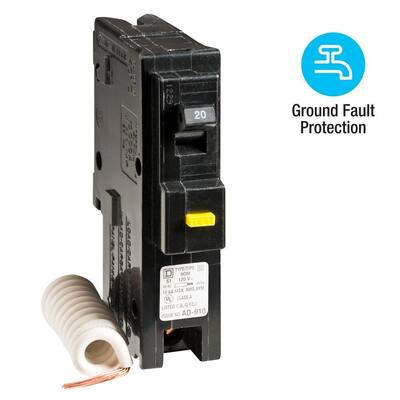
Only receptacles in proximity to sinks and other water sources or grounding hazards are GFCI’d. A GFCI will trip if shorted but that does not mean there will not be an arc or you will not get a zap.
Arc Fault circuit interrupters AFCI are meant to prevent arcing and are now standard for all branch circuits according to 2015 Canadian Electrical code, I expect American code to have similar updates. This is meant to reduce fires to appliances or people malfunction. That doesn’t mean electricians will start leaving boxes without covers.
Thank you, FluffyBob, I was stunned into silence with some of the replies here … surely I’m not the only one who had a toddler throw a complete and total temper tantrum because I wouldn’t let them electrocute themselves …
In response to various posts that mention GFCI, a GFCI works differently than a circuit breaker. A GFCI is not to protect against shorting out the terminals and getting a hell of a shock, it’s to protect against the current taking an alternate path to ground, like through you into a wet concrete floor. It detects the current flowing on both sides of a load and if they don’t match it shuts off. However, jumping the terminals with a two-year-old’s fingers will not trip the GFCI; it can cause a breaker to switch off if the current exceeds the limit. (This depends on the impedance of the two-year-old.)
Touching the hot with one body part and neutral with another body part won’t cause the breaker to trip; your body has too much resistance. And if you’re isolated from ground, the GFCI won’t trip, either. (As you mentioned.)
In the above situation, you will receive a big ol’ shock, and your breaker and GFCI won’t care.
A GFCI will trip if there’s a short between hot and neutral? So it’s also a circuit breaker? :dubious: I have never heard of this. Hate to ask, but cite?
I think he means shorted to Earth ground, I know neutral and ground are connected at the service box, but the GFCI will trip if any of the neutral current is redirected through ground, either the ground wire or any other ground connection …
The box to which a switch or receptacle is attached is not normally grounded? I assumed that this was required and that if it became live, the breaker in the distributor board would trip. That’s how we do it here - is the USA different?
I’ve seen it done that way in houses built in the 1950s; my folks house has it that way. However, I think new construction requires three-conductor cable to each box (hot, neutral, ground.)
Tried out an AFCI with older wiring and newer wiring, both ways it caused nuisance tripping, such as unplugging something while it was on (given I shouldn’t do that, but still a PITA anyway)
If the box is metal, then yes it needs to be connected to the safety ground. However, most junction boxes used in the US (at least in residential settings) are plastic.
Very true. I often wonder why my country (U.S.) hasn’t reinvented the wheel of sorts with electrical receptacles. Works fine, but I really like how the U.K. has such safety measures (needed more so because of the higher output I suppose).
Because you would immediately obsolete every electrical device in the nation that depends on wall outlets for power. Without thinking to hard that would be at least $15000 worth of stuff for me. Granted several units have removable cord such as my PC and some hand tools. Maybe a 10 year transition where retailers provide detachable or replaceable cords for all new devices similar to how clothes dryers are sold. Unless there were adapters built. And that is before retrofitting every building in the nation. I conservatively have 50-60 electrical outlets in my house for 110V circuits.