I suspect context and familiarity makes a big difference in how certain things sound. If you standing near a stack of milk cartons, “Hand me a couple of milks” will sound just fine, but in other contexts, it will sound weird. We’ve heard “a couple of beers” - meaning cans, bottles or glasses depending on whether you’re near a tap or a ice-chest full of bottles/cans - often enough that it now seems fine, but at first it probably sounded odd.
We get a number of different types of milk: high protein skim, whole, vanilla soy, plain unsweetened soy, cashew-almond, evaporated, shelf-stable bottles of chocolate-- some of them are used for baking, and we get them pretty rarely, some are used for putting in coffee, and we get them only every few weeks.
But there was some occasion that in addition to a holiday in the offing, when there was lot of baking, we were stocking up for potential bad weather. So there were five or six different kinds of milk on the shopping list.
I was the one who went to the store. When I got home, my husband asked “Did they have all the milks in stock?”
I answered in the affirmative, before I stopped to think about the odd construction. I had not had any trouble processing and understanding exactly what he’d meant, though.
Huh? What do you mean? The singular word is cavity. It follows the same formula of any other -ty noun. Parties, deities, beauties, etc.
I think furryman may be conflating dental caries with cavities. Different words, same meaning. Caries is both the singular and plural form.
According to the Christmas song, the correct plural is “hippopotamuseses.”
Honestly, when does one ever need to discuss more than one hippopotamus at a time? 
The question is based on an unspoken assumption – the idea that the English language was designed by someone (probably a committee ).
English, like all languages, evolved. English was also made more complex because it freely took words from other languages. So a consensus on how to create a plural evolved for no particular reason except that it made sense at the time. There were rules, but they were overruled by things like euphony or just plain pigheadedness.
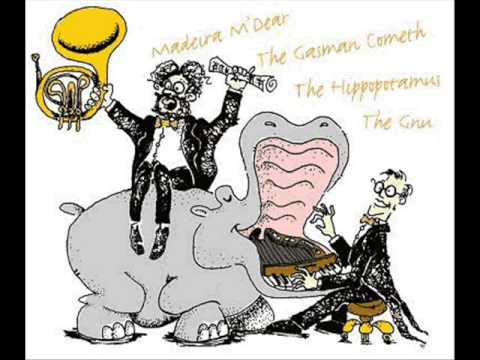
When fleeing a family or herd of them. But don’t talk to much; you’ll need all your breath for running.
Occasionally.
There is a device called a “tailor’s goose”, basically a type of flatiron. Now for the story:
The manager of a wholesaler of tailor’s suppliers prepared a letter to one manufacturer and wrote “Please send immediately, fifty tailor’s gooses.” The manager thought a bit, crossed that out and wrote “Please send immediately, fifty tailor’s geese.” Then he thought a little while longer, crossed that out, and wrote “Please send immediately, ONE tailor’s goose… Oh - what the hell, make it fifty.”
“Caries” is the decay itself; “cavity” is the hole in the tooth it causes. “Caries” is a mass noun that happen to look like a plural. If you wanted a plural, it would be something like “areas” or “spots of caries.” Likewise, you could say “A single area/spot of caries.”
It’s also a language that has hybridized more than once.
cow/kine ?
That’s it! (The answer is also at the link)
feminized:
adventures → adventuress
millionaires → millionairess
ogres → ogress
other ones:
bibles → bibless
needles → needless
cosine → cosiness
speckles → speckless
saltines → saltiness
handles → handless
cares → caress
To be a pedant, bibless, needless, speckless, and handless aren’t nouns.
No you’re right I didn’t read carefully enough.
I heard a comedian (from West Virginia) say, “Do you know how we can be sure that the toothbrush was invented by a West Virginian? Because otherwise it would be called a teethbrush!”