When Notre Dame reopens (currently slated for 2024) should there also be no pretense that it’s the real thing?
Are they going to claim it wasn’t reconstructed? Have they kept secret prior reconstruction work? It will be the cathedral at that location, but who will end up believing it’s the same structure as it was built nearly 1000 years ago? And, repeating myself here, what harm would that cause?
Sure, I’m guessing there’s going to be a lot of talk about the reconstruction. But you said “pretense that it’s the real thing.” Is Notre Dame no longer “the real” Notre Dame?
It’s no longer the real original Notre Dame cathedral. Hasn’t been for a long time.
You added a word I didn’t use there.
I apologize. I can’t see how anyone could have understood what I meant there.
Both Angkor Wat and Machu Picchu complexes are heavily rebuilt. Not just dug out. Should you return after a few years, to most such sites, you will see clear rebuilding has been happening.
It’s a fine line, of course, but just watching it decay, as the jungle consumes it, doesn’t seem right either.
Some of it is amazing to see. Both Prambanan and Borobudur were surrounded by piles of fallen stones when I first saw them. Years later, they had been lovingly rebuilt to what you see today.
Same with many Thai sites, in the 80’s your biggest worry was snakes in the thick overgrowth at some sites. Today they are well maintained, have carparks much easier access. For locals and tourists. It’s kinda awesome really.
An accurate replica of Stonehenge is really only possible at the same latitude as the original, since none of the astronomical alignments (or at best, one of them) would work at any other latitude. Or I suppose you could put one in the southern hemisphere at the opposite latitude, if you mirror-imaged it.
I’m not sure that there was ever a time when you could have said that it was the “real original” Notre Dame Cathedral. At what moment is the “original” defined? When it first started being used as a place of worship? When the basic structure (walls and roof) was completed? When the cathedra was officially moved there? When work “finished”? Those are all different dates.
The Tarxien complex in Malta was amazing. Much more so than a buried pile of stones would have been.
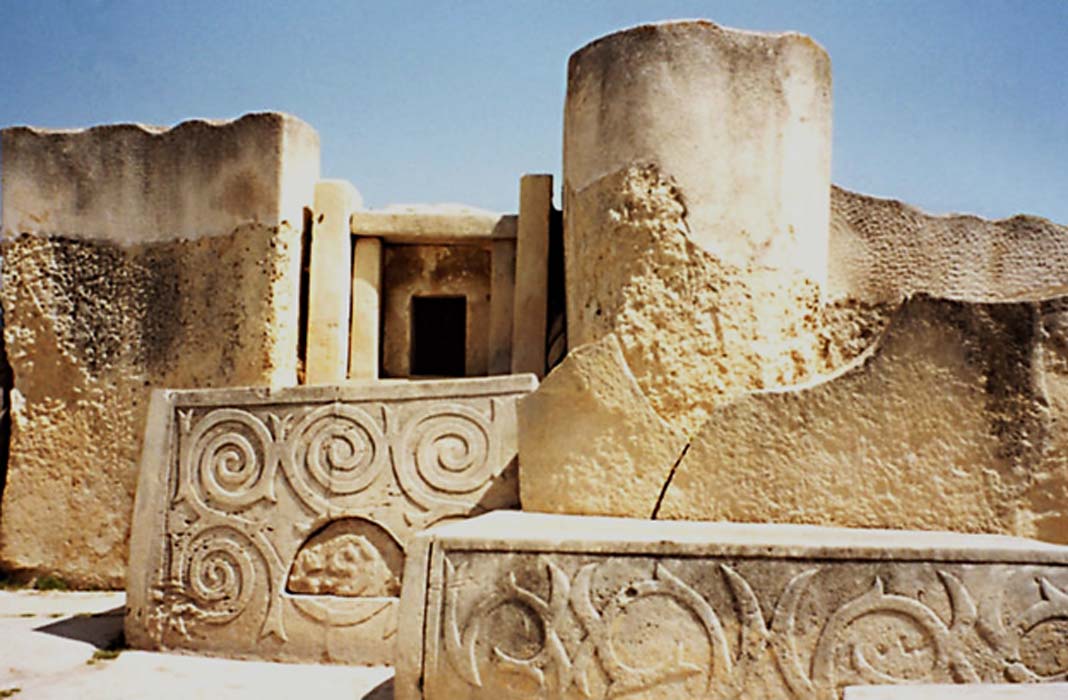
Sure there was. There was a period of time before it fell into disrepair and substantial changes made. Anyone who had been there at the time would have referred to the new and old versions of it. People know the difference between an original construction and a reconstruction. Reductio absurdum does nothing to clarify this in the least. And I’ll ask again, what would be the harm in presenting Notre Dame or any other reconstruction as the original anyway? Anyone that would care one way or the other ought to be able to find out for themselves. So even if you can’t understand the concept of a reconstruction it’s still a pointless difference to those who can.
Don’t we need to differentiate between ruins and archaeological digs, and structures that are currently or recently in use like Norte Dame? If there’s a leak in the roof, you need to fix or replace it, no matter how old or historic the building is.
Another one in the US is Fort Clatsop, the place Lewis and Clark Expedition overwintered where they reached the Pacific Ocean. By the time anyone thought it might be of interest, it had completely decayed. So they don’t know for sure the exact location of the original, but they put up a replica where they thought it had been. If it is in the location of the original, that would be unfortunate, since it’s likely they messed up some things we could have learned about the expedition.
I don’t think there’s one single answer. Also, as we are not able to travel in time, any reconstruction is going to be subject to interpretation.
In Avebury, some of the stones were broken up and used in building the local houses. I agree it should be excavated as much as possible (not sure there’s any more to be done in that direction), but destroying the houses to “locate” the stones and put them back doesn’t make sense. The using of the stones for the houses is part of the history.
I find it fascinating that there are markers showing the location of the original Fort Cumberland. Again, it’s too long since the original complex was there and reconstruction on site is not possible. There are plenty of reconstructions from contemporary forts which offer the chance to see how people lived, without destroying the current buildings.
That said, if there’s something still there, and it’s just buried, let’s dig it out.
Very true, however reconstructions create the constituency that supports archaeology.
We don’t know. Maybe civilization will collapse and there won’t be any archaeology or other science for a long time, if ever. Still, I think we should probably proceed carefully when excavating ancient sites.