I certainly should have done a simple search of the thread before I brought up the point. You’re right; it has been addressed. In my defense, I did ask at the end if it had been brought up and I had missed it, but I could have done a simple search myself.
I apologize to everyone for the pointless post.
In my further defense, I read through the early part of the thread with interest, then began actively participating only after a lot of these point had already been discussed. You’ve been active in this thread from a much earlier point, so a lot of these points are a lot more familiar to you than they are to me. But, of course, I could and should have done a simple search of the thread. Mea culpa.
Beyond that: frankly, your replies to me seem to be weirdly confrontational and hostile. I don’t particularly care if you “take me seriously.” I’m trying to participate in what seems like it should be a fun discussion of a silly hypothetical. And, apparently, failing.
So, sorry to have bothered you all. I’ll drop out now.
I posted way upthread about this (post #89). Tests with gunpowder madee with modern powder weapons misfired 43% of the time… And it was a common tactic at that time for the British to maximize their chances to hit by waiting until the enemy closed to 40 yds or less as at 100 yds the odds of being hit were pretty low. Keep in mind, we’re not talking Minie balls here but round shot which is not accurate like a spin stabilzed round would be.
A 1780 era Brown Bess was a flintlock. The Brown Bess was converted to percussion caps around 1840 or so. The U.S. converted its flintlocks into percussion caps around the same time period (as did most other folks). Around 1840 to 1850 is also when muskets began to be converted into rifle-muskets using Minie balls.
Flintlocks are a bit fiddly compared to percussion caps. You need to maintain the flint and you need to be very thorough in your cleaning after use. Misfires are very common if you do not properly maintain the weapon. Britain had a reputation for excellent military discipline (as George Washington found out the hard way), so I’m thinking that they were pretty good about maintaining their weapons.
Misfires happen, but if the weapon is properly maintained, they don’t happen as often as the alarming estimates you read indicated.
One notable exception is weather. If it’s raining, flintlocks don’t fire when wet. They used to make little leather covers that went over the flintlock mechanism to keep it dry. Those often didn’t work as well as they had hoped.
Under-powered rounds aren’t really a thing. Either the main charge goes off or it doesn’t. By 1780 they had been making muskets for nearly two centuries. They had good powder and decent lead.
The lead balls were reasonably easy to manufacture in quantity, and were undersized enough that the exact size of the ball and the barrel bore weren’t important (typically 0.69 for the ball and 0.75 for the barrel). Muskets were hand-made, so poorer quality shops would often be a bit inconsistent in the barrel bore diameter. This was an issue for Civil War era muskets, especially for the South as they were getting muskets from any place that they could. For Napoleanic era smooth bore flintlocks, slight variations in barrel bore size or musket ball size weren’t an issue.
The way a flintlock works is the flint strikes a piece of metal called the frizzen, which sends sparks into a small pan under the frizzen that is filled with a small amount of gunpowder. The powder in the pan ignites, which sends flame and small bits of burning powder through a small hole called the touch hole in the barrel. This ignites the main charge inside the barrel and fires the weapon. There is a small but definitely noticeable delay between the powder igniting in the pan and the main charge going off.
Your two main failures are a failure to make a spark or a failure to ignite the main charge. A failed spark is caused by a dirty or wet frizzen or a dull flint. A failure to ignite the main charge is usually caused by a clogged touch hole or insufficient powder in the pan. When the powder in the pan goes off but the main charge doesn’t, this is where the phrase “a flash in the pan” comes from.
You can also have a delayed shot by the powder in the pan not immediately setting off the main charge, but a burning ember sets the main charge off after a bit of a delay. If you get a flash in the pan, better keep the weapon pointed at something that you want to shoot because the main charge can go off several very long seconds later.
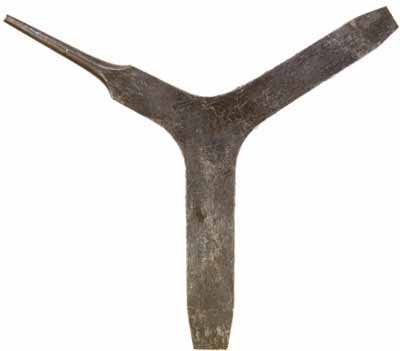
Musketeers carried a small tool like this in their cartridge boxes. It’s basically a combination tool with a screwdriver that you can use to completely disassemble the musket combined with a small pin that you can push into the touch hole to clear it if it has become clogged.
If you get a flash in the pan, you can quickly re-prime the pan and try again. If that fails, then it’s time to break out the tool and clear the touch hole. If you aren’t getting a spark, you don’t have time in the middle of a battle to nap your flint. You’re kinda screwed there. That gives you some motivation to keep your flint sharp before going into battle.
That seems way high to me for a properly cleaned and maintained flintlock. Granted I’m never shooting in battlefield conditions, but my failure rate is a heck of a lot lower than that. Even under battlefield conditions I would expect something more in the 5 to 10 percent range (by comparison, my caplock rifle-musket has never misfired, ever). Your musket needs to be in pretty crappy shape to have a 43% misfire rate.
Depending on the quality of your flint, it can go dull and start having significant misfires after only a couple dozen shots or so. Maintaining your flint is critical.
I’m inclined to agree with engineer_comp_geek re misfires. My wife and I have shot flintlocks at Colonial Williamsburg twice with small groups. We received safety instructions in case we had a misfire, but I didn’t see a single one between the two occasions. I witnessed or fired a total of about 50 shots. Granted, I’m sure the muskets were meticulously maintained and loaded/primed, but I would also expect that the British infantry would have some incentive to exercise similar care.
@swampspruce, thank you for your reply, and thank you for your considerate response to my raising a “new” point that you’d already addressed upthread, which I should have read.
@engineer_comp_geek, thank you for your lengthy and informative reply. I do have one cavil:
My own personal experience with firearms, using modern ammunition manufactured and stored to U.S. Army standards, is that squibs and under-powered rounds do occur on occasion. I’m finding it hard to believe that black powder charges in 1780 were so consistent and stored and handled so meticulously that under-powered rounds weren’t a thing. On the other hand, I’m perfectly willing to accept that they were rare enough that they wouldn’t make a significant difference in the OP’s scenario.
Yep. But the real problem isn’t so much that the round will be so underpowered that it’s totally ineffective, but that variance in the amount of powder per charge contributed to the inaccuracy of the musket.
So much of this hypothetical encounter depends on intangibles we simply can’t know. Will the Romans break at the first volley? How accurate will it be? What kind of formation do the Romans choose? What kind of cover is available? How green are the Redcoat soldiers?
I think the only real takeaway from all this is that it would be closer than at first blush you would assume. Close enough that the details will determine the victors.
The situation is so artificial that the outcome would be mostly determined by chance - whomever gets into formation faster under a “mutual surprise” scenario and then advances (Roman) or fires (British).
To clarify in case anyone is confused by my response: I have posted to correct some bizarre misunderstandings in the thread, but I’m not “on” a side here. Guns were used for a reason and they more or less obsoleted all previous weaponry in war, but in a highly constrained situation they can be beaten.
The difference between the Highlanders and the Romans is that the Highlanders know all about the capabilities and tactics of the musket line infantry they are facing, and the Romans don’t. The Romans don’t know that there is a 20-30s reload time on the muskets, or anything else whatsoever about the battle doctrine of the army they’re facing. One of the reasons the muskets only got one volley off against the Highlanders is that the Highlanders knew there would only be one volley if they could close quickly enough.
Ranged and melee combat capability are not the only disparities in the OP’s scenario. There’s a huge informational disparity as well. Romans don’t have any idea about the combat capabilities of musket formations, but the Redcoats will have a roughly accurate idea of the combat capabilities of armoured infantry with shield and short sword.
In the book, The Washing of the Spears, about the Zulu wars, it has some stats about the final battle outside the Royal Kraal. The Redcoats formed a square, and indeed, the Zulus came out of the tall grass at about 100 yards.
The Redcoats here were using the The Mk2 Martini–Henry rifle , a breachloader, that was a order of magnitude more accurate than the Brown Bess. It also had greater penetration.
The Redcoats killed there about 1000 Zulu. They expended 33,000 rounds to do so.
So a ten times more accurate rifle needed 33 rounds to kill one unarmored target.
Which battle are you talking about? The final major battle of the Zulu war, the Battle of Ulundi, didn’t go down as described. The redcoats at Ulundi started firing at 2,000 yards against a steadily advancing Zulu force, not at 100 yards. The Zulu also didn’t come out of tall grass at only 100 yards away.
How many Zulus were at the battle versus how many Brits? Because I imagine if you’ve only got 2,000 soldiers and you’re fighting an enemy with 22,000 warriors you’re probably going to lay down a lot of fire just to keep them at bay.
They did with the artillery , but in some cases, according to the book, the Zulu were able to get close by moving though the grass.
17 Companies vs several thousand Zulu was the portion of the battle for the Square. 5000 infantry or so. Maybe 10000 Zulu there, so only 2-1. But they also had cannon and gatling guns firing. The official estimate was 1000 dead Zulu, but they only counted about 500. If you rely upon counts, 500 Zulu were killed with 33000 rounds, plus fire from 2 Gatlings and 10 cannons.
Even if all the firing started at 2000 yards, this still means it took 33000 rounds to kill that many Zulu, assuming NONE were killed by Gatlings or cannon, and most accounts assume most of the casualties were due to those heavy weapons.
The The Mk2 Martini–Henry rifle was more accurate at 1000 yards than the Brown Bess at 100.
I was reading some other message boards, and the commanders of the day expected a maximum of 20% hits from a close range volley.
Yep. That rifle had a 27" grouping at 1200 yards. A soldier in the field could hit a man-sized target at 400 yards, and apparently in the Zulu wars the command to open fire was given when the enemy was roughly 400 yards away. It used to be used in long distance shooting competitions well into the 1900’s.
Also, being a cartridge-based breechloader the Martini-Henry in the hands of a skilled shooter could probably put five bullets downrange in the time it took to reload a musket.
If the British had used muskets in those battles they wouod have fared poorly.
18th century redcoats could beat the Zulu, it would simply have taken a larger deployment, and they certainly would have needed support of cannon and cavalry (which they would have had) now that we’re randomly talking about the Zulu War we’re well off the topic of a line infantry regiment versus a Roman legion (the British in the latter 19th century for example had far more sophisticated weapons like the Gatling gun, better infantry arms, better cannon than the 18th century.) The accuracy rate numbers put out frankly don’t change much about our knowledge of anything here. It was and is widely known most bullets fired in warfare do not hit any target at all, this has been true of every gun war.
To try and swing it back to the 18th century redcoats–they again, typically fought in combined arm engagements, and fully expected to fight in melee with bayonets. The redcoats in the Zulu war were probably significantly less familiar with bayonet fighting than redcoats of the 18th century, which I think is part of what got them surprised at Isandlwana. The issue with the redcoats versus a Roman legion was never that the redcoats would be expected to kill all 500 with musket fire, that is an ahistorical representation of how redcoats fought. They would instead be expected to lower morale and kill some of the advancing Romans with muskets, while gun wielding dragoons and cannon raked the Roman lines. But the hypothetical of the OP removes things like cannon and cavalry, which basically leaves a musket army with no historical support it would have had fighting an equal number of heavily armored infantry with large shields.
That actually just isn’t a very interesting hypothetical situation. The only way it is interesting is if you massively overestimate what muskets did. Muskets in mass could break lines or weaken morale, usually the coup de grace was delivered with a bayonet charge, again–with lots of assistance from cannon and cavalry which were very important to the era of line infantry. Against lightly armed enemies redcoats would be very effective in melee. What screws them versus the Romans is the Romans have large shields and are armored. The Zulu have hide shields and spears, which are probably a little more useful than the redcoat bayonet, but the actual redcoats of the 18th century would’ve encountered forces using shields and light armor in India for example, and they usually won those encounters (again, because they didn’t fight with just muskets, they knew how to use their bayonets and they often decided battles, and because the infantry worked in conjunction with artillery and cavalry–artillery in the 18th century was particularly devastating in battles where only one side had it, in terms of ability to break up lines and swing the battle.
Well sure, but if you are going to give the redcoats cannon and other support, you have to give the Romans the same - and the Romans with a full auxiliary of archers would devastate the redcoats before they even got in musket range, in my opinion. Especially if they figured out how long it took for the musketeers to reload after each volley. Early fighters against muskets would simply move forward until they saw the smoke of a volley then they’d all hit the ground while the bullets flew over, then get up and start firing arrows.
So if we are 500 against 500 and they start their attacks at 100 meters as the OP specifies, then assuming the 33 shots per kill mentioned above the soldiers are going to kill maybe 15 Romans. I think that’s low for a short-range volley, but even if it were 1-in-10, that would still only kill 50 Romans. And that would be the last volley they get off. And killing 10% of the Romans in a volley would be unlikely to cause them to break and run in my opinion. Romans were very disciplined and faced harsh consequences for breaking formation and running.
If they are both allowed auxiliary forces, I think the Romans still win. Archers are more mobile than cannon, and Roman composite bows had claimed effective ranges out to 400 yards in indirect fire, and 100 yards or somin direct fire. A good Sagittarii could loose 20 arrows in a minute. They don’t emit smoke and noise to give away their concealment or obscure their view, and the achers can spread out and move around to avoid cannon fire.
Against unshielded and unarmored foes, I’m not sure you’d even need the legionnaires. The archers could just stand off and pick off the Redcoats at their liesure. They would travel light and be able to outrun and outmanoever the enemy. At the battle of Little Big Horn the Natives used indirect bow fire aganst enemy forces to great effect - and their bows weren’t remotely as good as Roman composite bows.
Redcoats evolved tactics to face enemies of the time. The musket wasn’t a superior weapon to a bow, it was just easier to mass produce and a soldier could learn to be effective with it in days, whereas Roman archers took years to build their skills. As I recall, American Indians with bows were more than a match for colonials and redcoats. It wasn’t until the Kentucky rifle and the later repeating rifles that the gun became overwhelmingly better than the bow.
Logistically, bows took longer to make and required trained craftsmen, and arrows were much more expensive than musket balls. So if you want to quickly raise an army of 100,000 men from the population, muskets are great. But if you had to equip 500 men with weapons and could take years to train them, you’d be better off giving them bows rather than muskets. Again, in my opinion.
The bow didn’t die off because it didn’t work well, it died off because in the age of mass armies in the hundreds of thousands drawn from the citizenry, there was just no way to make them bow fighters or to provide them with the many millions of arrows they would need. Guns enabled mass factory warfare.
There are other reasons bows went away in normal warfare. They were easier to armor and defend against. In a long battle bowmen would tire out. It was hard to maintain supplies of arrows. But in our contrived situation of a single short battle, those don’t really apply.
I admire the bow as much as anyone, but in practice archers never achieved the kind of lethality you ascribe, even against unarmored enemies, and certainly not the Romans who never excelled at the use of that arm. The muskets under discussion are more accurate and have a longer range, while also being an order of magnitude more lethal. And that;'s not even bringing cannon into the mix, which would likely break up any attack at all, archers or foot-soldiers alike, and probably most cavalry.
If archers were as effective on the battlefield as you say, then there would have been elite cadres of archers in armies well into the age of gunpowder. But that did not actually happen. In actuality, the energy delivered by an arrow is much, much less than that of a long firearm.
It’s weird that people with guns tended to conquer those who hadn’t developed them yet, I guess for some reason they chose to disagree with your hypothesis that weapons from 1500 years prior were so massively superior and would easily win.
FWIW the English had the best archers in human history and they weren’t using bows any more by the 18th century, that should tell you something.
If the only advantage to muskets was they were easier to mass-train than archers and swordsmen you would expect battles between equivalent numbers of musketeers and pre-musket weapon users, the pre-musket weapon users would dominate. But our actual history of European conflict with societies that had not developed gunpowder is even with very terrible guns from the 1500s and 1600s European forces that were significantly outnumbered tended to beat the less technologically advanced forces.