A redcoat could carry about 60 rounds of ammo. How many spears did the average Roman soldier carry?
No pila. No ranged weapons by the Romans at all.
The British could be within 30 feet of the mound. That’s plenty close to hit with a musket. It’s not like all 500 Romans are going to suddenly charge over the wall. How would they get up there? How many could they get in a certain arc? They would be erect and helpless for enough time for a designated segment of the British line to shred them. If the Romans emerge in an expanding 360 degree spread, they can’t support each other and they die quick. If they concentrate on an arc, the rest of the British line is on their flanks and rear and they die quick.
Far fewer. Probably 2. Not sure how that’s relevant. If you are the Romans, your objective is to eliminate the gap between the armies and have as short of a charge as possible. If you line up across the British you get 3, 4, 5 volleys shot into you. Likely game over. If you close the gap it benefits the Romans. Digging a trench by necessity brings the British closer. Shots from range are useless in that scenario.
How does building a trench bring the British closer? For that matter, wouldn’t a trench do more harm to the Romans than the British? How can the Romans charge with a bloody hole in the ground between them and their target?
I’m also wondering why the Romans get to bring their artillery but the Redcoats can’t.
Where in the OP was it said the Romans didn’t have pila? It was pretty standard kit.
If the Romans are in their mound, the British have basically 4 choices. 1. Wait the Romans out. No loss for the Romans. 2. Charge. Great for the Romans. 3. Spread out and try to snipe the Romans. Personally I don’t think a 1 v. 1 siege would be effective. 4. Get close as a group on a single front. I think the advantage for the Romans here is also clear. A far lesser distance to travel when you can’t combat the enemy.
What other choice to the Romans have? Face off at a distance and wait for the Brits to tear you apart as you run across the field?
Yes, but here is where the Lorica would give the Romans a huge edge. The bayonets would glance off.
Right.
Due to the 100 yard set up, and no artillery, etc.
No doubt that a British army would defeat a Roman army on a real battlefield.
True, but this was a hypothetical. IRL a British army would defeat a Roman army. But in a 100 yard ambush? The Romans have the edge.
Sure top ends. But the speeds i quoted was what the Army expects it’s elite troops to sprint. See my cite.
The charged for short distances at a sprint. Mind you, they usually let the enemy charge them.
No. Look the lorica won’t do much vs the Brown bess, but it will make the bayonets useless.
Napoleonic Infantry used the musket to break up a formation, then closed with bayonet.
Right.
Pila were not the Roman artillery. Pila were personal weapons. Do the British not get to bring their bayonet? I didn’t say archers, or ballista.
Even if the Romans do have javelins, it isn’t going to help much in a fortification situation. The British can easily outrage it, and while muskets are hardly considered accurate today, they are much superior to throwing weapons in that regard. A Brown Bess used for sniping purposes can be reasonably used at 100 yards. Note that is hardly the effective limit of its power, just the range beyond which it would be quite difficult to pick out a man.
In this case, mjmartin considers that the Roman can dig trenches and put up a dirt wall. However, he (or she) is failing to consider that the British can do exactly the same thing. A good trench would slow any Roman advance. The British can simply mound up some dirt and plink at anyone in sight from a good 75 yards off, completely safe from any thrown pila. And if the Romans fortify themselves up, they are at a massive disadvantage, since now they are likely under the clock. They will run out of water very soon unless they also get a free spring or something.
This is the exact opposite of what the Romans ought to do under the circumstances considered, which, frankly, are completely bizarre since it hands the Romans an absurd number of advantages. But that’s the OP’s rather weird hypothetical.
I would love to see your source that a brown bess can snipe at any level of accuracy at 75 or 100 yards. I’m not saying that they couldn’t kill from that range, of course. Just that 1 Brit could hit 1 Roman that is protected from foot to shoulder doesn’t seem realistic at that range. No one else has made that claim in this thread, and I don’t see evidence for it on my web searches. The idea that in a 1 v. 1 situation (or more accurately, 500 v. 500) that the British could stop troops from seeking out water seems dubious to me.
I suspect your source is bad. How many members of the army do you think run a 10s 100m dash in full gear?
Hang on - you’re talking about the modern army!
My earlier quote made the point that just 100 years ago, the winning Olympic time at 100 metres for a trained unencumbered athlete was 11.4.
Now jump back 1900 years. Think how slow the best athletes in the World were then.
And the Roman army were superb at marching in full kit, not sprinting 100 metres whilst keeping their formation under heavy fire.
What if they got 60 tries?
From Wikipedia: “The accuracy of the Brown Bess was fair, as with most other muskets. In 1811, in London, a test shooting was conducted at the site. The target was a wooden shield the size of an infantry or a cavalry line. The results of the practice were as follows: at a distance of 100 yards (91.44 m) 53% hits, 200 yards (182.88 m) 30% hits, 300 yards (274.32 m) 23% hits.” 53% hits at 100 yards on a stationary target the size of a infantry line. I’d probably take my chances as a moving, head sized target at that distance, at least over having my whole body exposed as I charge the British line for 300 yards.
I clearly am not changing any minds here. I’ll throw up the white flag, even if I haven’t seen any reason to be optimistic about any of the other options.
Your mistake is not in judging the overall accuracy of a musket (*yet see below), but in over-estimating the advantages of fortifications. You seem to believe that the Romans are going to have something like 90% body coverage and protection. But unless they are allowed to build an incredibly tough fortification and the British are not allowed to do any such thing, the British side can always simply put up a platform and snipe. Fortifications like that were not really practical for Roman soldiers even under much better circumstances - they were good, but they couldn’t just improvise a castle from thin air. Their form of fortification defence required more active measures. The British can force the Romans to attack, but not vice-versa.
*Additionally, your statistics about accuracy are somewhat misleading because they are looking at firing rapidly. Given time to aim, muskets have a variance about twice that of rifles. That’s obviously not a good thing, but at 100 yards they’re still decent. And the British, in this case, can get to within 50 yards without risk.
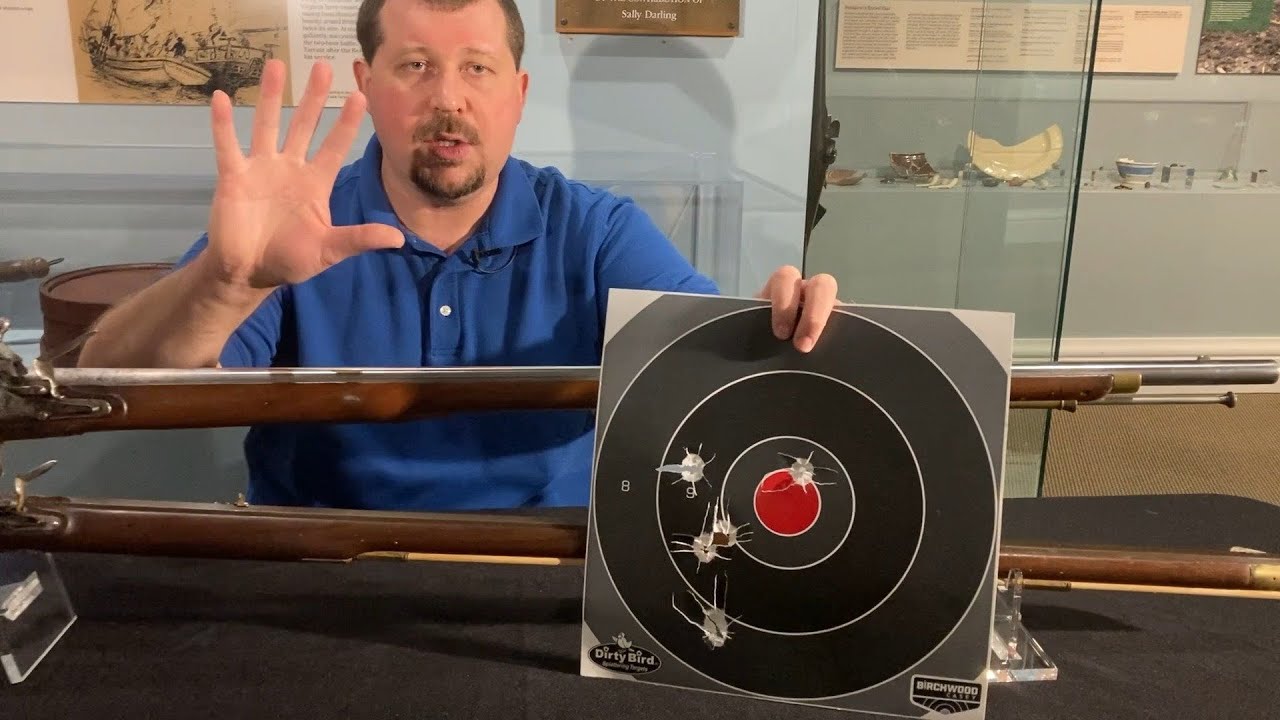

For a certain value of “any level” of accuracy, this guy managed to hit a two foot by four foot target with a 60% success rate at 100 yards using a Brown Bess. I’d be a bit leery of making myself a target at 100 yards.
Absolutely. But that was one guy. Not in battle. Not firing a volley, and probably trying to aim. Vs a stationary target not trying to kill him.
I don’t understand this comment at all. If I am 5’8 roman legion, and I dig a 5 foot hole, and all my comrades do too, we are pretty well protected from musket balls. No castle needed. If the British do the same, we are just a bunch of guys in holes staring at each other. Doesn’t get a victory, but prevents (slows?) sure fire defeat.
How long do you think I am going to stay in the same spot, waiting for you to shot me? Of course they would have to fire rapidly.
#1: 2’ x 4’ is a lot larger than my head. #2. I move.
With credit to Jon Snow: “Ok, its a bad plan. What’s your plan?” They only thing I have seen so far is make a mad dash across 200 plus yards and hope the Brits don’t tear you to pieces before you get to them. I’m staying in my hole, thanks.
We’ve kind of shifted this to shooting at the Romans who are in a fortified position. In such a situation, the British can park themselves 50-100 yards away and just occasionally plink at any Roman they see with impunity. There’s no volley firing, probably some aiming, and the British soldier’s life really isn’t endangered so that’s not a distraction.