Invading the Ukraine is win-win for Putin. Unless the US is willing to initiate a nuclear exchange, it is powerless to act. The economic sanctions will work to Putin’s benefit by moving Russian economic alignment from US/Europe to China. The west is in decline. The east is on the rise.
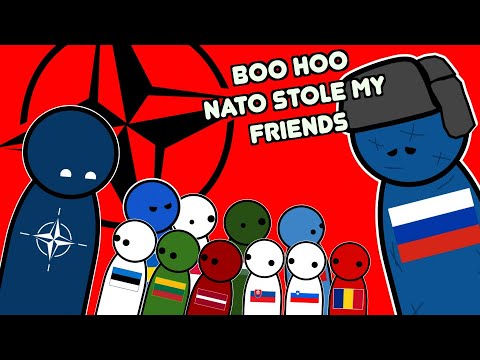
I wanted to link to this video from one of the channels I subscribe to. It’s a more light-hearted take on the questions I’m asking, and it aligns pretty well with my own thoughts on this. It’s about 15 minutes, and I’m sure more than a few 'dopers would find it silly (to me, I need a bit of comic relief at this point, as everything is pretty grim), but FWIW I agree with a lot of the answers to the questions I raised in the OP (MrDibble also pretty much hit them on the head, though in a much more…terse…manner ). Anyway, for anyone interested, here it is:
Interesting take. So, the sanctions won’t actually hurt Russia, but instead, it will be a win/win (with Chinese characteristics, no doubt) for Putin? Admittedly, that’s a different take than most I’m hearing.
Did you mean Russian justification is meaningless? I’m unsure what western justification is in the context of this thread.
Well, I wasn’t actually expecting Putin to put in an appearance on this message board. Nor am I looking for justification from his cronies. What I was looking for is folks who agree with some of the justifications I listed…or others they want to put forward…for Russia’s invasion. I’ve seen a few 'dopers who have posted them, so I figured they could join this thread and post their thoughts if they wanted to.
If the sanctions are so meaningless, why is Putin so angry about them?
Vladimir Putin delivered a chilling warning to the west over the imposition of sanctions on Russia on Saturday, warning that measures designed to cripple his country’s economy were “akin to an act of war”.
Putin must have been stung by the huge effects of the sanctions, particularly the blocking of 60% of Russia’s $600bn of foreign reserves.
Putin is also trying to use the potential future Iran deal as leverage for no future sanctions between Iran and Russia.
Russia presented a new condition for a revival of the Iran nuclear deal on Saturday: A U.S. guarantee that the sanctions that have been imposed on Moscow for invading Ukraine won’t be applied to Russian trade and investment with Iran.
Given what Lavrov called “the avalanche of aggressive sanctions” imposed by the West on Russia, the country could find itself unable to benefit from the opening up of trade and investment opportunities with Iran.
Everyone made a mockery of those agreements when they made them.
The Soviet bloc/Warsaw Pact and NATO were enemies. No one should agree to anything without an enforcement mechanism and expect anything out of it.
And I highly doubt any of the (former) eastern bloc had any illusions about those agreements. If the Soviets/Russians had really taken this seriously, they would have hammered out exactly what was being agreed to and got it in writing rather than relying on vague verbal assurances. And in this particular case it may have been essentially impossible to hammer out an agreement, because it would be very hard to get language that prevented the countries east of NATO from forming a NATO-like bloc that had enough support in terms of either military support or diplomatic agreements from NATO nations to be in NATO for all intents and purposes without technically being part of NATO. Even with the utter lack of any real restraint on NATO expanding, that’s all NATO was “guilty” of trying to do with respect to Ukraine. And obviously the current situation allowed Russia to invade without risking direct conflict with NATO, but the ties absolutely could become closer and Ukraine could become a country more similar to Taiwan in terms of it’s international support.
The “agreement” was about image (in the form of saving face for a defeated superpower) then and it’s about image (in the form of pro-war propaganda) now.
They would have pushed for a formal treaty, as that is one of the things the US takes very seriously. The fact that they didn’t…and that we didn’t…kind of puts this into perspective. I have no doubt that the US said they wouldn’t push into former Warsaw Pact or Soviet state territory, and they probably meant it…but then, they never thought those countries would run to the west and push so hard to be admitted to NATO. Not sure what folks think we should have done differently in this…those countries had good reason to do what they did and push for NATO membership. As we can see with subsequent Russian Federation actions.
So do you suppose Russia didn’t seriously care about NATO expanding eastward? Seems to me that if they had the power to secure a more binding agreement, they’d have jumped at the chance.
They had to settle for a handshake agreement because their collapsing empire wasn’t exactly negotiating from a place of strength, but I wouldn’t interpret that to mean that they didn’t care. Obviously, they cared greatly.
I suspect Putin, and Russian men like him, have spent years replaying this in in their minds thinking “if only we’d rattled sabers harder”. They’ve decided it’s now or never to take another bite at the apple. Unwisely, as it would seem to have turned out.
First, there have been plenty of times in which a country loses ground due to war without any nuclear weapons being used. Russia “lost” in Afghanistan and the United States “lost” in Vietnam , for example. So it’s certainly possible for the United States and other western powers to continue supplying enough non-nuclear support to Ukraine for Russia to eventually lost this war.
Second, I don’t feel the economic re-alignment you describe benefits Putin or Russia. It’s in Russia’s best interest to be an economic free agent, able to trade with either the west or China. This means that neither side can push Russia too hard because it has the option of switching its trade to the other. If the west pulls out of trade with Russia and Russia becomes dependent on China as its sole major trade partner, that gives China leverage over Russia.
I’m sure they did, but this would have been in the final days of the Soviet Union, and they didn’t exactly have a strong negotiating position to force the issue. But yeah, they certainly cared. They also had to watch it all come apart and there wasn’t anything they could do. Then they had to watch as their former ‘allies’ (all of who were allies because the Soviet boot was on their necks) ran to their former enemy. All of that had to be galling.
If they did think that they were deluding themselves that they were in any sort of position to do anything about any of this. But Putin seems good at believing things…or, good at shifting history to conform to his idea of how it should have been or even was.
I actually don’t think they ever meant it. I don’t think they thought it was a guarantee that they would expand eastward, but I highly doubt they ever decided to have a rival power dictate that kind of thing to them if they could help it.
This is absolutely true - they simply didn’t have the leverage to dictate anything about the breakup of the eastern bloc and had to accept what they could get.
But they weren’t stupid. There is a reason that some leaders of western nations were willing to give those vague assurances but weren’t willing to actually formally commit to anything - it’s because they knew that those verbal assurances weren’t real commitments. They had to accept something because the alternative was admitting that the USSR was agreeing to a conditional surrender and they didn’t want to admit that.
I disagree. If an agreement was made in 1991 (which is a debatable point) then NATO should have honored the terms of it. If they felt it was wrong to acknowledge Russia as having a sphere of influence in eastern Europe then the appropriate response would be to not make an agreement. It would have made things more difficult in 1991 but it would have left the NATO countries free to act as they wished.
But this is a moot point to this topic. If the United States had made an agreement with Russia back in 1991 to not admit any former Warsaw Pact nations to NATO and then violated that agreement in the nineties then Russia would have a legitimate complaint against the United States and NATO and the former Warsaw Pact nations which joined NATO.
But it would not have a legitimate complaint against Ukraine.
Countries don’t get to legitimately transfer their diplomatic anger over to a new target. Russia cannot say “It was wrong for Poland to join NATO so we’re justified in invading Ukraine.” Anymore than the United States could say “It was wrong for Russia to invade Ukraine so we’re justified in invading Mexico.”
I know you said “legitimately transfer” and no doubt don’t consider Iraq a justified use of military force, but it is nonetheless a glaring bit of precedent.
This is what the thread is about. The question is…would this be justification for the invasion of Ukraine by Russia? A lot of folks do use the ‘well, the US did X’ argument to justify Russian actions…and many times those arguments are valid wrt bad stuff the US did or has done in the past.
It’s not necessarily anger. The statement could go: “It was wrong for Poland to join NATO because it puts hostile forces too close to our borders so we’re justified in invading Ukraine as a buffer.”
I don’t agree with that, but it’s not completely non-sensical.
Putin’s concerns have never really been about offensive weapons close to it’s borders, though he does like to talk that up. He knows that NATO is primarily defensive. The issue (which has been raised in the past) is Anti-Ballistic Missiles close to the Russian ICBM launch sites that could conceivably neutralize a large portion of his Strategic Nuclear arsenal. Putin thought that NATO ABM sites in Poland would be bad, the possibility of those systems being in Ukraine probably keeps him up at night.
And yet the nations bordering Russia look to the west (the EU, and NATO) for economic growth and development. If sanctions and the invasion of Ukraine cause the leadership of Putin and Medvedev to collapse and the stranglehold of the oligarchs to be released, I hope that the EU switches from sanctions to support very rapidly, so that the Russian people get a taste of real freedom and their own shot at self-determination.
Well given that I also think invading Iraq wasn’t justified, I certainly don’t think it justifies Russia’s actions now. Nonetheless, the precedent of Iraq certainly complicates expressions of righteous indignation from the US in the eyes of people from some parts of the world, particularly those that have been on the receiving end of various rounds of American adventurism in the past. “Why should we support your efforts to hold Russia to account now when just two decades ago you were bullying anyone who didn’t want to support your own unjustified invasion?”
I will grant that this line of argument doesn’t really address the question of Russia’s justification. But I think it is a prevalent line of thought amongst those who aren’t overtly anti-Putin.
 ). Anyway, for anyone interested, here it is: