Try googling ‘Metacentric height’ for an explanation about this stuff.
A ship that is too stable (too low GM) will not ‘roll with the punches’, risking structural damage, and when it does roll, or pitch, it comes back too quickly - the ‘slamming’ causes fatigue failure and the vertical acceleration component of pitch is now known to be a prime component of sea sickness.
Obviously a ship that is too unstable rolls excessively, and may not come back if it rolls far enough.
Before computers became available to do the number-crunching the calculations of stability were very lengthy and tedious - so lengthy as to be deemed impossible by 19th c. marine architects initially. By the 1890s a mechanical computer called Amsler’s Integrator became available to make the process somewhat quicker. Over the centuries shipbuilders proceeded empirically, making evolutionary changes to designs that seemed to have proved their worth at sea.
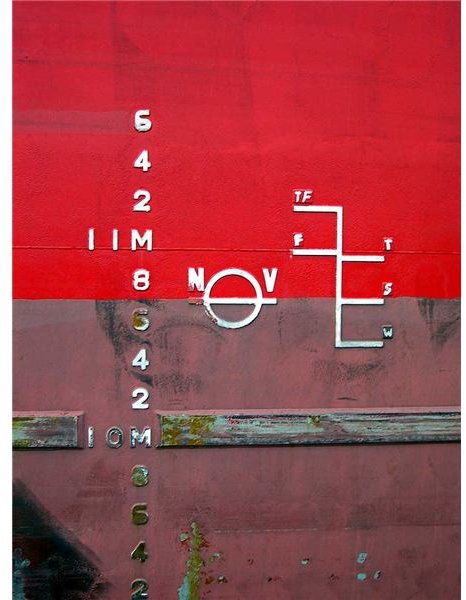
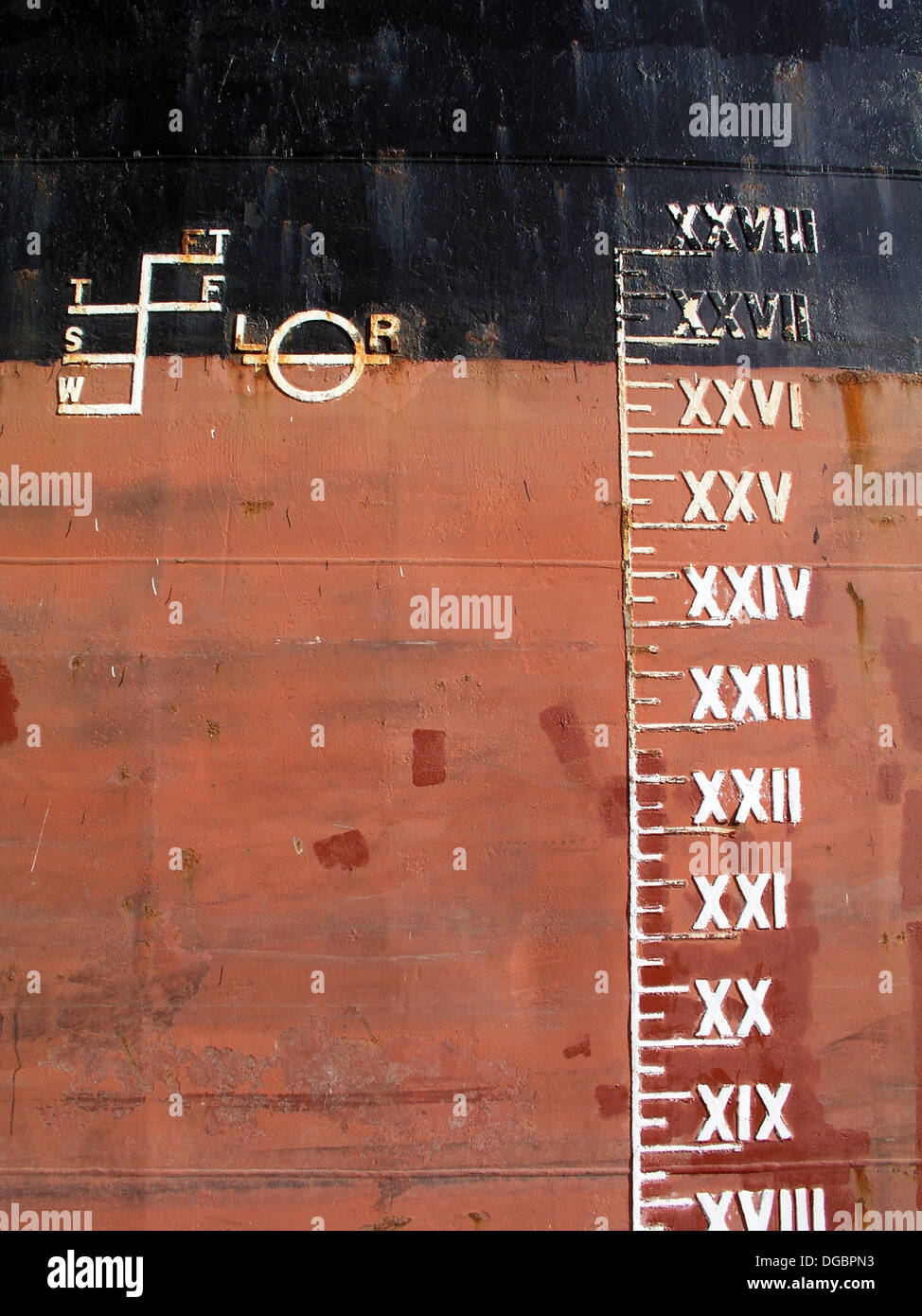
Your brother tells tall tales. Fully loaded bulkers do not have their decks awash. They can be loaded no deeper than their loadlines, which are some way down the sides of the hull. They would typically have several metres of freeboard. A vessel loaded deeper than her marks would be operating (very) illegally, would have voided its insurance, and would be stopped by any harbour master that saw it. The master would face charges.
In bad weather, very large seas will break over the decks and at that time movement on deck can be dangerous or impossible.
As to the business about breaking in half, there were major problems with structural failure a few years ago probably resulting in the loss of vessels such as the “Derbyshire”. The problem was with heavily loaded vessels and thought likely to result from the failure of hatch covers when green water broke over them. Needless to say, if you don’t want this to happen the last thing you do is:
1/ put more weight in the vessel (which is the only way you can increase draft); and
2/ increase the chances of green water over the hatch covers by having the decks awash.
Your post is nonsense from one end to the other, sorry.
An Admiralty indoor testing tank was built at Torquay in 1872 to study problems using scale models, and proved successful enough for a permanent installation at Haslar in 1882, which remained in use until the 1960s.
I am going on memory from years ago But if I do remember right bulk carriers when fully loaded have a low “free board” Their decks are not awash but the load lines are not way down the side, but a few feet down from main deck level. A hatch cover properly installed can take green water breaking over them without failure. When at sea you do not walk on the main deck but on the cats above the main deck, same as a tanker.
A tanker fully loaded will also have little freeboard and walking on the main deck in rough seas can get you very wet.
The reason for the low freeboard is the density of the cargo. When the density of the cargo is near or less then the density of water a ship can ride lower in the water without the worry of sinking in rough seas. If the ship rides deeper in the water then screw cavitation and slap effect is reduced. When a tanker is not fully loaded and one of the blades of the screw is coming out of the water everything shakes and it is a rough and uncomfortable ride.
You can scale down and test stability, but efficiency is a different matter. I attended a short course in ship modelling and if I don’t misremember some of the major problems is that there are different ways water creates drag on a vessel. Some of them require a scale model to go slower than real speed to give the correct measurements, and some require it to go faster. So you can’t measure all relevant properties with a single run with a model.
You don’t remember rightly. Have a look at this page and this photo. You will see the ore carrier and chinamax. These are large bulkers. The photos show them loaded and they have many metres of freeboard. It’s hard to get an idea of scale but have a look at the portholes in the accommodation. Each row represents a whole storey. So the freeboard is probably at least two storeys high. Probably more.
Lest you think these are not fully loaded note that they are down to the line between the boot topping and the hull paint, which means they are down to their marks. See this photoand this one.
Yeah, should do. However, go read the Wikipedia article on the loss of the Derbyshire. Green water over the hatches of a bulker is not something a master will encourage.
Go back and look at the first page of photos I linked above. Catwalk? What catwalk.
Yup tankers have less freeboard for the reasons you outline. I suspect perhaps bob++'s brother was actually on a tanker not a bulker.
Cruise ships to me look dangerous because they are basically a hotel slapped on top of a boat hull.
Their are these super long open hallways with just normal doors. Not water sealable. All those staterooms with balconies with normal sliding glass doors that would allow water to pour right in.
The cabins with conventional sliding glass doors are a long way above the water line. Like 50 feet or more. If you’ve got green water there you’re already lying on your side, or upright but sideways to massive waves. In which case you’re already in deep kimchee.
Overall I suspect (not my area) that cruise ships are less hardy than a well-maintained freighter or warship. OTOH, they have no mission which requires them to drive through nasty weather. Unlike the others. With modern weather forecasting the only way a cruise ship ends up in truly dangerous seas / weather is after a propulsion failure or major fire. In which case they’ve got a lot of other problems.
In my biz (airplanes), there certainly is weather we can’t fly through. So we don’t. Governments and industry spend a lot of money and expertise on developing effective worldwide prediction and detection of such weather so we don’t blunder into it inadvertently.
And yes, you can contrive a scenario where everything else goes wrong at once an somebody flies into unflyable weather. And when that happens they either survive or they don’t depending on the luck of the draw. But it’s rare enough that it’s considered within the breaks of the game.
USAF had a statement in one of the regs: “There is no peacetime mission which requires flying into a thunderstorm.” The other half of that thought was left unstated. Warplanes and warships have different risk/reward tradeoffs and hence different designs.
Not true. Example: On a rocking chair, the center of buoyancy is where the rockers touch the floor. The center of mass is above the floor, yet the chair does not tip over. A ship must be designed like a rocking chair in that any force that causes the boat to lean (list), causes the center of mass to rise.
You don’t remember rightly. Have a look at this page and this photo. You will see the ore carrier and chinamax. These are large bulkers. The photos show them loaded and they have many metres of freeboard. It’s hard to get an idea of scale but have a look at the portholes in the accommodation. Each row represents a whole storey. So the freeboard is probably at least two storeys high. Probably more.
<Portholes, I am not seeing portholes in the pictures and why would there be portholes, but I can see by the photos where the water line is and there is more freeboard that I thought there would be>
Lest you think these are not fully loaded note that they are down to the line between the boot topping and the hull paint, which means they are down to their marks. See this photoand this one.
Yeah, should do. However, go read the Wikipedia article on the loss of the Derbyshire. Green water over the hatches of a bulker is not something a master will encourage.
Go back and look at the first page of photos I linked above. Catwalk? What catwalk.
<I noticed no cats in the pictures on the bulkers, but I have walked the cats on tankers>
Yup tankers have less freeboard for the reasons you outline. I suspect perhaps bob++'s brother was actually on a tanker not a bulker.[/
Oldish thread, but, yes. I used to kayak white water rapids. The boats are designed to be unstable for quick maneuvering. Mine was a particularly short and wide boat, without fins. I threw my weight somewhat from side to side but the real capsize prevention was to lean into the obstacle, letting the force of water against the obstacle push the boat away.
Not sure if I could do that as captain of a heavy warship. Though I should have mounted cannons on my boat anyway.