# Siphoning for profit
**URL:** https://boards.straightdope.com/t/siphoning-for-profit/743852
**Category:** Cecil's Columns/Staff Reports
**Created:** [January 22, 2016, 4:08am UTC](https://boards.straightdope.com/t/siphoning-for-profit/743852 "2016-01-22T04:08:01Z")
**Posts on this page:** 20
**Page:** 1
### Author:  [@watchwolf49](https://boards.straightdope.com/u/watchwolf49)
#### Post date: [January 22, 2016, 4:08am UTC](https://boards.straightdope.com/t/siphoning-for-profit/743852/1 "2016-01-22T04:08:01Z")
In the article [How does a siphon work?](http://www.straightdope.com/columns/read/2372/how-does-a-siphon-work), there appears to be a bit of a mistake.
This can be easily tested on the kitchen counter. The article claims “Since the weight of the water in hose segment BC is greater than in segment AB, the water flows out of end C and more water is drawn into end A.” With the hose end A below water surface D, hose segment AB can be longer than hose segment BC and contain greater weight.
I think the correct statement would be “The weight of the water in hose segment BC is greater than in segment **BD** , the water flows out of end C and more water is drawn into end A.” As long as C is below D, A can be below C.
Can anybody else confirm this observation?
---
### Author:  [@nolaman](https://boards.straightdope.com/u/nolaman)
#### Post date: [January 22, 2016, 4:03pm UTC](https://boards.straightdope.com/t/siphoning-for-profit/743852/2 "2016-01-22T16:03:40Z")
It’s all gravity. Grasping at the straws of cavitation is an issue only when (for water) the column height is about 34’ or greater. And it’s not the weight of water in the “output” end, either. For example, you can have a 2" diameter hose coming up out of your bucket of water reducing to 1/16" diameter as it goes over the top of the bucket. As long as the output end is below the level of water in the bucket the siphon will flow, even thought there’s much more mass of water in the 2" hose section. The difference in air pressure is absolutely puny, down in the “unmeasurable” level. And siphons do indeed work in a vacuum (though not with water which would boil off).
So it’s gravity and unit column weight, not total weight. You have to divide the total column weight by the area of the column at the outlet end. This calculation works out just fine to figure out the flow rate of the siphon.
The reason barometers have a gap above the liquid is because of cavitation. The height of the column creates a reduced pressure at the top of the column. If that reduced pressure is below the cavitation pressure a gap will open at the top of the column. It’s not really a vacuum, it’s a gap filled with the gas form of the liquid.
---
### Author:  [@watchwolf49](https://boards.straightdope.com/u/watchwolf49)
#### Post date: [January 23, 2016, 1:07am UTC](https://boards.straightdope.com/t/siphoning-for-profit/743852/3 "2016-01-23T01:07:47Z")
> [@nolaman](#):
>
> [snip] … And siphons do indeed work in a vacuum (though not with water which would boil off) … [snip]
I’m curious, this was mentioned in the original article and I’m at a loss … what exactly are you siphoning in a vacuum?
---
### Author:  [@Chronos](https://boards.straightdope.com/u/Chronos)
#### Post date: [January 23, 2016, 3:16pm UTC](https://boards.straightdope.com/t/siphoning-for-profit/743852/4 "2016-01-23T15:16:59Z")
> [@](#):
>
> The difference in air pressure is absolutely puny, down in the “unmeasurable” level. And siphons do indeed work in a vacuum (though not with water which would boil off).
It’s not the difference in air pressure from one end to the other that matters. It’s the air pressure at the ends compared to the change in pressure due to the height of liquid. If you don’t have that, then both columns of liquid just fall into their respective basins, and leave a vacuum (or near-vacuum, with a little bit of partial pressure of fluid vapor) in the middle. It _is_ still possible to have a siphon in vacuum, but the only thing holding the columns together is the fluid’s own cohesion, which is both weak and fragile. So your maximum rise height would be very small, and if you bumped it, it might fail.
---
### Author:  [@watchwolf49](https://boards.straightdope.com/u/watchwolf49)
#### Post date: [January 23, 2016, 4:10pm UTC](https://boards.straightdope.com/t/siphoning-for-profit/743852/5 "2016-01-23T16:10:46Z")
> [@Chronos](#):
>
> … It _is_ still possible to have a siphon in vacuum …
This would imply that vapor pressure in the environment has _nothing_ to do with the siphon effect, am I reading you correctly?
---
### Author:  [@watchwolf49](https://boards.straightdope.com/u/watchwolf49)
#### Post date: [January 24, 2016, 4:25pm UTC](https://boards.straightdope.com/t/siphoning-for-profit/743852/6 "2016-01-24T16:25:17Z")
> [@nolaman](#):
>
> It’s all gravity. Grasping at the straws of cavitation is an issue only when (for water) the column height is about 34’ or greater. And it’s not the weight of water in the “output” end, either. For example, you can have a 2" diameter hose coming up out of your bucket of water reducing to 1/16" diameter as it goes over the top of the bucket. As long as the output end is below the level of water in the bucket the siphon will flow, even thought there’s much more mass of water in the 2" hose section. The difference in air pressure is absolutely puny, down in the “unmeasurable” level. And siphons do indeed work in a vacuum (though not with water which would boil off).
>
> So it’s gravity and unit column weight, not total weight. You have to divide the total column weight by the area of the column at the outlet end. This calculation works out just fine to figure out the flow rate of the siphon.
I builted a hose to these specifications except my outlet was 5/32" instead of 1/16". Sure enough siphoning occurred. However I could not get water to vaporize in a vacuum, although some copper in the motor sublimated. Smelled like Navier/Stokes is involved somehow …
> [@nolaman](#):
>
> The reason barometers have a gap above the liquid is because of cavitation. The height of the column creates a reduced pressure at the top of the column. If that reduced pressure is below the cavitation pressure a gap will open at the top of the column. It’s not really a vacuum, it’s a gap filled with the gas form of the liquid.
The height of the column depends on the external air pressure, as pressure goes down so does the height of the column, and therefore the height that can be siphoned over. So at 0 pressure, wouldn’t the height of the column also be 0?
---
### Author:  [@rat\_avatar](https://boards.straightdope.com/u/rat_avatar)
#### Post date: [January 24, 2016, 5:52pm UTC](https://boards.straightdope.com/t/siphoning-for-profit/743852/7 "2016-01-24T17:52:23Z")
> [@watchwolf49](#):
>
> I builted a hose to these specifications except my outlet was 5/32" instead of 1/16". Sure enough siphoning occurred. However I could not get water to vaporize in a vacuum, although some copper in the motor sublimated. Smelled like Navier/Stokes is involved somehow …
>
> The height of the column depends on the external air pressure, as pressure goes down so does the height of the column, and therefore the height that can be siphoned over. So at 0 pressure, wouldn’t the height of the column also be 0?
Here is a video that demonstrates a siphon working a vacuum.
[ ](https://www.youtube.com/watch?v=8F4i9M3y0ew)
---
### Author:  [@watchwolf49](https://boards.straightdope.com/u/watchwolf49)
#### Post date: [January 25, 2016, 4:36pm UTC](https://boards.straightdope.com/t/siphoning-for-profit/743852/8 "2016-01-25T16:36:47Z")
From [Physics Of Liquids & Gases](http://www.vectorsite.net/tpecp_08.html), section [8.3] GASES, just below the diagram of the bicycle pump.
> [@](#):
>
> - The notion of the mercury barometer leads to the concept of the “siphon”, in which a liquid such as water can be driven from a reservoir to an outlet through a pipeline over a hill or other obstruction. This vertical diversion is called a “siphon”, and it works as long as two conditions are obeyed: the outlet has to be lower than the surface of the reservoir, or in other words water will still only flow downhill overall, and the siphon has to be filled with water before the scheme will work.
>
> This looks like a problem in hydraulics, and it is, but the principle behind it is the same as that behind the mercury thermometer: the column of water flowing up the siphon is supported by the air pressure pressing down on the surface of the reservoir. When water flows out the outlet side of the siphon, it creates lower pressure, and so water on the inlet side of the siphon is driven upward. That’s why the siphon has to be filled before the siphon effect will work: if the outlet side of the siphon was open to the air, the water level in the input side of the siphon would be exactly the same as it was in the reservoir.
>
> There is a limit to the height or “crest” of the siphon above the reservoir level, depending on the density of the liquid and the air pressure above the reservoir. As mentioned, one atmosphere of pressure will lift mercury to a height of 76 centimeters, and since mercury is about 13.5 times more dense than water, one atmosphere of pressure on a reservoir should lift water about 13.5 x 0.76 = 10.26 meters. This seems like a shallow crest for getting water over the top of a tall hill, but it must be remembered that the crest is relative to the water level in the reservoir, not relative to the bottom of the hill. Water reservoirs are often sited on high ground; the pipeline from the reservoir may drop down into a valley and then back up over a hill, but the crest of the hill will be about the same height or lower than the reservoir level.
Perhaps this can be explained:
As the water exits hose end C, the _fluid_ pressure at point B is reduced, whereas the fluid pressure in the reservoir remains the same. Water then flows from an area of high pressure to the area of low pressure ([Bernoulli’s principle](https://en.wikipedia.org/wiki/Bernoulli's_principle)), in this case from point D to point B. It’s not about air pressure, rather it’s about water pressure. So in **rat avatar** ’s video, it is only gravity’s effect on the ionic liquid that causes the siphon.
_Water seeks it’s own level._
---
### Author:  [@gnoitall](https://boards.straightdope.com/u/gnoitall)
#### Post date: [January 27, 2016, 11:45pm UTC](https://boards.straightdope.com/t/siphoning-for-profit/743852/9 "2016-01-27T23:45:30Z")
XKCD’s “What If” [column yesterday](http://what-if.xkcd.com/143/) was about siphons.
Ok, ok, in XKCD’s quirky ultra-science weirdness style, it’s about siphoning water out of Europa and sending it to Earth. But it is mostly about siphons. And Europa.
---
### Author:  [@rat\_avatar](https://boards.straightdope.com/u/rat_avatar)
#### Post date: [January 28, 2016, 6:50am UTC](https://boards.straightdope.com/t/siphoning-for-profit/743852/10 "2016-01-28T06:50:02Z")
> [@gnoitall](#):
>
> XKCD’s “What If” [column yesterday](http://what-if.xkcd.com/143/) was about siphons.
>
> Ok, ok, in XKCD’s quirky ultra-science weirdness style, it’s about siphoning water out of Europa and sending it to Earth. But it is mostly about siphons. And Europa.
> [@gnoitall](#):
>
> XKCD’s “What If” [column yesterday](http://what-if.xkcd.com/143/) was about siphons.
>
> Ok, ok, in XKCD’s quirky ultra-science weirdness style, it’s about siphoning water out of Europa and sending it to Earth. But it is mostly about siphons. And Europa.
And XKCD’s claims on why it is not possible are wrong, that explanation confuses the limitations of a suction pump or a vacuum to make the water move.
> [@](#):
>
> It’s not necessarily obvious at first glance, but siphoning works because of air pressure.
While it is unsettled the most recent studies point to siphoning working due to molecular cohesion. If it were purely due to air pressure we wouldn’t have any trees taller than 34 feet as Xylem tubes would be unable to siphon water higher. In some of the tallest trees the pressure can hit -15 atmospheres at the top. The potential energy, due to gravity, of the higher container is the energy source and not air pressure, and while it is possible that the tiny differential in air pressure between the two levels may help to initiate the conversion of that into kinetic energy or movement it is not why a siphon functions.
> [@](#):
>
> If you take a tube full of water and point the ends down, gravity will try to pull the water down, making it fall out of both sides. If the water did start to fall out, a vacuum would form in the middle, since there’s no way for air to get in to fill the gap.
In a siphon a true vacuum would not form unless, either dissolved gases precipitate from the solute due to the drop in pressure or water vaporizes until the pressure levels are reduced.
Trees avoid the phase conversion for two reasons, their Xylem tubes are very thin which increases the energy required for water molecules to over come surface tension and they are smooth which does not provide nucleation sites for bubbles at the temperatures they encounter.
> [@](#):
>
> This means that on Earth’s surface, you can’t siphon water over a barrier that’s more than 34 feet high. In Denver, where the air pressure is lower, the limit is 28 feet. In a vacuum—in theory—you can’t siphon at all.
The limit in Denver is because of a lower starting air pressure, but only for a suction pump and not in a siphon unless the pressure drops to where you either precipitate dissolved gases or cause or to produce water vapor.
Liquid water has 3 hydrogen bonds per molecule, ice has 4 hydrogen bonds per molecule. While liquid water does not form this 4th bond due to it’s energy state it does attract other water molecules. When the movement of the water in a siphon starts it is this molecular cohesion that will pull the surrounding molecules up and over the siphon. And as the principle of minimum energy explains the continuing kinetic energy is provided by the tendency to a lower energy state provided by actually being lower (thus lower potential energy)
_Bonus section: The height water can rise to due to a vacuum pump or suction is because the work is being done by the atmosphere. The height that water can rise due to a suction pump in a fluid filled system is limited by cavitation and will only occur if the local pressure declines to below the saturated vapor pressure._
---
### Author:  [@rat\_avatar](https://boards.straightdope.com/u/rat_avatar)
#### Post date: [January 28, 2016, 7:05am UTC](https://boards.straightdope.com/t/siphoning-for-profit/743852/11 "2016-01-28T07:05:49Z")
Here is a cite published recently where degasification of water did allow them to siphon past the traditional limits as they could avoid the issues surrounding the precipitation of desolved gasses.
[http://www.nature.com/articles/srep16790](http://www.nature.com/articles/srep16790)
---
### Author:  [@gnoitall](https://boards.straightdope.com/u/gnoitall)
#### Post date: [January 28, 2016, 2:47pm UTC](https://boards.straightdope.com/t/siphoning-for-profit/743852/12 "2016-01-28T14:47:20Z")
> [@rat\_avatar](#):
>
> And XKCD’s claims on why it is not possible are wrong, that explanation confuses the limitations of a suction pump or a vacuum to make the water move.
And I’m not advocating XKCD’s science on this. God knows there’s a cottage industry in debunking Randall Munroe. :rolleyes:
I just pointed out the odd synchronicity of the topic coming up twice in completely different arenas.
ETA: and the cartoon (and over-the-top hypothetical) are cute for anyone not genetically predisposed to hate XKCD out of misplaced hipsterism.
---
### Author:  [@watchwolf49](https://boards.straightdope.com/u/watchwolf49)
#### Post date: [January 28, 2016, 4:01pm UTC](https://boards.straightdope.com/t/siphoning-for-profit/743852/13 "2016-01-28T16:01:37Z")
> [@gnoitall](#):
>
> **What the hell were the odds?**
The odds that someone at XKCD reads this site everyday looking for opportunities the discredit **The Master**? … I’d say better than maybe we would expect …
… and they got it wrong anyway, poor souls …
The first problem is the water would freeze in the siphon tube within a couple hundred million miles, the second it the tube would need to have increasing angular velocity as it got closer to Earth and the third is the “equal gravity” hump between Jupiter and the Sun is a bit further than 34 feet from Jupiter’s surface.
I think their explanation of a siphon is flawed in that they assume that the two sides would immediately split causing a cavity to form. I believe first the fluid pressure at the humping point would be reduced compared to the fluid pressure in the columns (for any height below 34 feet for water). This creates a pressure force upwards in the columns and then it’s just a matter of which side creates enough pressure force to overcome the force of gravity, and that would be the side that weighs the least. Air pressure adds to this effect, but is not required for this to occur.
One reason I like this explanation is that is works quite well with an incompressible liquid. Although after the passage of any discreet amount of time, the liquid will form the cavity … these forces involved act over the infinitely short period of time, causing an infinitely small pressure drop at the humping point which is enough to trigger the pressure forces to overcome gravity on one side or the other, initiating the siphon. This happens _instantaneously_ for an incompressible liquid.
Water is safely considered an incompressible liquid for our kitchen counter experiments. My explanation can be tested using a compressible liquid. Adding a dye to the liquid in the siphon tube, we should observe a bit of liquid flowing into the upper container at first before the flow reverses and the siphoning proceeds.
**SAFETY WARNING** Make sure you mop up before Mama sees what you done did to her kitchen floor ( **you’re** the reason Papa planted that willow tree out back).
I’ve only read the abstract of **rat avatar** ’s link … so I may well be modifying my proposed mechanism after I’ve studied the whole article.
---
### Author:  [@rat\_avatar](https://boards.straightdope.com/u/rat_avatar)
#### Post date: [January 28, 2016, 6:01pm UTC](https://boards.straightdope.com/t/siphoning-for-profit/743852/14 "2016-01-28T18:01:53Z")
> [@watchwolf49](#):
>
> The odds that someone at XKCD reads this site everyday looking for opportunities the discredit **The Master**? … I’d say better than maybe we would expect …
>
> … and they got it wrong anyway, poor souls …
>
> The first problem is the water would freeze in the siphon tube within a couple hundred million miles, the second it the tube would need to have increasing angular velocity as it got closer to Earth and the third is the “equal gravity” hump between Jupiter and the Sun is a bit further than 34 feet from Jupiter’s surface.
>
> I think their explanation of a siphon is flawed in that they assume that the two sides would immediately split causing a cavity to form. I believe first the fluid pressure at the humping point would be reduced compared to the fluid pressure in the columns (for any height below 34 feet for water). This creates a pressure force upwards in the columns and then it’s just a matter of which side creates enough pressure force to overcome the force of gravity, and that would be the side that weighs the least. Air pressure adds to this effect, but is not required for this to occur.
>
> One reason I like this explanation is that is works quite well with an incompressible liquid. Although after the passage of any discreet amount of time, the liquid will form the cavity … these forces involved act over the infinitely short period of time, causing an infinitely small pressure drop at the humping point which is enough to trigger the pressure forces to overcome gravity on one side or the other, initiating the siphon. This happens _instantaneously_ for an incompressible liquid.
>
> Water is safely considered an incompressible liquid for our kitchen counter experiments. My explanation can be tested using a compressible liquid. Adding a dye to the liquid in the siphon tube, we should observe a bit of liquid flowing into the upper container at first before the flow reverses and the siphoning proceeds.
>
> **SAFETY WARNING** Make sure you mop up before Mama sees what you done did to her kitchen floor ( **you’re** the reason Papa planted that willow tree out back).
>
> I’ve only read the abstract of **rat avatar** ’s link … so I may well be modifying my proposed mechanism after I’ve studied the whole article.
Note, nothing in my cite nor argument claims that we could do an inter-planet siphon. I was pointing out that the reasons why he said it won’t work weren’t why it wouldn’t work because siphons don’t work the way he thinks they work. (Sorry if you try and parse that but it was fun to write)
---
### Author:  [@Chronos](https://boards.straightdope.com/u/Chronos)
#### Post date: [January 28, 2016, 7:16pm UTC](https://boards.straightdope.com/t/siphoning-for-profit/743852/15 "2016-01-28T19:16:47Z")
A siphon needs _something_ to hold the working fluid together. In practice, in almost all applications, that something is atmospheric pressure, and hence an ordinary water siphon near sea level can’t rise more than about 10 meters. In that video, they instead use a liquid with very strong internal cohesion, so it’s held together by its own intermolecular forces. That also works. But it’s not the vapor pressure that’s the issue, like they claim.
---
### Author:  [@rat\_avatar](https://boards.straightdope.com/u/rat_avatar)
#### Post date: [January 28, 2016, 9:05pm UTC](https://boards.straightdope.com/t/siphoning-for-profit/743852/16 "2016-01-28T21:05:26Z")
> [@Chronos](#):
>
> A siphon needs _something_ to hold the working fluid together. In practice, in almost all applications, that something is atmospheric pressure, and hence an ordinary water siphon near sea level can’t rise more than about 10 meters. In that video, they instead use a liquid with very strong internal cohesion, so it’s held together by its own intermolecular forces. That also works. But it’s not the vapor pressure that’s the issue, like they claim.
The issue with vapor pressure in fluids like water is that it will boil off, even at just .5 psi the boiling point of water is around 80 F and at around 0.09 psi water will boil at 32F. If there are any solids, or precipitation of dissolved gases near this point, or if the tubes are not smooth and thus offering a nucleation spot the water will boil. Also at practical sizes for the surface of the water will allow for evaporation. The fluid they used had enough molecular cohesion to prevent evaporation in it’s liquid phase.
In water this the same molecular cohesion is what keeps the fluid together and not atmospheric pressure. If you look at the paper linked in the above nature url you will see that experiments have demonstrated that water has a tensile strength of at least −150 MPa (around -22,000 PSI). The role of atmospheric pressure in the 10 meter limit is due to the dissolved gases in the water. As pressure drops the ability of water to hold these gasses in solution also drops, when bubbles form as these gasses precipitate causing a siphon failure.
In the above nature article they successfully demonstrated a 14.5 meter high siphon through degasification.
---
### Author:  [@Chronos](https://boards.straightdope.com/u/Chronos)
#### Post date: [January 29, 2016, 1:49am UTC](https://boards.straightdope.com/t/siphoning-for-profit/743852/17 "2016-01-29T01:49:05Z")
So, suppose you had a siphon of only moderate height, but at 100°C. Is the contention that the siphon would not operate under those conditions?
---
### Author:  [@rat\_avatar](https://boards.straightdope.com/u/rat_avatar)
#### Post date: [January 29, 2016, 5:20pm UTC](https://boards.straightdope.com/t/siphoning-for-profit/743852/18 "2016-01-29T17:20:43Z")
> [@Chronos](#):
>
> So, suppose you had a siphon of only moderate height, but at 100°C. Is the contention that the siphon would not operate under those conditions?
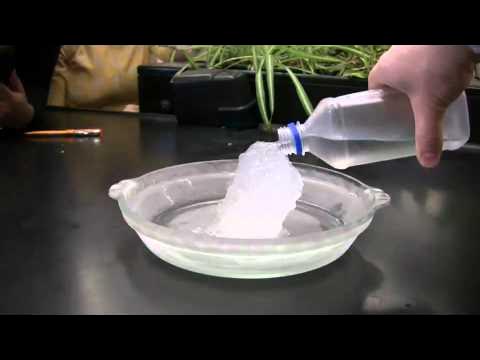
It depends on what “moderate height” is but even then you could possibly accomplish this if there was no nucleation site to initiate the phase change.
The phase change to a solid is similar and also requires a nucleation site and is why you can experiment with purified water in smooth containers.
[ ](https://www.youtube.com/watch?v=Fot3m7kyLn4)
---
### Author:  [@watchwolf49](https://boards.straightdope.com/u/watchwolf49)
#### Post date: [January 29, 2016, 5:44pm UTC](https://boards.straightdope.com/t/siphoning-for-profit/743852/19 "2016-01-29T17:44:11Z")
One of the things I’m taking away from the degassing article is that the stuff that’s coming out of our kitchen faucet isn’t exactly water. It’s a solution with water as the solvent and N[sub]2[/sub]/O[sub]2[/sub] as the solute, and the solution is fully saturated with N[sub]2[/sub]/O[sub]2[/sub], especially if the pot-heads have left the landlord’s aerator alone. When we put this solution into a column, the pressure at the top is reduced (and the article confirms this does indeed occur) which in turn reduces the solvents ability to hold the solute. The extra N[sub]2[/sub]/O[sub]2[/sub] is “expelled” from the solution and precipitates back into it’s gaseous phase. The cavity created is both N[sub]2[/sub]/O[sub]2[/sub] and water vapor which would have a higher pressure. Only the weight of a column of 10 m is needed to overcome the upward pointed pressure force. Whereas with pure water, the cavity only contains water vapor. We need a column of about 15 m for the weight to overcome the pressure force.
The liquid water surface is always kicking out water molecules into the cavity above, and water molecules are always being recovered by the liquid from this cavity. When these two actions are occurring at the same rate, we’ll find the cavity has a very specific pressure (it’s _vapor pressure_) at a specific temperature, for water this would be 23.3 mbars at 20ºC. If we raise the temperature, the vapor pressure will increase and I’m sure there’s tables widely published that given this value for a wide range on conditions. This is all fine and dandy until we reach the the boiling point of water. At this point things change, we can no longer (normally) raise the temperature until we’ve completed the phase change of the water, from a liquid into it’s vapor. Thus, the “vapor pressure” of water at 100ºC (1 atm) can be a wide range of values including the pressure of the water being completely vaporized.
I bring this up as there seems to be a bit of confusion about exposing liquid water to a perfect vacuum. Yes, the water will begin to boil off but the water vapor collects in the cavity and we no longer have a perfect vacuum. As more water boils off, the pressure increases and this raises the boiling point of the water. With enough liquid water available, eventually the boiling point will be equal to the ambient temperature. Any remaining liquid water will remain in it’s liquid phase (except those molecules leaving and being replaced by molecules returning).
Now proceeding with the question whether 100ºC water (@ 1 atm) would form a siphon, I’m going to say yes, if the water is in it’s liquid phase. The cohesion required is provided by the innate nature of liquids. I’m also going to speculate that water vapor at 100ºC (1 atm) would also siphon _if and only if_ some outside agency provides the cohesion required. Say for example in an environment of Hydrogen gas. We achieve our cohesion from the higher density of water vapor, in that we can collect the water vapor in a container. In this situation we (maybe) could siphon the water vapor over a very very small humping point height.
Gases are fluids and should obey the rules governing fluids, including developing upward pressure forces in the two sides of a siphon tube.
---
### Author:  [@watchwolf49](https://boards.straightdope.com/u/watchwolf49)
#### Post date: [January 29, 2016, 5:51pm UTC](https://boards.straightdope.com/t/siphoning-for-profit/743852/20 "2016-01-29T17:51:06Z")
> [@rat\_avatar](#):
>
> … The phase change to a solid is similar and also requires a nucleation site and is why you can experiment with purified water in smooth containers …
\Under very exacting conditions, water can exist in it’s liquid phase down to -48.3ºC, but no lower. [Wikicite](https://en.wikipedia.org/wiki/Supercooling)\
[Next page](https://boards.straightdope.com/t/siphoning-for-profit/743852.md?page=2)