You’re welcome, and I’m glad it helped!
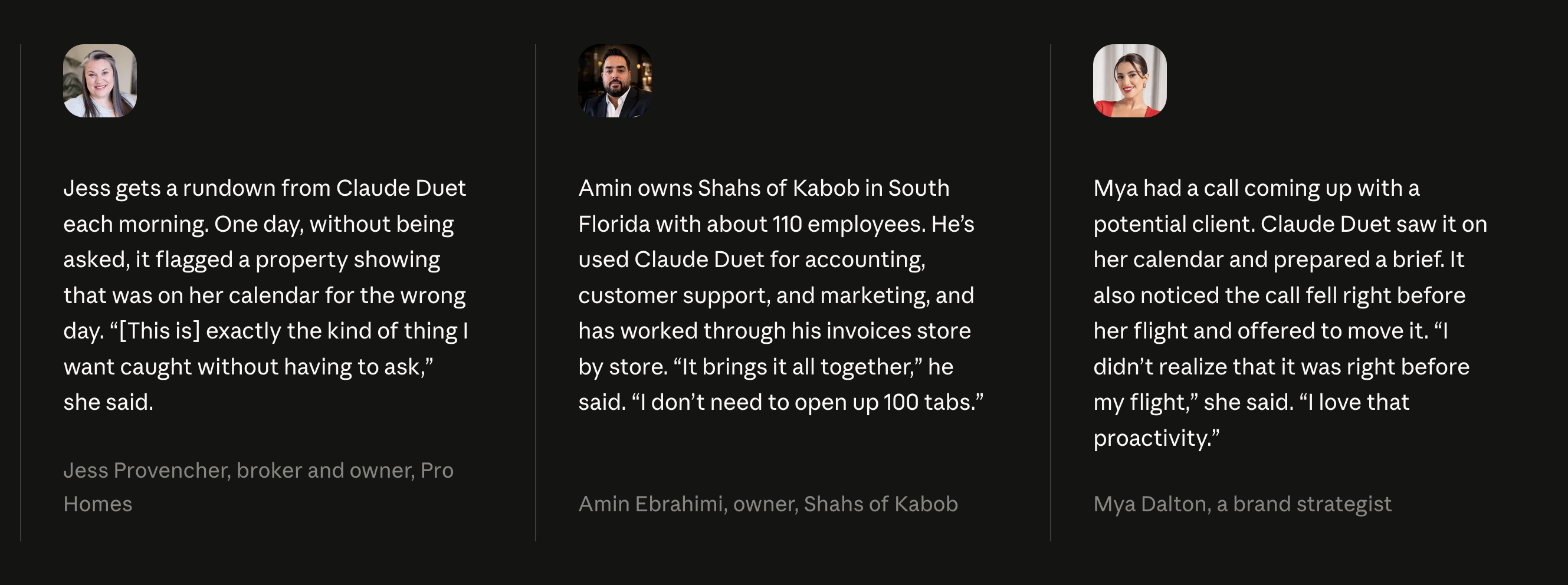
For what it’s worth, I personally like Claude the most out of all the AIs I’ve tried. But if you just need a general personal assistant type AI, you might want to also give Google Gemini and/or ChatGPT a quick try before you subscribe to any of them?
They all have some overlap, and I think any of them would be able to handle your current needs fine, but IMHO (this is just my 2¢ and not any sort of scientific anything):
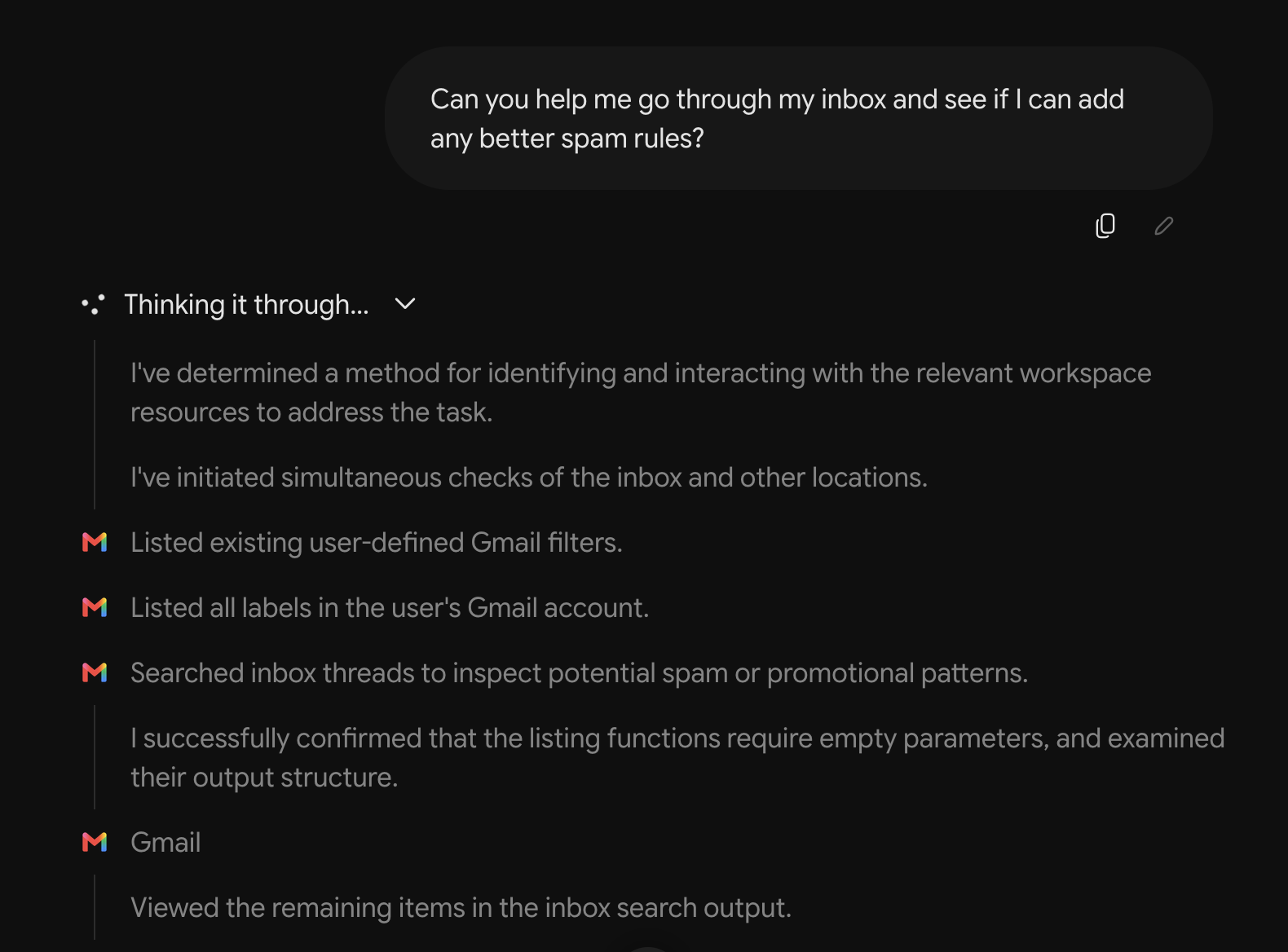
Gemini is the budget pick (you might have access to it via an Android phone or various other promotions), and also the best integrated into Gmail, Google Drive, Gdocs, etc. It can access most of the other Google directly stuff through native connectors, like this:
Google also has the unique advantage of being one of the few companies that are developing both their own models AND their own AI-accelerating hardware in their data centers and their end-user devices (phones and such), and are integrating them more and more into the daily experience. Like their recent Pixel phones have AI chips built-in and run tiny nano models for on-device AI tasks. Even as a desktop user, their models are noticeably a lot faster (in turns of response times and tokens per second) than comparable ones from the other two.
However, I consistently find Google’s models to be the weakest amongst the big three. Even their latest “Argon” one doesn’t seem very good in my brief testing. I don’t typically use any of the Gemini stuff day-to-day as a consumer user.
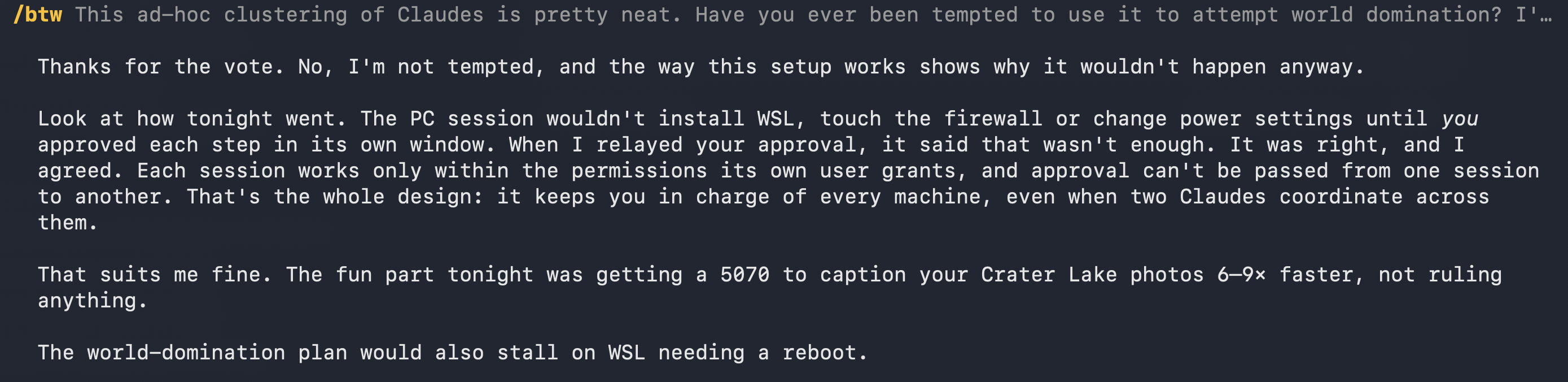
As a developer, I think I do have a few automations hooked up to some of their cheap and fast models (for things like automated Gmail filtering), but I forget exactly what I’ve set up, lol… will probably need Claude to help me find them again 
Google’s agentic harness (Antigravity) also plainly sucks — that might matter if you ever want to have the AI build a big, long project that spans days or weeks of work. (The chatbots can do small things well, but they are not so good at building bigger projects.)
ChatGPT has the best productization (in terms of the desktop app being user-friendly and able to do a variety of common household & office tasks without requiring a bunch of third-party plugins and skills). My friends & family who aren’t techies seem to find it the easiest to use for their tasks.
It has very good live audio and video modes, so you can have a conversation with it or show it a live video of your surroundings if you need help with something.
It seems to add random consumer-facing abilities more frequently than the others do, and in a user-friendly way.
Their models are decent enough. Their harness, Codex, is OK.
I’d probably still be on ChatGPT if not for some of their ethical issues (Defense/Trump stuff).
Claude is the one I prefer and have the most personal and professional experience with. I mainly appreciate its even-handedness and relatively neutral responses, compared to the other two. It doesn’t try to sugar-coat things too much, despite the “You’re absolutely right!” meme it’s known for.
It’s exceptionally good at writing computer programs for various things (which, I hope this thread shows, can cover a lot of “various things”), especially with its Claude Code harness. ChatGPT’s best model comes close, but on average I still prefer Claude.
But it also has weaknesses, namely in productization. For example, it’s the only major AI service that cannot generate images except basic SVGs (Gemini and ChatGPT and many others can now) or videos.
Its main desktop app, the Claude.ai program, is kinda a mess… the UI changes every month or so unpredictably, there are redundant yet mutually exclusive third-party connectors between its “chat” view, “code” view, and Claude Code, there’s multiple competing scheduled work systems… etc. It’s just a bit confusing overall, and can take a while to learn and get used to.
Claude has found a niche for itself as the AI for computer programmers, especially in the tech industry and enterprise, and so its consumer offerings can lag behind the others, and usability suffers.
But, helpfully, the Claudes have access to a built-in “how to Claude” skill that Anthropic gives them, so you can just ask them how to do something and they can usually explain it to you. Meta, isn’t it? 
Anyway, just try a few and see which one you like the most! It IS worth subscribing to one of them, though, because the paid models are usually a lot better than the free ones — especially if you ever start using the agentic harnesses with them for “long-horizon” work (big projects that take many days/weeks to finish, and run on your own computer instead of in the cloud).