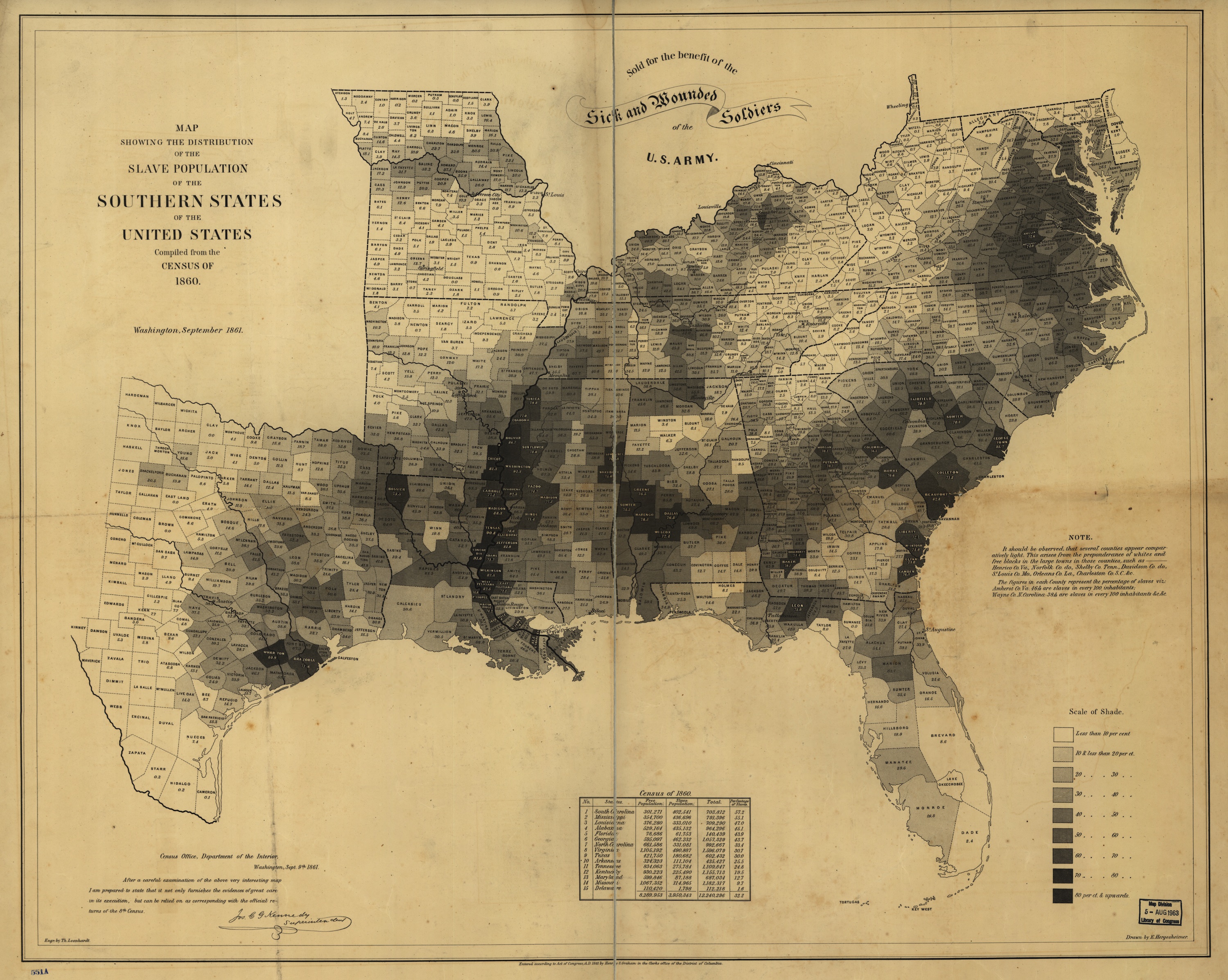
It wasn’t purely political, it actually freed a number of slaves in Union custody immediately. It also gave the Union armies legal authority to permanently free any slaves that came under their control as the war progressed. By the time of the 13th Amendment actually being passed a substantial portion of the slaves had actually been freed under this mechanism.
The Emancipation Proclamation isn’t really properly seen as a warning, either. It’s actually Lincoln making good on his earlier warning–made in 1862, that he was going to issue such a proclamation. The EP was actually issued after the expiration of Lincoln’s “deadline”, set in September of 1862 when he issued the preliminary proclamation and made it known it would enter force on January 1, 1863 for any States that remained in rebellion.
This is all true but is spoken from hindsight. Some Southerners that understood economic theory more appropriately actually wrote about how the slave economy was a dead end economically (this bit of truth tended to make them very unpopular, see Hinton Helper) but most would not believe that what you’re saying would come to pass. Most humans are not good at recognizing that sort of thing.
Additionally, there was a substantial portion of Northerner who did not want to fight a war. They were content to negotiate a peace with the CSA right from the beginning and just let the split happen. Given that background, it isn’t actually totally unreasonable from the South’s perspective, to think that maybe just by seceding the North would look at the situation and decide an invasion would be too costly and too hard and just let the South go. At times Lincoln was keeping the North in the war through sheer force of will, a lesser man very well may have just let the South secede without any major battles being fought. So it also is only in hindsight that we can know the South was going to face such complete and utter economic devastation from the war.
The South’s military leaders didn’t entertain the idea they could straight up “beat” the North or anything, but they believed they could continually defeat them in the field until the North got tired of fighting–and that nearly happened. So it’s not entirely illogical from the perspective of a Southerner to think seceding made sense. Yes, if they had a crystal ball and knew that Lincoln was dead serious about invading, and he would continue to levy troops and continue to wage war even after suffering huge casualties, and that eventually the Union Armies would devastate and essentially raze the South they might have given the whole thing second thought. But there is no way to have known in 1860 that was coming.
I wasn’t there, but everything I have read suggests that an overwhelming reason for the civil war was that Lincoln was not going to permit extension of slavery into new states. This would have prevented the south from continuing to dominate congress the way they had (thanks, in part, to the notorious 3/5 clause) and would eventually result, for example, in repeal of the fugitive slave act. And likely, reversal of the Dred Scott decision. And this they could not live with.
After the end of reconstruction, BTW, the south could count all its blacks towards its congressional allotment, and not allow any of them (except for maybe a trivial few) to vote. So while the south couldn’t dominate congress, they could still prevent things, such as anti-lynching laws, they didn’t like. Evil is as evil does.
Maryland emancipated its own slaves in 1864, I believe. They were thus not affected by the Emancipation Proclamation (which only applied to States in rebellion) or the 13th Amendment (which was passed after Maryland’s own State constitutional amendment banning slavery.)
Delaware and New Jersey both did have slavery up until the 13th Amendment–and despite it being extremely negligible in both States it still had enough political support that those two States voted against the 13th Amendment initially.
New Jersey in particular is very strange, they passed laws that guaranteed the gradual abolition of slavery but it was taking a very long time. The effort started in 1804 and in 1865 New Jersey still had a very small number of slaves, although they had been redefined as “indentured servants apprenticed to their former owners for life” (a situation of bondage that, just like chattel slavery, would be made illegal by the 13th Amendment.) Makes it strange that New Jersey voted against the 13th Amendment, as they had been working to abolish slavery on their own initiative for more than half a century and there were fewer than 20 remaining slaves by the time the 13th Amendment was passed.
It was enforced by federal troops in each county and each town of each state in rebellion that they entered. From that point on, the former slaves who had been freed by the federal troops were legally freemen, not slaves.
Up until the Emancipation Proclamation, that did not happen, even if federal troops captured an area that had been in rebellion. In fact, Lincoln personally countermanded an earlier order by General Frémont declaring slaves to be free in Missouri: see Frémont Emancipation.
Again, agreed. So we can admit that the south was correct in it’s assumption that Lincoln would set the framework for total abolition and impotence on the part of the south to countermand that.
To marginally continue the hijack, it’s like abortion rights supporters voting against Romney because they believe that he would outlaw abortion if he had the chance. He doesn’t have the votes in Congress to do it, but you just damned well know that he would vote for people, and appoint people, appoint SCOTUS justices, who given the chance would outlaw abortion. I am pro-life, and I will fully admit that these laws about consent and having abortions done in a surgical center and such are merely a facade to make abortion more difficult. The goal is to outlaw abortion.
Much like Lincoln and banning slavery in the territories. The south rightfully saw that his ultimate goal was to ban it’s economic way of life. To say that Lincoln was a moderate is akin to saying that Rick Perry is a moderate on abortion because he doesn’t want to outlaw abortion, but simply wants women to be in safe surgical centers. It’s a horseshit argument, and both oppositions saw/see it for what it stands for.
Oh, I’m in agreement that to them secession and resistance looked like perhaps the only remaining viable strategy for preserving their socioeconomic framework. Heck, to this day we have entire regions and countries around the world thinking “if only we could bring back the industry we used to rely upon; it’s those mean capitalists elsewhere who are driving us down”.
That many years later many of their descendants still think the Union crushing them utterly is something to be resented and mulled (as in the OP quoted myth about the debts), as opposed to just the results of a really bad decision where they were in the wrong and something to get over, is a bit harder to swallow.
(/QUOTE)South Carolina’s economy was based more on slavery than just about any other state. This was not due to cotton but rather indigo; the raising and processing of which was brutal work. South Carolinians thought their economy would collapse without slaves and were not going to give it up, even if reimbursed, because they were afraid they’d never be able to pay people enough to work in the indigO plantations.
[/QUOTE]
I think that indigo production was just about over in America before the Civil war. England was no longer offering a bounty that had inflated the price of Carolina indigo. They stopped that when we fought for independence and competition from India and the East Indies flooded the market with cheap indigo.
It was cotton that the British wanted form the south during the 1860’s.