Good Morning, Miss Bliss was a show about Hayley Mills as a Jr. High teacher. It lasted for one season before they dropped her, refocused on the students themselves, becoming Saved By The Bell.
I never saw them myself but I’ve read that the early episodes of Lost in Space were reasonably serious science fiction. Then the show morphed into the space sitcom mostly focused on the boy, the robot, and the evil doctor. (I saw enough of those to develop contempt for the show)
Season 9 of Scrubs probably counts. Everyone thought Season 8 was the end, and all the major plot lines were wrapped up, but then all of a sudden they come out with another season where there’s a new narrator and now J.D. and Turk are teachers at a medical school.
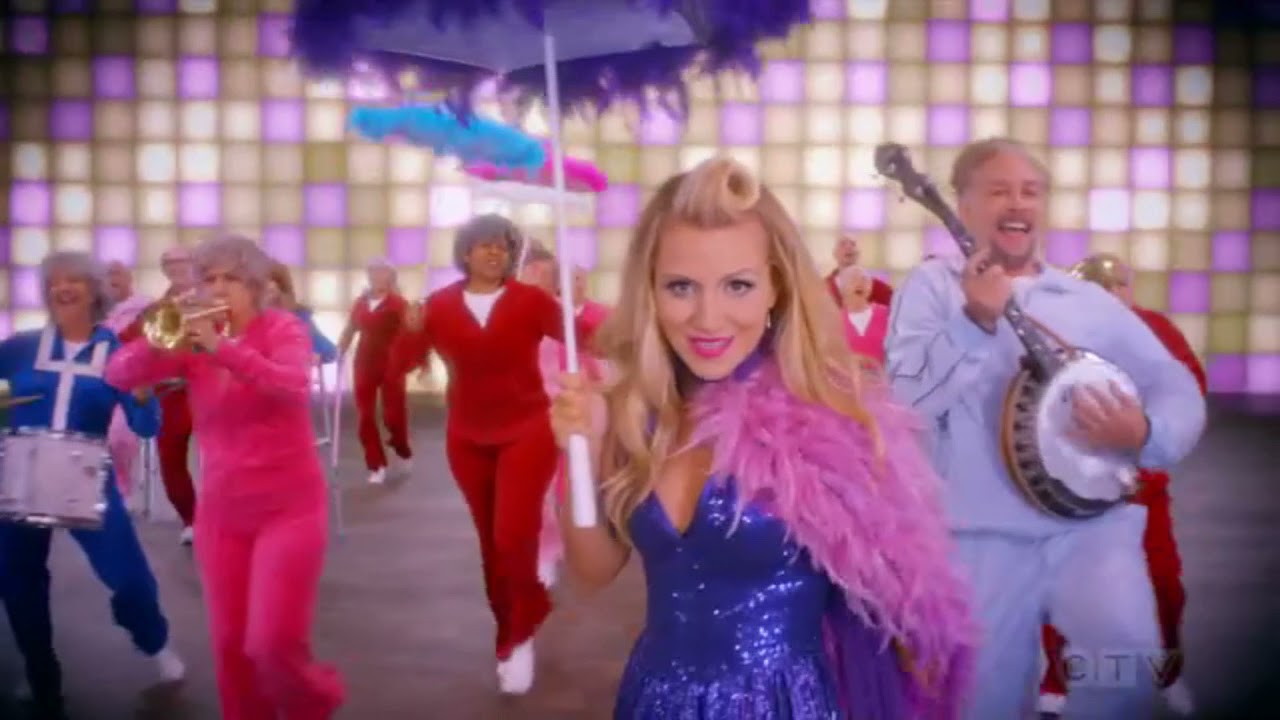
A few years ago the sitcom B Positive started out being about Drew, a therapist who needed a kidney transplant and Gina, a flighty, hard-living old acquaintance who agreed to get clean and sober and become a donor.
In the second season, a wealthy resident of the assisted living center the donor worked at died and left her a buttload of money, which she then used to buy the center. The stories instantly shifted to Gina and the center’s residents. By the end of season two, Drew had gone on a cross country trip and was seen only in brief phone calls to Gina.
There was no third season. Annaleigh Ashford (Gina) went back to Broadway and Thomas Middleditch’s (Drew) career has been mostly off-screen after he was accused of sexual harassment.
And of course, they did spinoff Fish.
“Bob” (the last Bob Newhart sitcom) was about a former superhero comic creator who had gone into greeting cards - but is recruited back into comics to revive his hero (“Mad Dog”). In the second season, he was hired back at a greeting card company with most of the cast changed.
“Family Matters” was a slice of life sitcom about a middle class African-American family dealing with typical family issues - until partway through the first season, when Urkel took over.
Family Ties, which was a show about hippie parents dealing with their 80s kids had focus strongly shifted to being a Michael J. Fox show, but that might not be enough of a shift to matter.
“The Facts of Life” ditched half the large cast of girls from the first season, added a new one (Jo), and then kept that new cast for several seasons afterwards. If you had watched the first season, you’d look in vain in later seasons for Molly (Ringwald), the smart girl, and the athletic girl who disappeared completely.
And “Legends of Tomorrow” kept changing cast members and goals (in the first season, the goal was to defeat Vandal Savage, but in later seasons, the goal was to a) defend the time line from villains, b) defend the timeline from anomalies released by previous blunders, c) defend the timeline from demonic creatures released by more blunders (and so on, with a cast of characters that changed frequently).
I think the weirdest TV revamp was on a program call I’m a Big Girl Now. I actually mentioned it in a SDMb post in 2021. In this show, the main characters worked in a think tank at the beginning of the one season of the show. In the middle of that season, the workplace changed to a newspaper office. The characters didn’t quit their jobs and then all got hired by a new employer. The workplace simply changed with no explanation. I guess that someone decided that nobody wanted a show set in a think tank, so they changed it to being a newspaper:
How about Roseanne, when one season they suddenly won the lottery and got rich?
P.S. I think a sitcom about someone who writes superhero comics might work better in the 21st century than it did in the 20th, due to the recent increase in the acceptability of adults talking about superheroes.
Tell me more. What happened?
And then they had to rename the show when the title character suddenly disappeared a few seasons later…
I remember that show. I think the change was necessary as the first season ended with Drew receiving the kidney transplant from Gina. So where else could they go?
Budget cuts, new cast and stuck on a primitive planet with Flintstone-quality sets.
A relationship triangle between Drew, Gina and Drew’s ex-wife, for one thing. The failure of the kidney transplant/kidney problems for Gina that Drew has to help her navigate. Gina still gets the assisted living home and becomes Drew’s boss. Put a man and a woman as leads in a sitcom and there are all sorts of things that can happen.
But more telling was the complete pivot away from Drew in the second season. Even the opening was all Gina, with Drew getting less and less screen time as the season progressed.
Take a look at the opening titles for season two.
The show become more episodic (before most advanced one of the plot lines), and became more Kevon Sorbo centric. Seems like there were a bunch of dream/hallucination episodes but that may be my faulty memory.
Robert Hewitt Wolfe says:
Basically, they want the show to be more action driven, more Dylan-centric, and more episodic," Wolfe explained. "They also want more aliens, more space battles, and less internal conflict among the principal characters. Also, they want a lot less continuity so as not to confuse the casual or new viewer with too much backstory. And finally, they wanted to rework the visual signature of several of the characters, most especially Trance and Rommie, but also Dylan (less uniforms, more civvies).
Brian
The Cosby Show spin-off A Different World had a first season centered on Lisa Bonnet’s Denise Huxtable and Marisa Tomei’s Maggie Lauten. The show was about a black girl and her white friend at an HBCU. After the first season, Bonnet and Tomei left the show and they elevated Whitley and Dwayne to the leads, and added a half dozen new characters and targeted a more traditional HBCU experience.
The show that acted as a pilot for McHale’s Navy was a one-hour drama. The resulting show was a half-hour comedy.
Kind of like Stalag 17 inspiring Hogan’s Heroes.
The series Toma, about an unconventional detective, did well enough in the ratings to earn a renewal. However, star Tony Musante did not want to do a second season and quit the show. The producers recast the show with Robert Blake and renamed it Baretta, to bigger success.
The Aquanauts, a show about divers who salvaged sunken boats, starring Keith Larsen and Jeremy Slate. Larson had to leave mid-season due to health problems (exacerbated by all the time he spend in the water) and was replaced by Ron Ely. The two were now running a surf shop on the beach and de-emphasized the skin diving. The title was changed to Malibu Run.
Perry Mason was a radio show featuring the detective (before the Raymond Burr TV series). It slowly morphed into a soap opera. Erle Stanly Gardner objected, so they change the name to The Edge of Night, and later did a television version, which remained on the air for decades.
This is a different sort of thing, I suppose. The comedy series The Mary Tyler Moore Show ended with most of the employees of the television show within the series being fired from their jobs. There was a spinoff called Lou Grant. In it, Lou Grant, played by Ed Asner, plays the same character as he did on The Mary Tyler Moore Show. He moves from Minneapolis to Los Angeles to take a job as an editor at a newspaper. However, the show Lou Grant is a drama, not a comedy.