If you carry one, might as well carry one that has a flashlight and solar panels, too:
That kit is poorly conceived and next to useless. For example, it has four fishhooks and two lead weights (not sure how you are supposed to crimp those on) but only a short length of monofilament fishing line, all of which is kind of irrelevant because it doesn’t have any way to process an hypothetical fish that you might to catch if you actually happen to be lost near a body of water containing fish large enough to eat. Of course, all of this is notwithstanding that if you are really lost enough to need to fish for food you are probably a long way beyond the aid this kit could otherwise provide; you can survive for several weeks without food but you’ll need water and shelter pretty quickly, neither of which this kit provides or aids in any way. In fact, about the most useful thing I see in this kit is the duct tape which you can buy in a large roll for 20% of the cost of this kit and wrap around a water bottle or a piece of cardboard. The second most useful thing are the bobby pins, which can be used to replace a button or hold together a torn article of clothing, and the needle that could be used to lance a blister, and about everything else can be tossed. (I supposed the bag might be useful for carrying a small amount of water although there is no means of water treatment, and while the signal whistle is a good thing to have it won’t do you much good buried in the bottom of your pack, and instead should be strapped to shoulder strap of your pack or on a lanyard around your neck.)
The fundamental problem with any pre-made “essentials” kit is that it is made for some generic hiker in some hypothetical emergency without consideration for experience, environment, and potential hazards. I’ll have a very different ‘essentials’ list if I’m doing a summer alpine valley hike than I will if I’m cross-country skiing, or sea kayaking, or hiking the Lost Coast. For each of those, my essential items will reflect the hazards I would expect to encounter–inclement conditions, physical hazards, possible poisonous plants and animals, and duration I might expect to be out of contact–and should be packed accordingly. Just as with a medical kit, it is also imperative that a hiker build their own kit, not only so that they are familiar with every item in it but so they also have experience in using it. A “means to start a fire” is worthless if you don’t know how to build a proper fire using that means and with the fuels available in the environment, and oh by the way how to do it safely so you don’t add “being trapped in a flaming forest” to your current list of hazards.
With regard to cell phones I find that many people are way too dependent upon them and are utterly shocked when they cannot get service, or worse yet, can get service but it doesn’t help because they cannot provide their location to emergency services. Relying on a cell phone as an all-in-one communication, illumination, and navigation device for anything other than a casual hike is foolish at the very least. This isn’t to say that a hiker shouldn’t carry a phone, which can be useful in many ways, but it is not an ‘essential’ piece of kit in the sense of being something to rely upon in an emergency scenario.
Your best tool in an emergency is, of course, the one on top of your shoulders, and the experience and training with which you have hopefully equipped it so that you do not panic and know enough to think through the priorities of survival; that is: shelter, water, warmth, and food, in that order. Any ‘essentials’ kit should reflect those priorities in the environment in which you are operating; if you are out in the desert, for instance, you probably don’t need extra clothing but a tarp and a means of pitching it to protect against sunlight are crucial; however, in the winter, insulation and a windsock will be far more useful. Knowing how to build a lean-to out of local materials is a great skill to have but it takes a lot of time to collect materials and unless you are planning to be stuck in place for more than one night is probably a waste of precious time and energy. Water requires a means of transport/storage and treatment; obviously a reliable bladder and water treatment tablets are the most compact, but a durable bottle and a filter will last longer and are easier to use. Making fire for warmth is crucial in cold temperatures if you don’t have good insulation but it can take a lot of time and energy to collect suitable fuel (if you can find it) and processing wood with just a small knife is an exercise in futility, so you’d want to have a saw or possibly a small hatchet (if you know how to use it safely).
But above all, you need to be able to stay calm, assess your situation, consider your resources and environment, and make a plan that doesn’t put you and your party in greater hazard, e.g. sending people in different directions to find help without navigation, doing risky things like climbing dangerous slopes, crossing swift water without aids and skill, et cetera. Most people in the backcountry get seriously injured or die because they don’t consider what they are doing, the environment they are doing it in, develop experience and obtain training in basic survival and first aid, and make a coherent plan for dealing with the situation in which they have found themselves. No ‘10 Essentials’ you buy at REI or off of Amazon.com is going to provide that.
Stranger
That one is pretty easy–just use a rock or something. You probably will already have one for the emergency MREs.
I see what you did there.
Tripler
Well played, Sir. Well played.
Let me second the applause for that bit of brilliance.
I can think of few environments where extra clothes would be more essential than the desert. If you’re properly dressed for a desert day, you’re not properly dressed for a desert night.
And no, you shouldn’t rely on a phone in an emergency. You shouldn’t rely on any single piece of equipment in an emergency. Doesn’t mean you don’t want to bring it.
If they have an emergency MRE they they can just use the “Veggie Omelet” as a lure to trap a bear into their figure-4 snare made with the monofilament line, use the signal mirror to hypnotize it, and then convince the bear to share its stash of nuts and honey. I don’t know what you do with the tinder because I guarantee that “Fire Light Sparker” isn’t going to do much more than singe it but I bet you can have a lot of fun trying to navigate with that button compass.
If someone is heading into the desert I would assume (although I know I should not) that they’ll have a long sleeved shirt or windbreaker. If they’re with someone else, finding a sheltered spot and huddling for warmth should be sufficient if uncomfortable for any three season conditions. Going anywhere in backcountry in winter or inclement conditions without suitable layers is foolish regardless, and no “10 essentials” is going to fix that.
The problem with cell phones in the backcountry isn’t that the don’t have any utility, but for anything you might need it for in an emergency it probably just isn’t reliable. It’s not a good flashlight, not particularly good for navigation, and if you are far enough beyond civilization that you can’t just walk to help the odds that you’ll have cellular service are pretty unlikely as well. If reliable communications is part of your emergency plan then you need to have something like a Garmin inReach or a handheld ham radio, and even those can fail in certain conditions. I wouldn’t consider relying on external rescue to be part of an “essential” primary rescue plan the way wilderness first aid training, shelter-making, and water purification are; having to call for rescue should be a backup plan for a really bad situation, not something you do because you’ve just gotten lost or you stayed out until it got too dark to hike.
Stranger
Hey man, if I’ve successfully used a kit like that to hypnotize a bear, I’m not gonna make it share nuts with me. I’m gonna ride that bear to the nearest Pizza Hut.
It depends on where you are hiking. Here in the northeast some people carry bear spray but I feel that extra food or water is a better use of the weight you carry versus bear spray. But different people make different choices, and it’s all very personal.
I think you’re overestimating the utility of the veggie omelet.
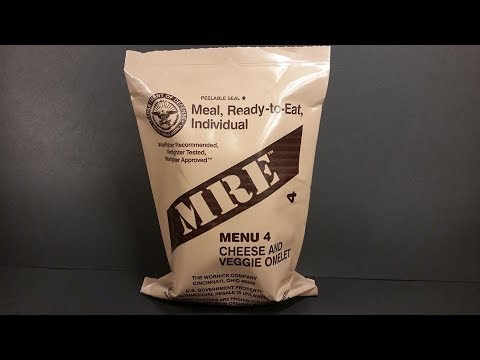
Bears will eat pretty much anything—even the MRE made as a prank—and I want to save the mac & chili in case the bear is resistant to my efforts at mesmerism.
Stranger
I must me missing something here. All modern smartphones are fantastic for navigation. If you happen to be in contact with search-and-rescue people, you can give them your exact position. And even if you’re not, the GPS chip doesn’t depend on the cellular network—you can navigate with it just fine.
But I’m pretty sure you (Stranger) are well aware of these things. So why do you say that a phone with a GPS chip and a charge isn’t particularly good for navigation?
So, again, if you are far enough in the backcountry to be seriously lost, the likelihood of having a cellular signal is extremely low, so the odds that you will be “in contact with search-and-rescue people” is not something to be relied upon. (I know, people get lost within a quarter mile of travelled roads; I hear the stories about people calling from Eaton Canyon claiming to be completely lost, but then, these aren’t people who are going to pack “10 essentials”, either.)
It is true that all modern smartphones have independent GPS capability and in developed areas can provide accuracies down to a few meters. This is because the phones use wireless-assisted GPS that relies upon having a cellular signal, as do the Google Maps and Apple Maps most people use for daily navigation. Yes, you can download Gaia or ViewRanger or any number of other smartphone apps but how many casual users bother to download the apps and update maps for navigation. I know a lot of hikers and even some SAR people like to use their smartphone app for navigation which is fine if you are just going on a day hike in relatively exposed terrain but they don’t function so well when you are in mountain terrain where line-of-sight to more than a couple GPS satellites may be spotty, and when running in unassisted GPS mode they tend to consume power rapidly compared to a dedicated GPS unit like a Garmin 64X which is problematic since you can’t simply swap out batteries. (Yes, you can carry a separate powerbank and cable…again, how many people do this when they go hiking?) The accuracy of cell phone without assisted GPS is not particularly great, and certainly not what I’d want if calling in a rescue.
Again, carrying a smartphone is fine; it can take pictures and store notes and maybe send a text if you happen to get service. Certainly, if you have an emergency and have to leave someone behind to get help, you can at least use it to call from a trailhead instead of having to drive into the nearest town, saving that amount of time. But it is not something I would consider an essential item or relied upon for communication in the case of a backcountry emergency. I would–and do–carry a separate GPS unit as well as paper map and compass, at least a couple forms of illumination, and frequently a handheld ham radio, all of which are far more likely to be of use in a backcountry emergency than a smartphone. I carry a smartphone, too, but just because it is a more convenient camera than a dedicated DSLR, and because once I get back to the trailhead I want to find the nearest burger joint or taco stand at which to get a meal. I would never rely on a cell phone for communication miles away from any road or rely upon it for primary navigation any more than I would paddle in the open ocean with one of those origami ‘sea kayaks’.
Stranger
I’ve played around with unassisted satellite-only GPS on phones before (and I know I’m doing explicitly that because I keep all forms of location services switched off almost all the time) and when displayed on a satellite map image they accurately distinguish between whether I’m at the front of my house or the back of my house. I can’t imagine a rescue where you need precision more than 10 or 20 feet.
Again, if you are in flat geography where you can reliably get four or more satellite signals, a smartphone can navigate with reliable precision. Now, try doing that in an Arizona slot canyon or along the Lost Coast Trail. I recall hiking up Bright Angel a few years ago at Grand Canyon and all of these people frustrated and amazed that they couldn’t get cell signal or reliable GPS because they’re in a crack a mile below the mean surface level where half of the aspect of the horizon is covered by canyon wall.
Also, just because you have turned location services off doesn’t mean that your phone still isn’t getting the advantages of assisted GPS. Location services prevents individual apps from getting GIS information, but it doesn’t mean that your phone isn’t still receiving and making use of augmented GPS signals that allow the phone to more quickly locate its position than it would via GPS satellite signals alone.
Stranger
@Telemark has the right list with emphasis on broad categories rather than specific items. @Stranger_On_A_Train’s note about having “shelter, water, warmth, and food, in that order” is on point. With those two pieces of information and some prior proper planning any hiker should be prepared for most emergencies.
I think a lot of hikers feel the need to have backup supplies for any situation. However with a bit of foresight and planning most hiker’s regular supplies can be modified slightly to provide adequate emergency support. For instance I require my Boy Scouts to carry a bivy sack in their backpack when on any hike, even a day hike. They are lightweight, take up very little space, and can not only be used for emergency warmth and rain protection but can negate the need for a fully waterproof shelter in an emergency situation. In such an emergency situation where a lost hiker needs to spend an unscheduled night in the woods a bivy sack can be lifesaver. On a multi-night hike a bivy sack can not only do those things but provide an added layer of warmth as needed. Similarly all the boys carry a small vial of water purification tablets and a backup emergency water bladder. They take up almost no room and can, again, be a lifesaver in an emergency situation. You get the idea. A dedicated “survival kit” is laughable as any decently prepared hiker already has 90% of what they need and the other 10% is location and climate specific and thus no pre-made kit will do much of any good.
As previously noted by others a cell phone has very limited use as soon as cell reception drops. Here in the PNW there are vast tracts of national forests – tens of thousands of square miles – that have no cell service, all frequented not only by hikers but by hunters and mushroom pickers and families on weekend picnics. A map and compass (not one of those shit button compasses that come in most “survival kits” but a good baseplate compass from a reputable manufacturer like Suunto or Silva with adjustable declination, pre-adjusted to your location) are vital, and the knowledge of how to use them even more so.
For what it’s worth, here are the bare essentials I ensure all my scouts have with them on a hike:
Pocketknife: Many knives marketed toward young boys are junk. Plastic handles, pot metal blades, loose fittings. A “pocketknife” from my list is usually a multi-tool and I encourage all my boys to choose one from a quality manufacturer Such as Gerber, Leatherman, or Victorinox. I personally carry a Leatherman Wave on my belt and have a Buck 110 in my pack as a backup.
First-aid kit: On a troop hike there is one large FA kit that a dedicated “medic” carries that has a multitude of items including things like SAM splints. Each individual boy carries their own FA kit with a few bandages, a pair of tweezers, a couple sheets of moleskin, and the like. Years ago the boys took a bunch of old Altoids tins, painted them red, and they use those as their pack FA kits. For a day hike those work well and contain everything that they will likely need. Some boys have to carry extra FA supplies such as asthma inhalers and epi-pens. This is been referenced before in this thread: the best FA kit is one that you make yourself, tailored to your needs and the specific possible environmental dangers.
Extra clothing: season and environment dependent. Also required may be certain articles of clothing for for certain situations such as snake gaiters.
Rain gear: pretty self-explanatory. An emergency poncho, a big trash bag to cover the backpack, and a pair of lightweight rain pants are all that are required to stay mostly comfortable and safe in even an extreme downpour.
Water bottle: self-explanatory. Needs to be large enough to provide adequate hydration between potable water sources, so on some hikes a surplus army canteen will suffice, on others a full 3-litre hydropack is needed.
Illumination: as noted above, a headlamp with spare batteries (and spares for the spares) is vital.
Trail food: the boys plan their own meals, so in addition to the regular rations we have them carry emergency rations as well (see below).
Fire starter: The BSA is big on each boy knowing how to start a fire with a ferro rod striker. Ok, so we teach them. Good. But on the trail the boys carry a cheap Bic lighter for starting fires.
Sun protection they all carry a small tube of high-SPF sunscreen, everything above and beyond that is season, environment, and location dependent. A wide-brimmed hat and sunglasses are normal additions as are long-sleeve shirts.
Map and compass As noted we use Suunto baseplate compasses. Each boy has a small card with declination information on it so they can set the declination as needed. We use caltopo.com to create maps of the area we’ll be in then simply print them out and voila! maps on demand.
All of the above are BSA required, so the scouts have to carry those on any outing where another scoutmaster could potentially do a gear check. In addition to the above, the scouts usually have at a minimum:
- The aforementioned bivy sack.
- One of these reusable firestarters, fueled and ready.
- A small bottle of water purification tablets.
- An emergency collapsible water bottle (like a water bladder).
- In winter, one of these quilted tarps for emergency warmth and shelter if needed.
- At least one MRE and some trial mix, sometimes more than one.
- A small kit with 100’ of 550 cord, some duct tape wrapped around a pencil, a write-in-the-rain notebook, and a dozen safety pins.
Additionally the scouts try to match gear. For instance we impress upon them the importance of not only having headlamps with spare batteries, but each boy using a headlamp that takes AA batteries. That way if something happens to the batteries, the chance that another boy will have appropriate spares increases. Similarly with camp stoves: we encourage them to use stoves that burn isobutane so that each boy has a fuel supply that will service each stove in the patrol. If one stove conks out the fuel can be used on another stove, for instance. This makes snafu’s less likely.
The lighter can clip to a strap or a zipper pull, the tarp and the bivy sack are folded square and laid in the bottom of the bag, and the rest are put in a gallon ziplock. All of this takes up vary little extra space in pack.
With these items and the above 10 Essentials, a hiker is prepared for many an adverse situation. Add in the expected trail meals, shelter, sleeping gear, and day / night clothing (multiple layers, including a hat and a windbreaker or waterproof shell at minimum) that any hiker should carry and they’re set. Shelter, water, warmth, food. Check. To reiterate, however, no single list or one single kit will do all things in all situations, or even be just ok in most situations. The above list is sort of our foundation, and we build from there, with occasional tweaks (such as omitting the quilted tarp in summer if we’re staying in the low valleys as cold nights are not an issue.
All of this, of course, assumes that the hiker is knowledgeable enough to use this gear and can adapt to emergency situations including keeping calm and remaining rational. That may be too much of an expectation for some.
Sure, but a GPS might run out of power or have some other problem, so the paper map and compass are good back ups.
Also, a paper map can double as a fire starter. I’m a big fan of multi-use.
While special situations the phone may have trouble with mapping, due to things like slot canyons of caving, over all I have found it to be wonderfully accurate even in places without any signal. I used it as my primary locator on the Appalachian Trial thru hike which as vast areas without signal (and vast areas with signal), and would be in airplane mode when I was not using it. Turning it off airplane mode I got a lock in seconds usually, sometimes a minute.
I also found the light from the phone fine to hike by - one does not need a superbright headlamp at all unless you hike with others who have them, it was just holding the phone what was inconvenient.
The thing about phones is they can fail, so all eggs in one basket is not a great idea. A power bank most likely will solve 90% of all failures in practice.
Fun fact: Cell phones are also emergency fire starters which will still work if your phone does not. Puncturing the battery will start a very hot fire that can be used to light a camp fire. This can be done if needed by smashing the phone between rocks.
Plus, the best way to deal with an emergency is to not have one in the first place, and there are a heck of a lot of situations that can come up that would be an emergency without a cell phone, but aren’t with one. Again, you don’t rely upon it, because you don’t want to rely upon any one piece of gear. But there’s no justification for not having one.