It’s not true that in the 1950s women didn’t have careers. From 1950 to 1959, the proportion of women that worked outside of the home increased from 34% to 37%. A small proportion of women never married. Most of the others eventually got a job when their children were old enough that they didn’t have to take care of them. Some of them who were upper-middle class never got jobs because they and their husbands had enough money to live on, partly from the husband’s good job and partly from both man and women inheriting money. People in the 1950s weren’t shocked by the fact that most of the teachers in public schools being women and mostly married woman.
It’s from when she was living on Vulcan.
“Why is it the greatest champions of the white race always turn out to be the worst examples of it?” (Garth Ennis)
Correction: “in public schools were women and”. Also, the neighborhood where the family lived in Father Knows Best was pretty well off. It was never intended as a average American neighborhood.
I’ve been catching “Leave it to Beaver” since I retired. I never cared for it when I was a kid - it just wasn’t funny, especially as the show went on.
As a kid, I preferred The Donna Reed Show. Donna was a housewife and seeing it today, she’s quite capable and smart. I saw one recently where she had to take the kids camping. She knew nothing about it and screwed things up at first, but was smart enough to hire someone to help instead of going all I Love Lucy over things.
IIRC the reason Ward was mad was because they had taken a shortcut (Eddie’s idea) called the Camelback Cutoff. And the road was rough, leading to the blown tire. And possibly, Ward had told them not to do this.
This is from memory. Corrections welcome.
No, it was not. Rightly or wrongly, the nice house with the white picket fence and dormers was represented as the typical home of a middle-class family that the viewers could identify with. The father – Jim Anderson – often rebuffed the childrens’ requests for money on the grounds that he just couldn’t afford it. Just for one example, when Betty befriended a rich girl and agreed that she and her parents would attend a country club banquet, Jim refused on the grounds that it was $20 a plate and they couldn’t afford it.
Eventually Jim relented, but as events turned out, the whole family went to a diner instead where Bud had just gotten a job as a short-order cook to earn some extra money.
No, the family was not “pretty well off” above the standards of ordinary middle-class viewers.
I remember all of the mentioned shows. Ward Cleaver was a former Seabee, so I have a soft spot for him. The demographics of those shows was pretty reflective of my neighborhood. Black folks and other people of color lived in the Eastchester end of town. The only non-white person I ever saw living in our neighborhood was the Japanese wife of a former military guy. My mother would look out the window and see her and mutter “I just don’t know. . .” Probably a holdover from living through WWII. As for TV, the only place one saw anyone of color was on Ed Sullivan, who basically thumbed his nose at convention and had enough network clout to get away with it. Talent is talent.
I think there’s a difference between “women who have a paying job/work outside the home” and “women who have careers”. I’m not sure I can define it easily - but I’ll try. Let’s say my husband gets transferred to New Orleans - if my job is not a factor at all in deciding whether I will move with him , I probably have a job not a career. Doesn’t mean I won’t move if I have a career, doesn’t mean I will move if I have a job rather than a career , just that some jobs are not a factor in decision making.
That’s now equivalent to about $200. Going to a country club banquet already makes them upper-middle class at least. It’s typical for someone of any socioeconomic class to think that they are right in the middle economically and complain about not being able to afford things, even when they are richer than 95% of the country.. In any case, most women knew that eventually they would get a full-time job.
I don’t know why you’re being so obstinate about this. The only reason they were even invited was because of the rich girl that Betty made friends with, and Jim (the father) was strongly pushing back because of the cost. It was Betty’s new hoity-toity high-class friend whose family were members of the country club. The whole point of the episode was that the Andersons were not in that class, and they were content with that.
I was a little too young for the 50s family sitcoms, but somehow I got to watch The Many Loves of Dobie Gillis, which started in 1959.
The creator, then famous comic novelist Max Shulman, intended the show to be the anti-Father Knows Best. Dobie was among the first, maybe the first, “teenager” to star in a show. He didn’t live in a suburb. His family had a grocery store in a small city and they lived upstairs, still a very common situation back then. (I lived in a rented apartment over a bakery until I was eight. They weren’t luxury quarters.)
The father, Herbert, who ran the store with his wife, was always exasperated about the way his son had turned out, lazy, mediocre in school, obsessed with chasing girls. Dobie was supposed to work every free hour in the store, just as in every other family business and unlike the nebulous office jobs that most sitcom fathers had. He found hundreds of ways of ducking out of work. “I gotta kill that boy. I just gotta” was Herbert’s catchphrase in the first season, and then got killed itself. Too far. Father was always screwing up, and needing to be rescued from his mistakes by Dobie or his extremely patient wife. Women were almost always superior to men, being smarter, more capable, and better in the social world that Dobie and Maynard kept flunking. Brainy Zelda - I didn’t get the name until years later - was obviously infinitely better for Dobie than all those vacuous lovelies he drooled after. And how many other shows made a female professor both intellectual and sexy?
No blacks were in the show, true. But Maynard, the lovable beatnik classmate, brought black culture into the show by his love of jazz music, which was always treated with respect, unlike rock, which was gently mocked. Maynard was so Other that he served as a substitute for all the Others scorned in small cities like his.
At its high points, it was one of the best sitcoms ever. Unfortunately, the network kept interfering and cutting out exactly the social satire that was the show’s point, and seasons two through four saw fewer high points every year. I saw some of the other sitcoms later and they were as blandly meaningless and unfunny as their stereotype.
Footnote: my step-mother-in-law was an engineer starting in the 50s or 60s and she endured constant prejudice during her career.
Apparently, I still don’t get it.
I remember that in fiction the name Zelda was often given to brainy/unattractive girls. Is that what you mean? Or is there a pun in there?
While it is clearly the case that women working in non-stereotypical jobs was not common in the 1950s, I don’t think it was always viewed with great hostility either. For example on the TV show What’s my Line, you occasionally get women working unusual jobs and they seem to be treated quite normally.
In fact I just watched an episode at random and the first guest, a woman was definitely working in what would be considered a male profession.

Check it out. It can be quite fun to cover your eyes when the profession is revealed and try to guess. There is a remarkably large number of episodes of the show on Youtube and and it’s an interesting glimpse of America during those decades.
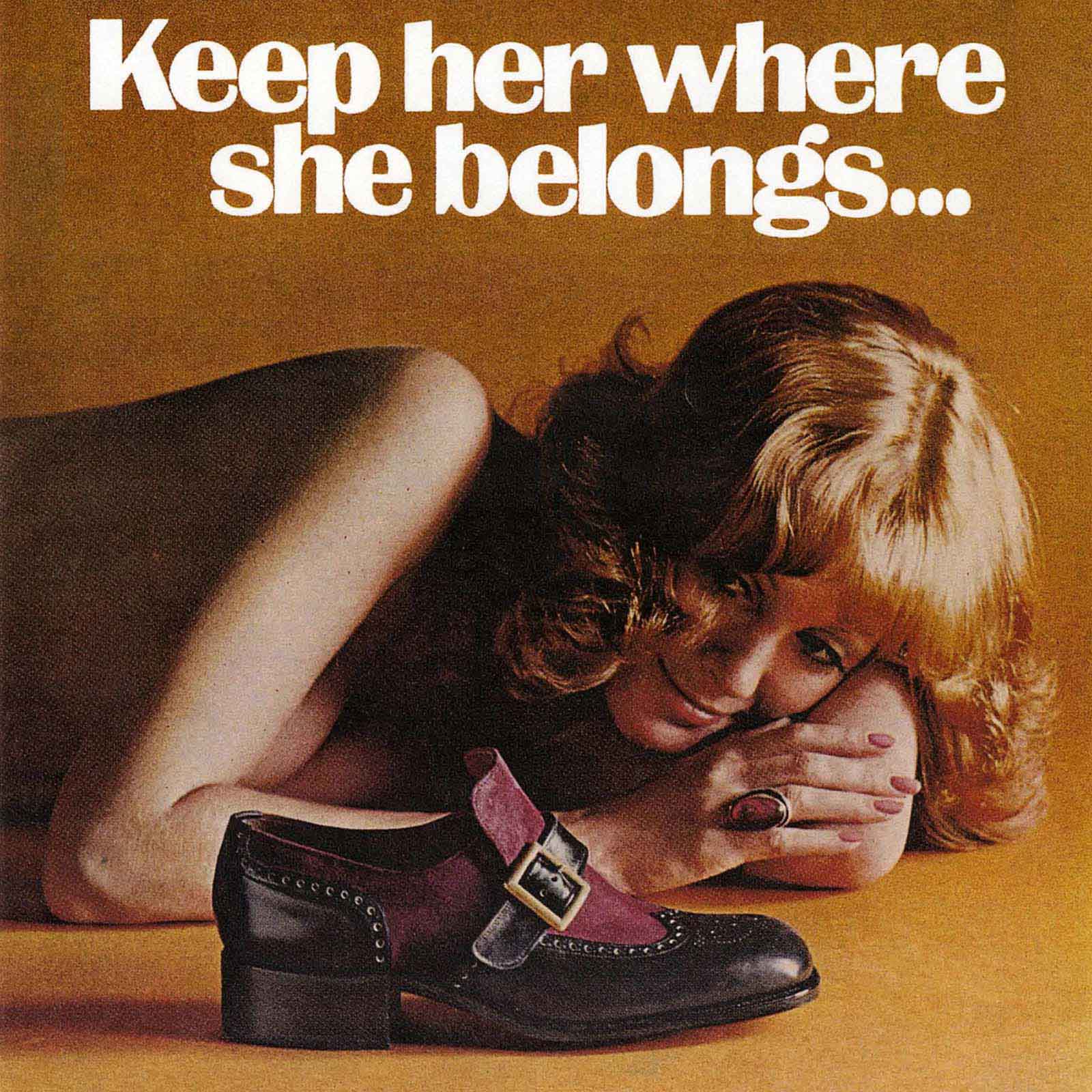
I am not shocked by those shows. I am shocked that people point to shows like “Father Knows Best” and “Leave It To Beaver” as fine examples of what they want this country to be.
Absolutely. In fact in an old series I’m currently watching, the original Perry Mason (1957-1966) his secretary Della Street is more than just a secretary – she’s a super-competent career woman who goes along and helps him and his sidekick private detective Paul Drake on many of their investigative adventures.
But Father Knows Best was nevertheless very typical of the culture of the 50s. In fact it persisted for decades longer …
Zelda Sayre married F. Scott Fitzgerald to create the couple of the decade in the 1920s. That Zelda was beautiful, party-loving, and an alcoholic with mental problems, the exact opposite of Zelda the character. I don’t know whether that was part of the joke. Shulman loved odd names for the endless stream of girls so it may have just a name.
Thank you. Serves me right for not being well-read.
MAD magazine ran an article, “What is a Make-out Man?”:
Make-out men are never named Melvin or Marvin or Egbert or Hobart. They have names like Lance or Porfirio or Rock or Biff. Strangely enough though, they all seem to end up marrying girls named Zelda.
Eras reflect the anxieties of their time. And the entertainment of an era helps people cope with those anxieties.
For example, Captain Kirk talked computers to death every other episode (or at least quite a few times) because in the mid-to-late 1960s, Americans were very worried about computers. Computers were becoming widespread and people worried (with reason) about their jobs being at risk. Seeing Kirk get the upper hand so many times had to be reassuring.
Similarly with Father Knows Best. In the mid-1950s, the upheavals of World War 2 were still being dealt with. WW2 saw both non-white men and females-in-general filling roles they had never been allowed to fill in the past. Not only as engineers, as in the FKB example that @wolfpup gave, but in all kinds of positions of responsibility. Positions that potentially could displace the All-American White Christian Hetero Male from his position atop the social and economic hierarchy.
So a show like FKB, that plainly and unambiguously laid out the Proper Places of everyone concerned (non-whites out of sight; females strictly in their assigned roles) pleased people. Like those Star Trek episodes, FKB provided a way of emotionally coping with scary changes.
Whereas in another article (c. 1955), they observed that movie cowboys always have names like “Lance Sterling”:
Not that you’d meet one guy in a hundred with such a name!…Mainly people have names like…George Freeble…Iggy Siedenham…Melvin Poznowski…! Could you ever picture a cowboy hero called Melvin Poznowski?