Yep, they still do. They seem to have turned into a feeder program for (as I recall) United and JetBlue pilots. Get your hours with Cape Air and jump out in a year or two.
Their schedules to ACK and MVY - particularly frequency - have dropped substantially in the last couple of years. I fly out to the islands from New Bedford or (if I have to) Hyannis probably 10 times a year for work. The morning flights have zero tourists, they’re all workers heading to the islands for the day. Literally 15 years of seeing the same people every morning, spread across two or three flights between 0630 and 0750. Now they’re doing maybe one flight a day, three or four days a week. Instead of a 12 minute flight to MVY it’s an hour drive to Woods Hole and a 45-minute boat ride.
Cape Air’s fleet is exclusively 9-seaters - 402s and Tecnams. I’m not sure if they’re still running whatever the electric one was; it was never in use on the routes I frequent. Once you hit 10 paying passengers, you’re an air carrier and can only use a Part 139 airport. Many of the airports Cape Air uses are indeed 139 airports (BOS, HYA, MVY, ACK, etc), but the smaller ones where EAS is a thing are usually not 139 airports and it’s waaayyy cheaper to operate from.
It’s situation dependant in general, we set the cabin zone temperature in the flight deck and the flight attendants can make limited adjustments around that temperature. The AC then pumps in air that is either hotter or cooler than the current cabin temp to bring it to the desired temp. I’ll have a look tomorrow to see if it tends to be pumping cooler or warmer air in the cruise. I think it’s warmer at altitude, and I should know because I look at it regularly, but I’m usually looking to see that the cabin is a reasonable temperature rather than comparing the inflow temp to the cabin temp.
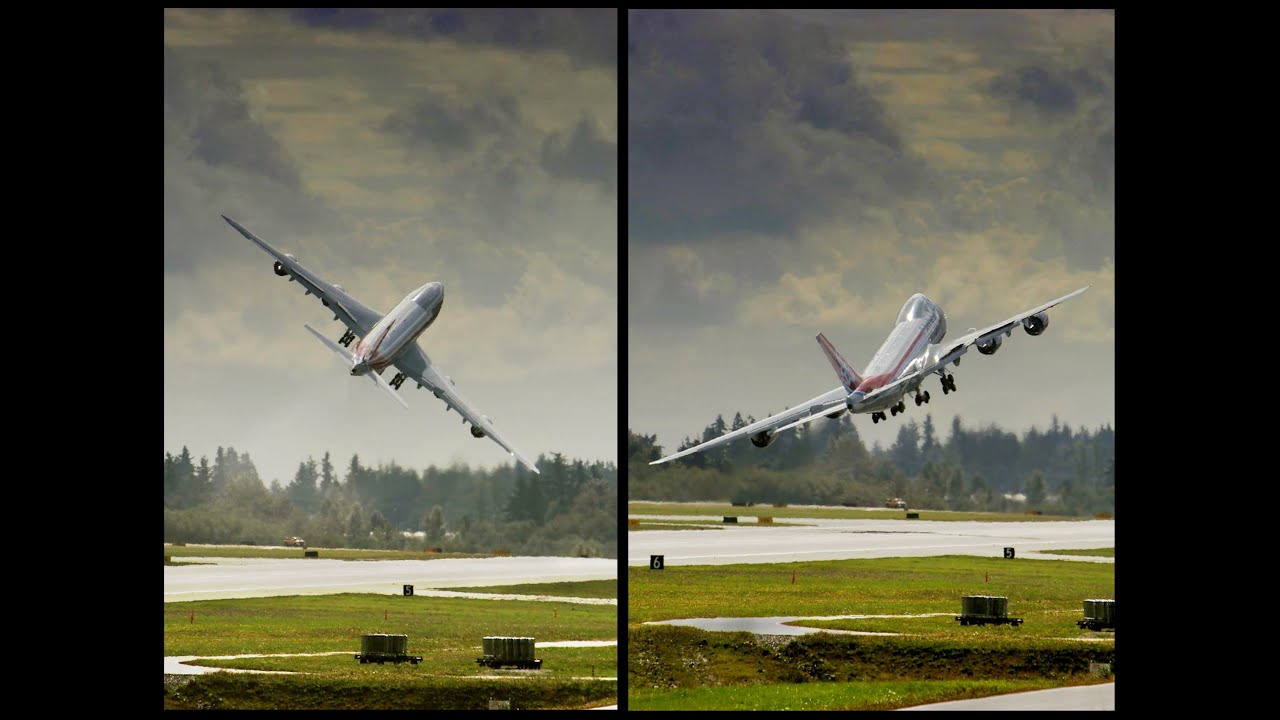
So, pilots, was this a skilled test pilot doing a little hotdoging and you should cut him a little slack, or was this a batshit insane level of irresponsible recklessness and he’s only alive by very dumb luck?
If I am remembering my physics correctly, when you compress a gas it gets warmer. So my guess as a layman is that the pressurization system would be pumping in warmer air, because it’s been compressed, and then it needs to be cooled to make it a comfortable temperature. But you’re the expert here.
Jet environmental control at cruise is kinda intricate if you want to get into how the cabin inflow air is created. But that wasn’t the question asked.
The air entering the cabin at cruise is 50 to 70C warmer than the air outside. And is typically 1-2C cooler than the ambient temp in the middle of the cabin.
So are we adding warmer air or colder air? The answer is it depends on what you’re comparing it to. Vast amounts of heat are needed to keep the interior above -40C. All the passenger’s body heat would be a drop in that bucket. My vote is to consider that it’s warm air entering the cabin. Otherwise there’d be icicles hanging off everyone and everything.
I had a neat airline experience yesterday. Not one I expected.
I rode back to MIA from CDG on an Air France 777-300ER. ~10 hours gate to gate. Like most modern cabins, they had seatback screens with a bunch of different entertainment options. And a nav display tied into the airplane nav system so you could follow along on the flight, looking at maps or Google Earth-like images of what would be seen out the sides or front of the plane. So far, so ordinary. At least here in the 21st Century on non-RJs.
The cool new thing was they had a video camera mounted under the nose forward of the nose gear. Which had one sensor aimed forwards and one aimed straight down that you could switch between. So you could sort-of see a pilot’s eye view of the proceedings. Parked at the gate, pushback, taxi, takeoff, enroute, landing, and all the way to the other gate. The enroute views were rather hazy even when the sky out the window was clear. And they aimed the forward-facing camera so the field of view had little look angle downward, but lots of look angle upwards. So lots of sky & clouds with rather little sea or land. But overall it was pretty cool to watch that oh-so-familiar stuff one more time.
My former employer’s jets have no such gizmo. Nor have I seen it on other carriers’ airplanes I’ve ridden on. This was a first. For me.
That seems to be relatively common on European (and maybe other continents) airlines. I first remember seeing it on… I think Lufthansa. And I’m pretty sure my more recent BA flights had it, on their nearly brand new at the time A350. They’re sometimes also have a tail mounted camera, so you can watch a top down view of your aircraft in flight.
The compression and expansion cycles have already happened before the air gets to the ducts. It’s more about the cabin temp sensors vs the selected temp and what temperature the duct air needs to be to make them equal.
I flew to New Caledonia with Air Calin on an A320 neo a few years back and they had this camera, but my employer’s aircraft don’t have anything like it. I thought it would quite useful as a pilot to be able to see if the ground crew were there or not.
The barest of Googling suggests this wasn’t an actual airline flight, but was some sort of photoshoot for marketing purposes. Which would make it merely stupid rather than criminally insane.
Low level maneuvering flight kills quite a few people every year, and it’s not just Sunday VFR pilots. There’s a reason professional airshow pilots have to spend several years on the circuit before they receive wavers to perform at ground level.
Even if the only occupants were pilots, that’s a huge plane with potential to do lots of damage if it crashed. Seems a gimme that the FAA will come down hard on this.
I’ve been on vacation the last couple of weeks and although I was on the Dope, it was with less than my usual intensity. I’m back now.
If it was pilots goofing off, they’ll be unemployed ex-pilots real soon. It’ll be interesting to read whatever comes out later. But I bet there won’t be much.
There apparently is a bit of a tradition that when new airplanes are flown away from the factory on the actual delivery flight to the customer, a wing rock is performed, saluting the nest from which the bird is graduating, never to return.
There was a near disaster a few years ago with a 747-400 for Cargolux where the maneuver was started waay too soon after liftoff and with lots more control input than was safe. Almost leading to a stall barely an airplane length above the ground. When you really stir the yoke, ailerons and spoilers flapping this way and that, it’s easy to drive a big section of wing beyond the critical AOA & into stall. Look at the amount of rudder deflection trying to manage all the yaw induced by that maneuver.
There was another delivery event where a low pass over the takeoff runway of a Cathay 777 got lower than planned. At least there was no nutty wing rocking. Leading to Cathay management insisting loudly that this was never done. Despite lots of vids of it happening routinely and almost certainly with management awareness and acquiescence. Since it’s usually management pilots doing those initial pickup & delivery flights. See
I said “barest Googling”, during which I saw a sentence about a non-revenue flight for marketing purposes. If so, it may also be true that the pilots were goofing off and not doing what the company intended.
The owner told KXAN the flyby was part of a marketing video and said the pilots flew lower than expected.
The article quotes another Jetran public statement that explains the flight to begin with:
JetRan said the aircraft was undergoing a final pre-delivery test flight before its planned entry into the Qatar Airways Cargo fleet.
So, a final check-flight after taking delivery from the cargo conversion, and a marketing video opportunity. But:
We are aware of a video circulating on social media showing a freighter aircraft conducting a low-pass flight in a manner that does not reflect operational standards
They are rather disappointed in their pilot, apparently.
Lotta YouTubes dissecting the recent Qatar 777 event. I’ve not spent the time to watch them, but if anyone has a favorite YouTube aviation commentator they’ve probably produced a vid on this.
FWIW, I know a few folks who flew for Qatar, Etihad, or Emirates. They pay well, but you’re treated like the slave you are. Regardless of any risks they took, or who authorized the script they were following none too well, the fact they embarrassed the brand is the end for them.
In a relatively full A320 today (19 empty seats) and the forward and aft cabin are being pumped with air at 22°C to maintain a cabin temperature of 23°C. The flight deck is also at 23°C but the inflow is 28°C.
A low level straight pass over a runway is not that difficult to perform safely & reliably. You’ve got plenty of tools to maintain a safe enough but excitingly low altitude. Probably a good idea to make a few passes in the sim first though.
A low level bank is a whole 'nother thing. Nobody has a good feel for how many feet up or down the wingtips move in turns. Nor are there any cockpit tools to tell you. Whether his wingtip does or doesn’t clear the ground and by how many feet plus or minus, is dumb luck.
Now whether the whole thing was a good idea comes down to whose idea was it and how much advance planning went into it. Spur of the moment “Hey y’all, watch this!” is always a bad idea.
OTOH the manufacturers and airlines do formation flying in big jets to take dramatic marketing pix & vids. They also perform seemingly wild maneuvers at airshows. All those are carefully risk managed and carefully planned events. This is one of the few modern era airliner-at-airshow crunches I know of: Air France Flight 296Q - Wikipedia.
The report said it found no indication of any pre-crash mechanical malfunctions or failures in the engine that would have prevented the normal operation of the plane. In fact, NTSB said it appeared that the engine of the single-engine turboprop plane had been producing power at the time of the crash.