It may be worth noting that this statement is fully accurate only in straight & level flight.
K364, here’s another approach you can take, since I think in your OP you missed something pretty fundamental. I’m not sure what it was, but I don’t see how you addressed the volume of air that gets thrown downwards.
I would estimate that the wing pushes the few meters of air below it down, and it also grabs the air a few meters above it and throws it down too. Grabbing the air above to throw it down is the Coanda effect that Little Nemo mentioned upthread.
When taking off, isn’t the angle of attack quite steep? And if so, isn’t the propeller also “pulling” the plane upward?
I didn’t wanna go for the obvious joke. Mainly because there weren’t any replies yet, so I couldn’t.
Two different methods to calculate the lift and both will give correct answers … the problem is that using volume involves many more parameters and is more complicated to calculate … just throwing this problem into Navier-Stokes gives the correct answer without all the complications …
We could caste this problem into volume movement, it’s just easier to casting it into pressure differences … as long as upward pressure is more than gravity, our airplane rises in the air column …
No, but what has been discredited is the “equal transit” theory, which is the idea that the longer length of the upper surface is what causes the air up there to go faster. It’s miniscule in comparison to the actual causes of the pressure difference.
This, honestly, is the biggest source of the OP’s flaw. He only counted air molecules the wing hits, not the ones next to the boundary layer.
Bernouli’s Principle is still correct, but the nonsense that usually gets taught in schools and mistakenly called Bernouli’s Principle is not.
Yes, pointing the nose up adds part of the thrust to the lift and some of the lift becomes additional drag. The angles aren’t much though, somewhere between 10 and 20 degrees.
Everything looks good with your back of the envelope calc except the sin(theta) part.
Imagine the plane being stationary and the air moving at the velocity of takeoff. Then go to this link https://www.kullabs.com/classes/subjects/units/lessons/notes/note-detail/3597
Scroll down to the part where the equations are presented for a curved surface impact. You will see that the resulting force is of the form :
Rho x a x v^2 (1 + cos theta). If you see the wing at take off it has those curved things that come out (aerilons??), so the wings behaves more like a curved surface than a flat one.
You got the Rho x a x v^2 part right. I am not a aerodynamics guy either.
The Four Forces of Flight, illustrated and simplified.
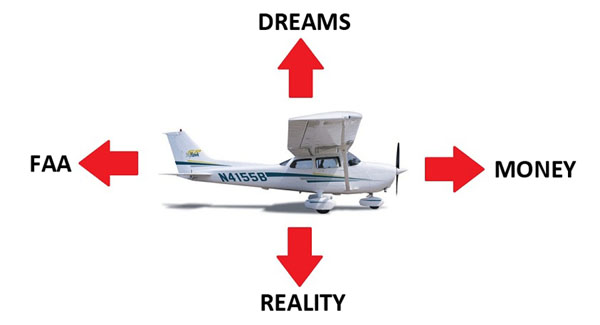
I do not think ground effect is the issue here but it is a thing. The Soviets made an awesome and improbable and ineffective ground effect vehicle nicknamed the Caspian Sea Monster.
Useless it was but it was pretty cool.
Flaps.
Yes this happens thousands of times each day.
That wing area number is for “clean” wings in a cruise configuration. The 747 has an effectively much larger wing area when the high lift devices are deployed at takeoff and landing. On the trailing edge it uses multi-slotted Fowler flaps. These essentially “telescope” rearward out of the trailing edge increasing surface area:https://i.pinimg.com/originals/73/11/47/7311470a130c2f49d2c9f77159000573.jpg

And on the leading edge it uses Krueger flaps: Krueger flap - Wikipedia
Besides increasing wing area, the flaps redirect airflow in more downward direction and allow the wing to achieve a higher angle of attack without stalling, which increases lift.
The photo of a YC-15 also shows how flap design can greatly increase wing area and (in some cases) even deflect the engine exhaust downward. This drastically changes the deflection angle and deflected total air mass volume: http://www.airvectors.net/avc17_04.jpg
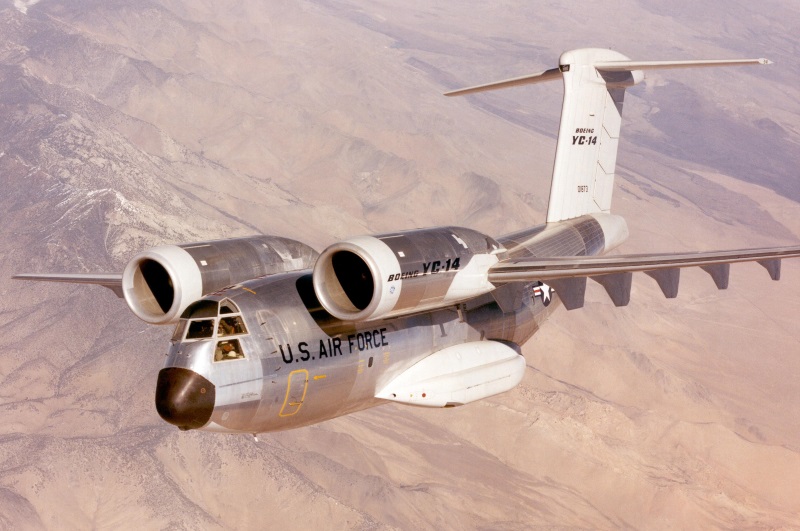
The YC-14 flaps could deflect 90% of its engine thrust downward 70 degrees: https://sobchak.files.wordpress.com/2009/10/yc14_3.jpg
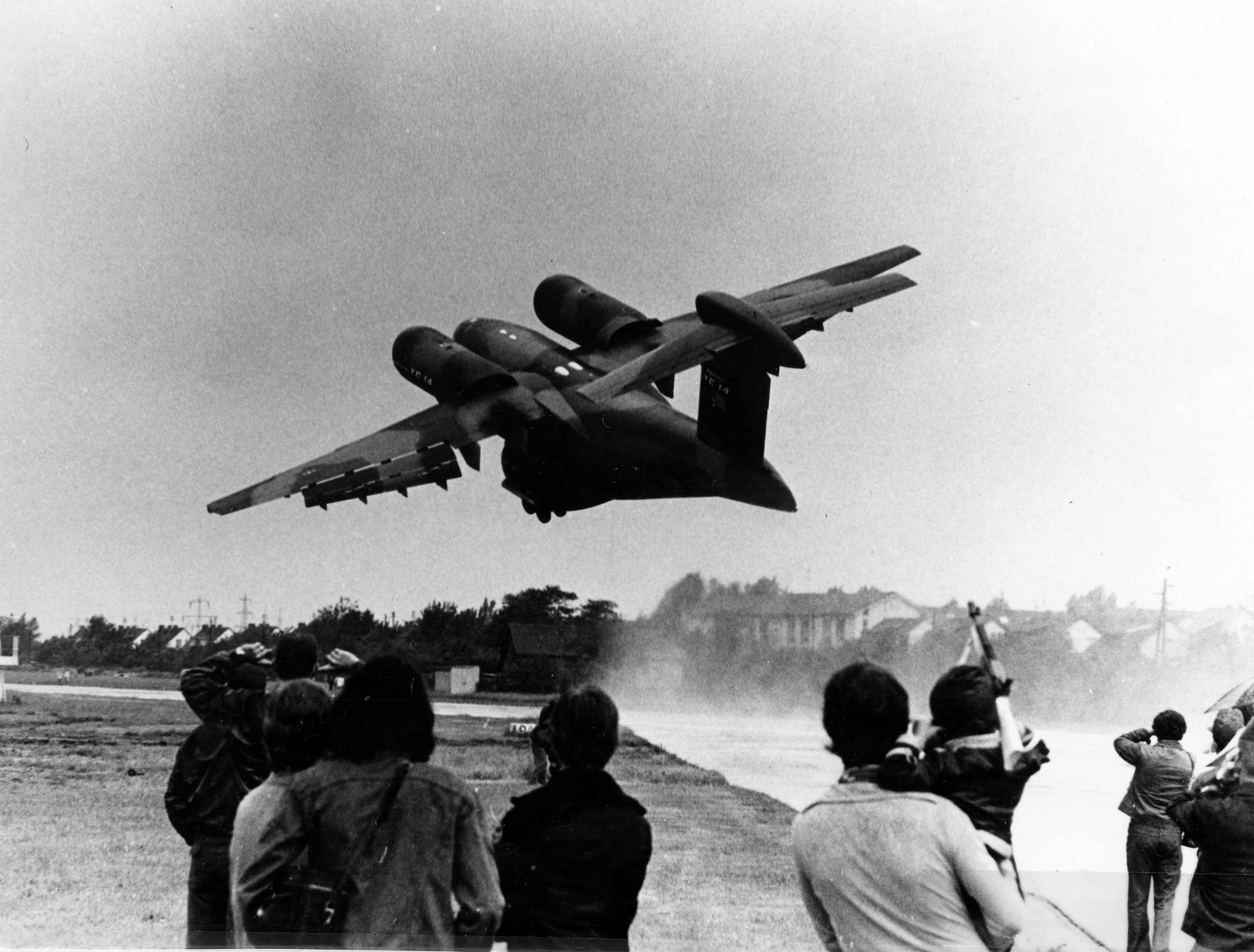
The 747 doesn’t use blown flaps but these examples show how you can’t pull a number out of your hat like 30 deg. deflection and assume that is reliable and constant.
Also the wing’s coefficient of lift varies with angle of attack. As the plane rotates for takeoff the lift coefficient increases, thus displacing more air downward: https://www.grc.nasa.gov/www/k-12/WindTunnel/Activities/lift_formula.html